Three X accounts. One Grok Bot. In the span of a few months, the system produced 69.8 million impressions, 321,000 likes and 319,000 bookmarks. The single best post pulled 7.1 million views from an eight-word caption and a screenshot that already existed on the internet. Daniel Ch, who runs the accounts with his brother David, published the full playbook on X in August 2026, including the exact prompt, the stack and the terminal commands that wire it together.
This article is that playbook, edited for clarity and expanded with the Postiz side of the setup. It covers how the Bot finds ideas, the two plays it runs, the prompt word for word, the video loop, the five setup steps, and the part Daniel still feels weird about. Nothing here requires you to post on camera or start from a blank page.
Original write-up: Daniel Ch on X. Last updated: September 24, 2026.
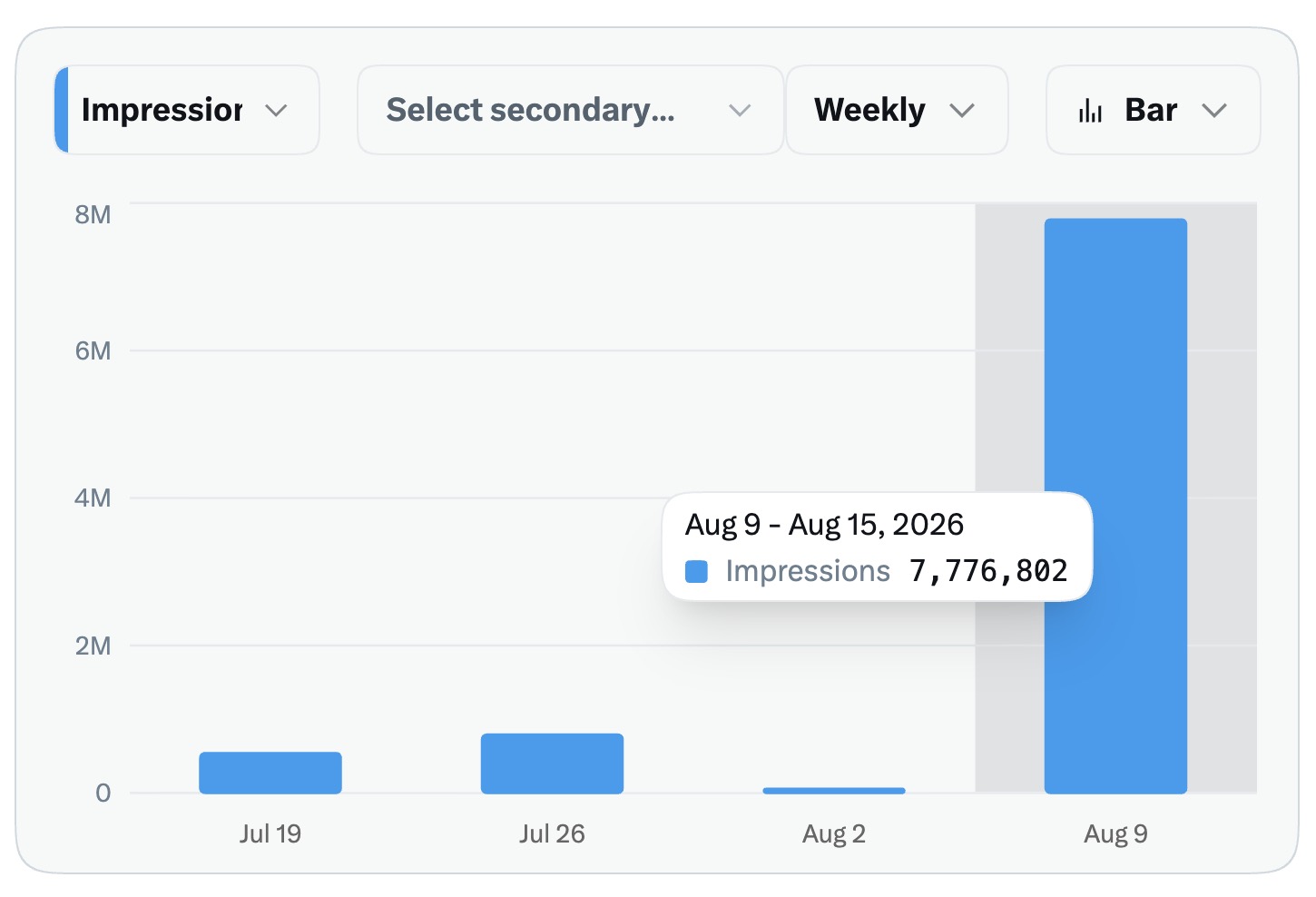
One week in X Analytics: 7,776,802 impressions, most of it from a single screenshot post.
What is a Grok Bot content system?
A Grok Bot content system is a workflow where an always-on AI agent researches source material, proposes post ideas with hooks, writes first drafts, and hands the finished versions to a scheduling tool as drafts. The human keeps the final call on what gets published. In Daniel’s setup, one Grok Bot feeds three X accounts: @chddaniel, @chhddavid and @shipper_now.
Grok Bot is the agent product from xAI and Cursor, not the Grok chatbot on X. A Bot keeps files, memory and tool connections between tasks, which is what lets it learn from last week’s winners before suggesting this week’s batch. Daniel ran the same loop on Hermes Agent first and it worked the same way. The setup commands are the only Grok-specific part.
The post that made 7.1 million people stop
It was eight words: “best cold email i’ve seen in my life.”
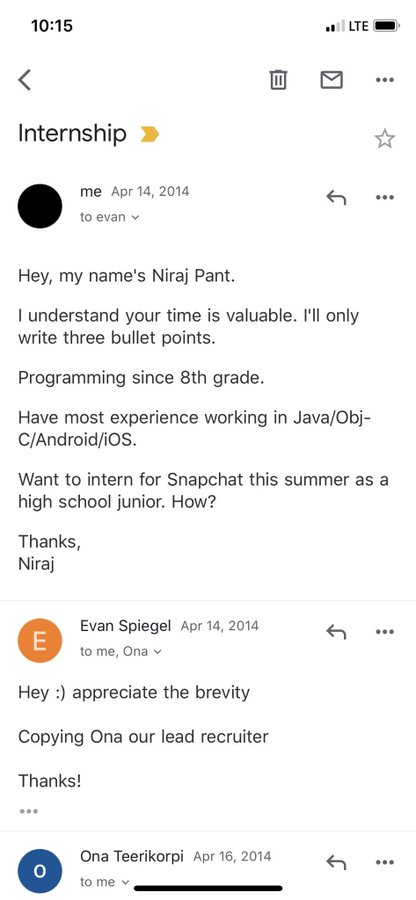
The screenshot behind the 7.1M-view post. Three bullets, one reply from Evan Spiegel, 48,000 likes.
David’s post got 7.1 million views, 48,000 likes and 10,700 bookmarks. The Bot did not invent the screenshot. It was already online. What the Bot did was find it, see what was interesting about it, and repackage it into a post people wanted to open.
The obvious caption would have explained what happened in the email. The Bot wrote a judgment instead. You open the image to check whether the judgment is right. That was enough.
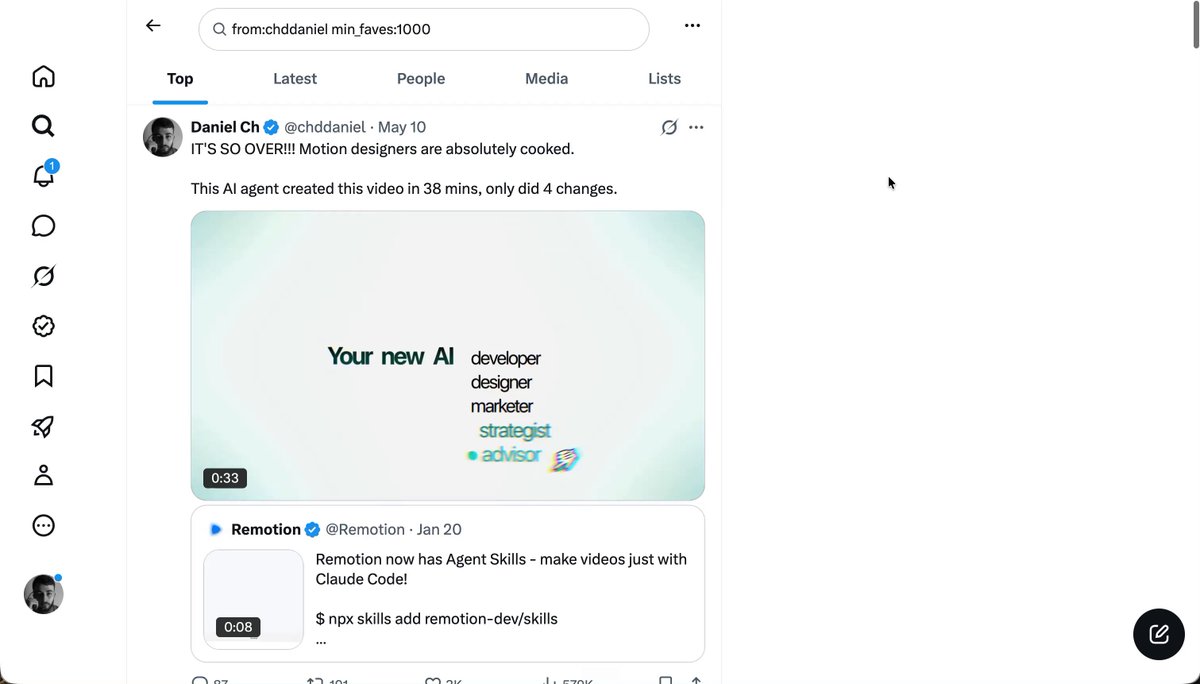
And it was not one lucky screenshot. Daniel keeps a running list of the 1,000-plus-like posts the Bot has helped manage, create and clear. The fastest way to see them yourself is an X Advanced Search for from:chddaniel min_faves:1000.
X Advanced Search with min_faves is how the Bot finds proven material, and how you can audit the results.
Manage all your social media in one place with Postiz
The Website to App launch is the cleanest example of the system working across all three accounts. Same core idea, three different wrappers, three different audiences.
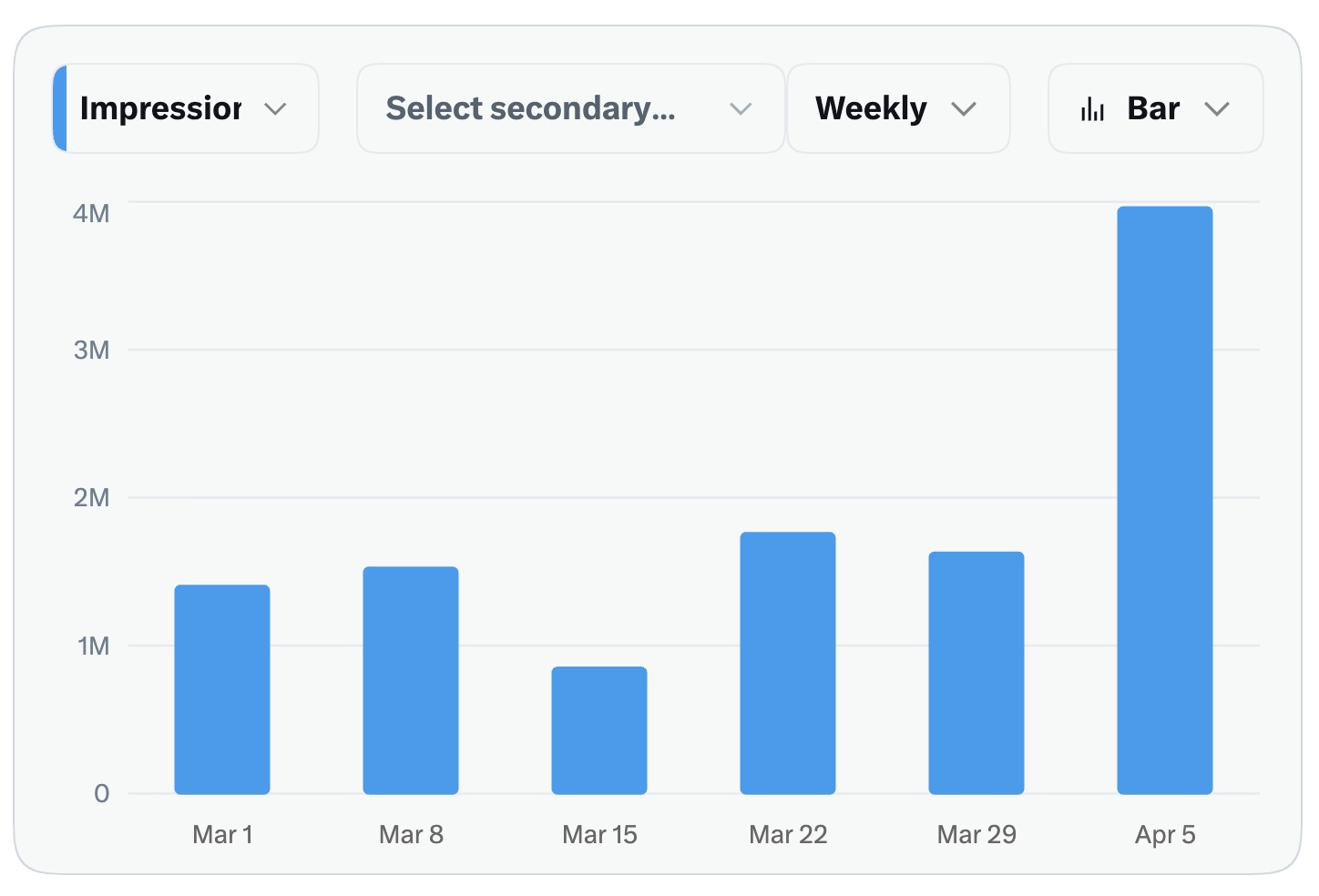
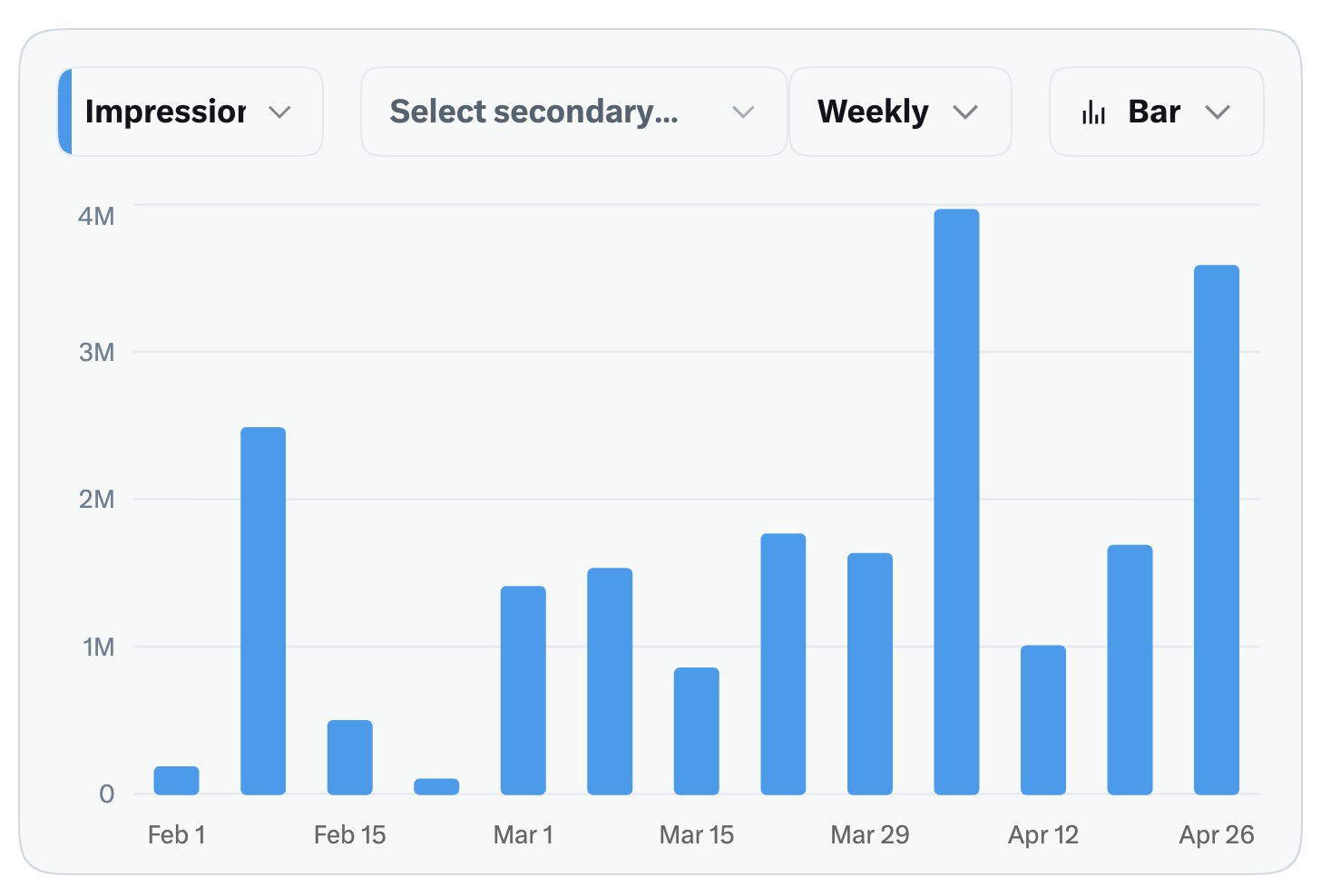
This was not all one week, either. The impressions charts below cover February through April 2026, before the cold-email post existed.
March to early April 2026: between 0.8M and 4M impressions a week.February to late April 2026. The system produces repeatable spikes, not one outlier.
Daniel had some hesitation with the “this is terrifying” and “it’s so over” kind of angles. They got criticism for them too. He does not know whether the Bot picked up an echo chamber in its inputs, whether it came from the prompt, or whether that is simply what X rewards. But he kept seeing the same result: those angles worked.
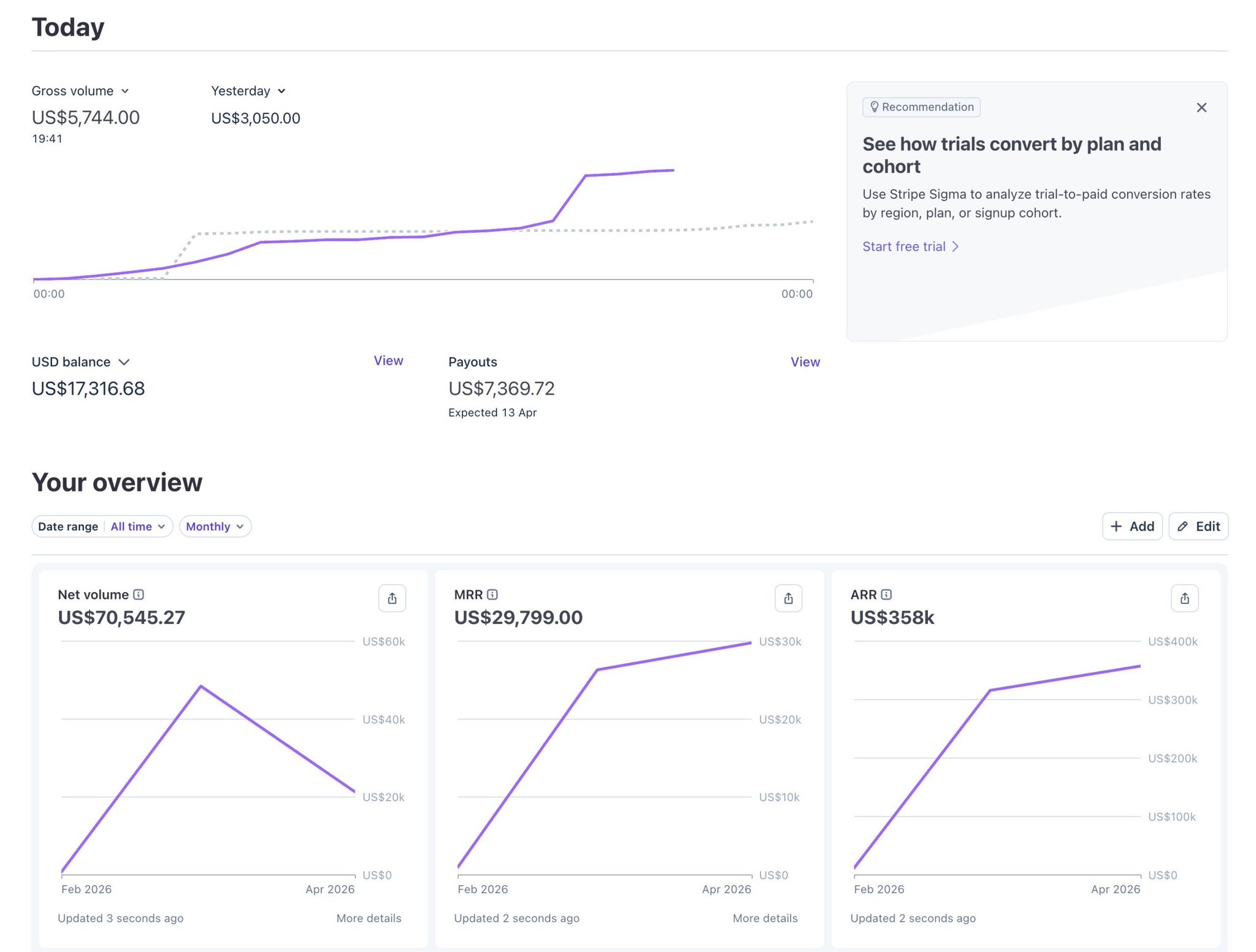
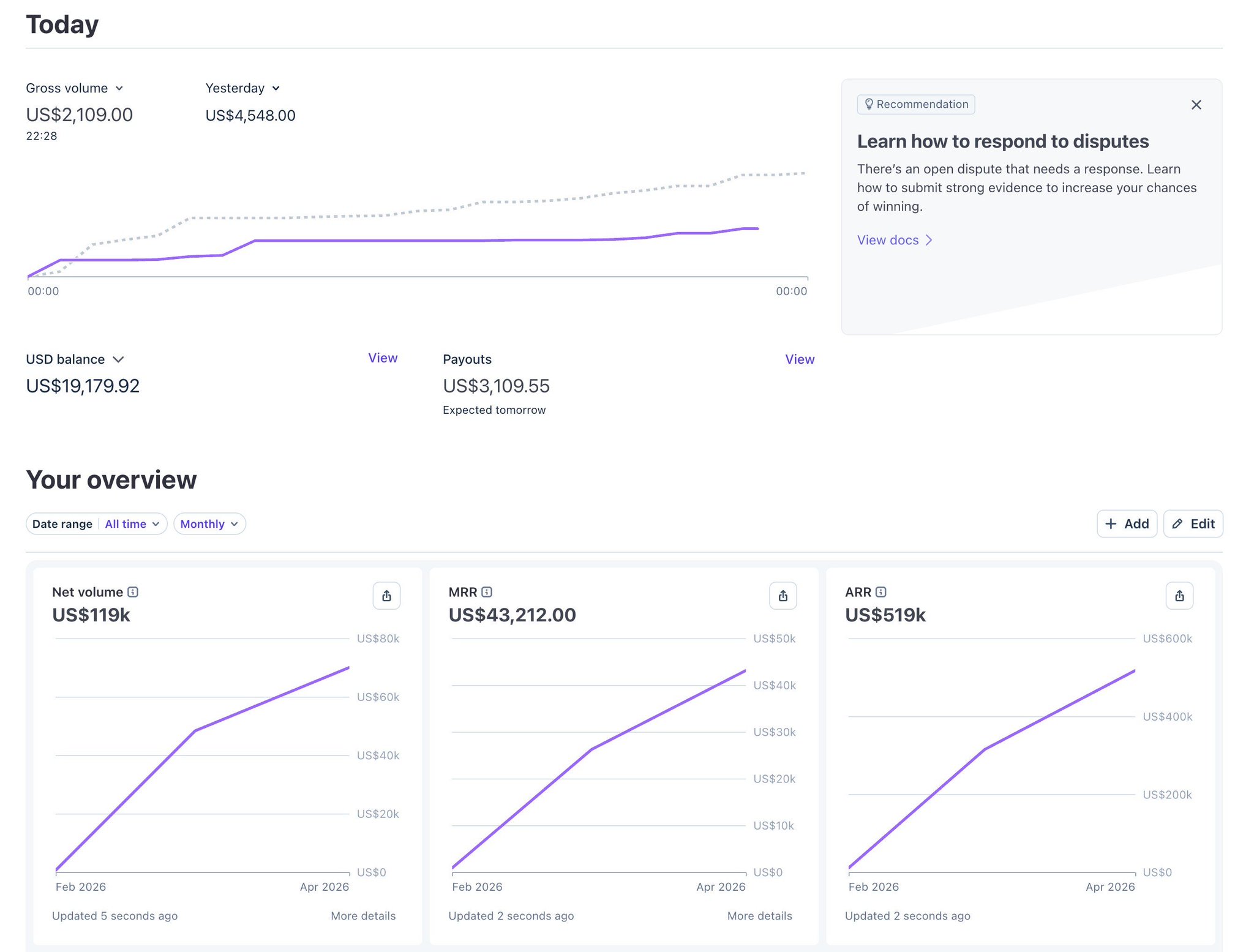
The posts led to actual growth for the product they were promoting. These are the Stripe dashboards Daniel shared alongside the impressions charts.
Stripe in early April 2026: $29,799 MRR.A few weeks later: $43,212 MRR. Attention that turned into revenue.
The two plays the Grok Bot runs
The Bot does not use one trick. It has two different ways of getting to an idea worth posting.
Play 1: Repurpose attention that already exists
The first play is to find something that has already proved people care. A post, screenshot, video, launch or story already has a core value inside it. That value might be status, surprise, fear, usefulness, identity, a before-and-after, or a question people cannot help answering.
The source is not the post. The source is the value the post gives people.
The job is not to rewrite it with synonyms. It is to see whether a 6 out of 10 execution can become a 7 out of 10 with a better visual, a better first line, less explanation, more curiosity, or a format that makes the value clearer. One core idea can have more than one good packaging. That is the whole point.
Play 2: Create an angle from scratch
The second play is more interesting. The Bot starts with something the team already has: a product build, a small observation, a screenshot, a conversation or a result. Then it finds the human tension inside it.
That is how a normal product update becomes a post about a fear, a status signal, a surprising implication, a shortcut, or a thing people have felt but have not seen stated clearly.
The exact prompt Daniel gives his Grok Bot
This is the prompt, unchanged. Notice what it does not do: it does not decide which account posts, it does not force a product mention, and it does not ask for a content calendar.
You are my content research and angle agent for @chddaniel, @chhddavid, and @shipper_now.

You are not a content calendar. Your job is to find dormant attention, or create a fresh angle that makes people stop.

Do not decide which account should post an idea. I will make that call.

There are two plays.

PLAY 1: Repackage proven attention

Find public source material with real proof that people cared: posts, screenshots, videos, launches, articles, stories, or demos.

For X research, start with min_faves:500. In larger or noisier niches, use min_faves:2000 or min_faves:5000.

Do not copy the wording. Find the durable core value in the source. If the original was a 6 out of 10 execution, explain what could make ours a 7 out of 10: a stronger visual, a different hook, less explanation, more curiosity, or a better format.

PLAY 2: Create a fresh angle

Start with something we already have: a product build, observation, result, conversation, screenshot, or raw idea.

Find the human tension inside it. Look for surprise, fear, status, usefulness, identity, contrast, a hidden implication, or a question people would want answered.

For every candidate, return:

1. The play: repackaged or original.
2. The source link, if there is one.
3. The core value in one sentence.
4. Why people might stop or care.
5. Five genuinely different hooks or angles.
6. The best media or format for the idea.
7. Claims that need checking.

Prefer the smallest caption that makes the media more interesting.
Do not invent factual context.
Do not force a product mention.

I want a short list of things worth looking at, plus a reason for each one. I do not want a queue of generic "tips."
Two lines carry most of the weight. “Prefer the smallest caption that makes the media more interesting” is why the cold-email post was eight words. “Claims that need checking” is why the human review step stays short: the Bot flags its own weak spots before anyone reads the draft.
The thing that surprised him
Daniel ran this exact system with his Hermes Agent before moving it to Grok Bot. It worked just as well there. He has since moved the workflow to Grok Bot, which is why the examples and setup in this guide are Grok-specific.
The useful part is not just having an agent. It is giving the agent real source material, a clear job, the right tools, and feedback from what worked last time. Swap the agent and the loop still holds.
What to copy this week
Do not try to build a giant content machine on day one. Here is the version Daniel recommends starting with.
Start with one thing you know well. A product build, a customer conversation, a screenshot, a result, or a piece of public material your niche already cared about.
Give the Bot that material. Ask it for five repackaging candidates and five original angles. Make it show its sources when it is drawing from something public.
Pick two ideas. One should repackage proven attention. The other should be an original angle from your own material.
Make the package earn the click. Use the strongest visual you have, write the smallest caption that makes people curious, and do not explain the entire point upfront.
Read the result. Save the hook, creative, timing, likes, bookmarks, replies and drop-off points. Give that back to the Bot before the next batch.
That is enough to learn whether you have a system worth building out.
The bit Daniel still feels weird about
He does not think every high-performing angle is automatically a good one. A lot of the posts that worked had an “it’s so over” or “this is terrifying” framing, and he was hesitant to lean into that.
He still does not know whether the Bot is picking up an echo chamber in its source material, or whether X simply rewards a sharp, worrying claim. But he also does not want to pretend that a safer idea getting 50 likes is the better system. He would rather see the signal, use judgment, and keep learning from it.
The full stack
Tool
Job in the loop
Grok Bot
The angle engine. Researches, repackages proven attention, creates original angles, writes the first version, and learns from the winners.
Grok Build
Where Daniel gives the system more context, works through the files and prompts behind it, and connects the pieces.
Where the finished versions become drafts, and where drafts become posts through a voice note while he is driving.
X Advanced Search
How the team finds proven raw material with min_faves:500, min_faves:2000 and min_faves:5000.
X Analytics
Where they see whether people stayed, saved, replied or dropped off.
Remotion
Motion graphics when the right format needs to be built rather than clipped.
HyperFrames
Speeds up the same kind of motion-graphics work.
You do not need Grok Build for every social task
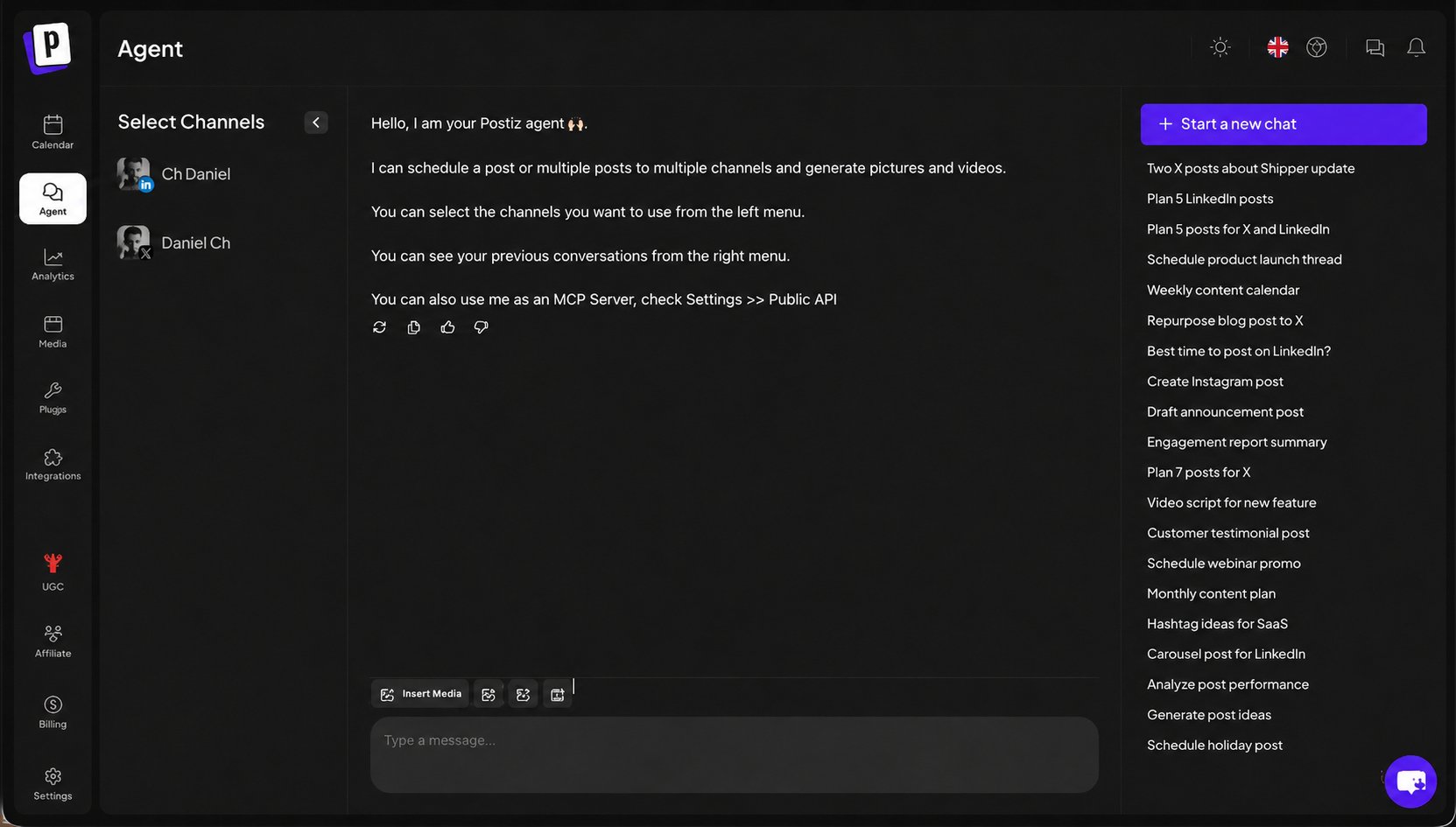
Grok Build is where Daniel does the wider research and works through a pile of raw material. But if he just wants to brainstorm posts, repurpose something for X, look at performance, or schedule finished work, he talks to the Postiz agent directly.
The Postiz agent with Daniel’s LinkedIn and X channels connected. The shorter loop for work that already lives inside social.
It is the shorter loop when the work already lives inside social. He does not need to push every small job through Grok Build first.
The video loop
The Bot connects to SendShort through MCP. That is the video-editing part of the system.
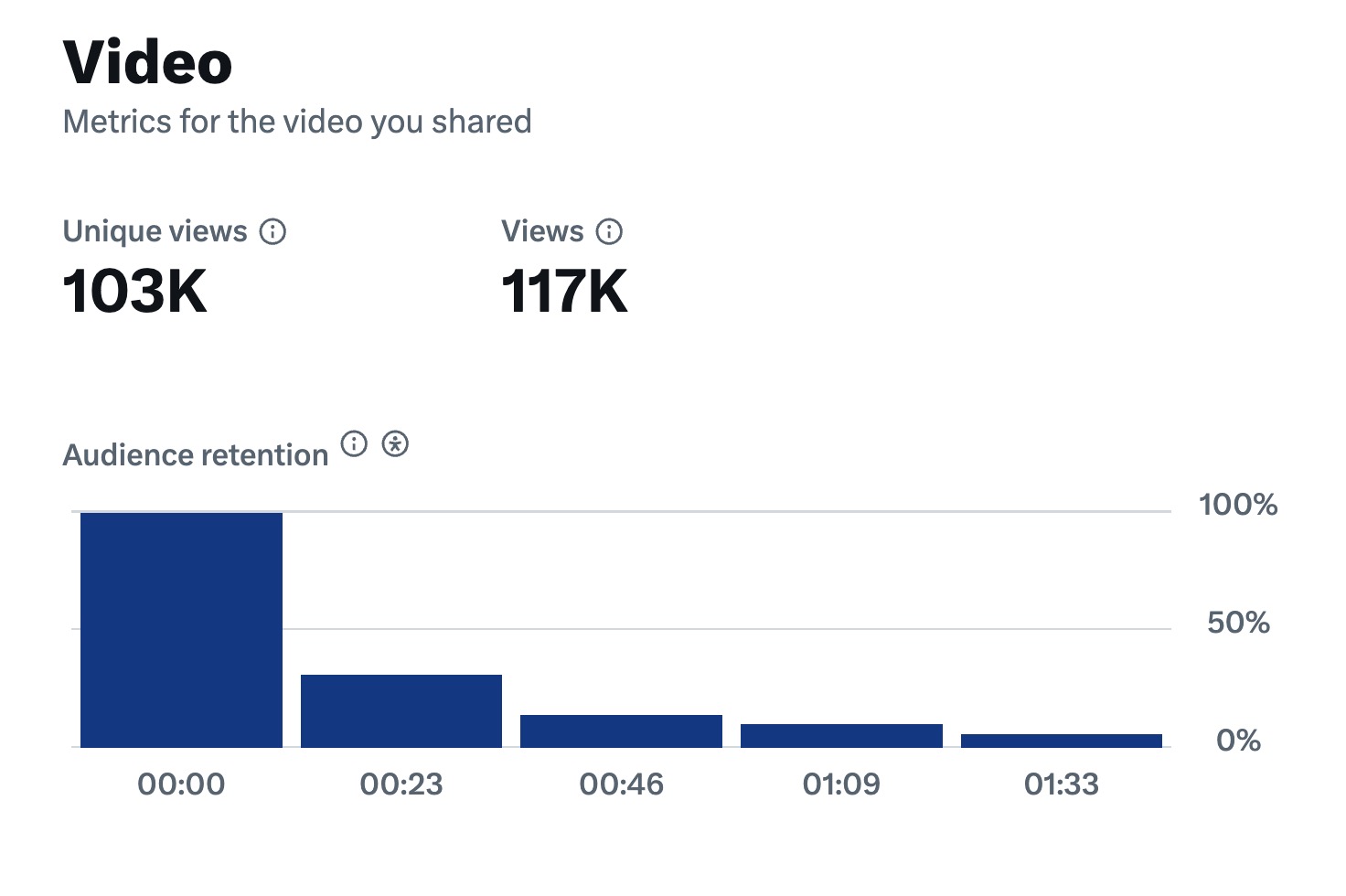
The team does not make a long video, post it, and hope for the best. They use X Analytics to see where people leave, then give the Bot a more specific job: keep the strongest parts, rebuild the opening, and test a shorter cut.
One 1:33 upload: 117K views, 103K unique viewers, and a steep drop after 00:23. That drop is the signal for what to retest.
For example, they have taken 00:10 to 00:18 and 00:25 to 00:49 from one source video, turned them into a much shorter cut, and seen it perform better than the original. SendShort makes the slicing and remixing practical. Remotion and HyperFrames cut down the motion-graphics work when an idea needs something built rather than clipped.
Then Daniel tells the Bot to use Postiz to put the finished versions into drafts and schedule them around the hours that have worked best for him. He still checks the first frame, the claim, the account and the draft before anything goes live. But the part after the idea used to mean a lot of clicking. Now the Bot carries it through.
How to wire up Grok Bot, SendShort and Postiz
This is the Grok-specific setup Daniel uses now. The same content loop also worked with Hermes; only the connection commands change. You need Grok Build and Node 18 or newer installed first.
curl -fsSL https://x.ai/cli/install.sh | bash
Step 1: Connect the accounts and get the two keys
Connect the social accounts you want to use in Postiz. Then go to Settings, Developers, Public API and create a Postiz API key. In SendShort, go to Settings, Preferences, API keys and create a SendShort key.
Step 2: Connect SendShort to the Bot
Paste this into your terminal, then replace the example key with the one SendShort gave you:
The Postiz MCP server lets the Bot see your connected channels, create drafts, and schedule posts. If you are on Grok Bot through Cursor rather than the CLI, you can install the Postiz plugin from inside a Bot chat with /add-plugin postiz and get the same tools.
Step 4: Give it the Postiz skill too
The MCP lets the Bot see your accounts and create drafts. Daniel keeps the Postiz skill as well, so the Bot can upload the finished MP4s before it creates those drafts.
That last command should print your connected social accounts. If it does, the Bot can now upload media with postiz upload and create posts with postiz posts:create.
Step 5: Run a safe first job
Start small. Give the Bot a YouTube link and ask it for one clip. SendShort imports the video, makes the clip, and waits until there is a download link. Nothing gets published.
Import this YouTube video into SendShort: [paste link].

Clip it into 1 short. Poll until a download URL is ready.

Do not publish anything.
Once that works, tell the Bot what to do with the finished MP4:
Use the finished MP4 to create one X draft in Postiz for [account].

Return the hook, caption, and Postiz draft ID. Do not publish it.
After that, change “1 short” to however many versions you want to test. Postiz also has its own AI video clipping now, so if you would rather run the whole loop through one account, the Bot can clip and draft without a separate video tool.
What happens after something works
A good post can disappear from the feed before you learn why it worked. So the team keeps the source, the opening line, the creative and the result. The Bot reads that back before it suggests the next batch.
For the cold-email post, that log gave them more than one follow-up:
The best and worst cold email side by side
Why the three-bullet structure works
A version for sales DMs
A teardown of short outreach that actually gets read
A video explaining why the screenshot pulls you in
They keep the reason it worked and test it somewhere else, rather than reposting the viral thing until everyone is sick of it.
The operating loop
Give the Bot real material and room to create original angles.
Use the winner log to tell it what moved and what did not.
Let SendShort create cuts, remixes and shorter tests when video is involved.
Let Postiz turn the approved versions into drafts and schedules.
Read the next result, then run the loop again.
Daniel does not give the Bot permission to automate judgment. He uses it like a $10,000-a-month employee who keeps handing him great options, and he picks the ones that match his instinct for what travels. He does not consider that instinct the best in the world. But it gets better fast when a $10,000-a-month employee keeps feeding it real signal.
TL;DR
Give people something worth opening, saving or sharing.
Let the robots do the boring 90 percent: research, source-finding, first drafts, variations, and keeping track of what worked.
Do not start from a blank page. Repackage proven attention or find a fresh angle in material you already have.
Test text, images, video and remixes.
Use X Analytics to see where people stay or leave, then feed that back into the next batch.
Let SendShort handle the cuts. Let Postiz turn approved versions into drafts.
Keep your own unique skill, taste, for the final call.
Frequently asked questions
Do I need Grok Bot to run this content system?
No. Daniel ran the identical loop on Hermes Agent first and it worked just as well. The prompt is plain text and Postiz connects through MCP, a CLI and a REST API, so any agent that can hold a prompt and call tools can run it. Postiz has setup guides for Grok Bot, Hermes Agent, OpenClaw, Claude Code and Codex.
What does min_faves do in X Advanced Search?
It filters results to posts with at least that many likes. Daniel’s prompt starts at min_faves:500 and moves to 2,000 or 5,000 in noisier niches. Adding from:handle narrows it to one account, which is also a quick way to audit any creator’s real hit rate.
Why does the Bot create drafts instead of publishing directly?
Because an agent will eventually write something you would not send. Every draft waits for a human to check the first frame, the claim and the account before it goes live. That review takes minutes a week and is the difference between a system you trust and one you babysit.
How does Postiz connect to Grok Bot?
Three ways, and Daniel uses two of them. The MCP server is one command: grok mcp add --transport http postiz https://api.postiz.com/mcp/your-api-key. The Postiz CLI and skill let the Bot upload video files before drafting. And the Postiz plugin on the Cursor Marketplace installs inside a Bot chat with /add-plugin postiz. All three use the same API key from Settings, Developers.
Does this work for LinkedIn, Threads or other channels?
Yes. The research and angle prompt is platform-agnostic, and Postiz publishes to X, LinkedIn, Threads, Instagram, TikTok, YouTube, Bluesky and more than 20 other channels from the same draft. Change the hook length and format to fit the channel and keep the rest of the loop.
How much does the stack cost?
Grok Bot is billed by xAI and Cursor. SendShort has its own plans. Postiz plans start at $29 a month, with unlimited posts and API, MCP and CLI access on every plan. See the Postiz pricing page for current limits.
Give your Grok Bot somewhere to publish
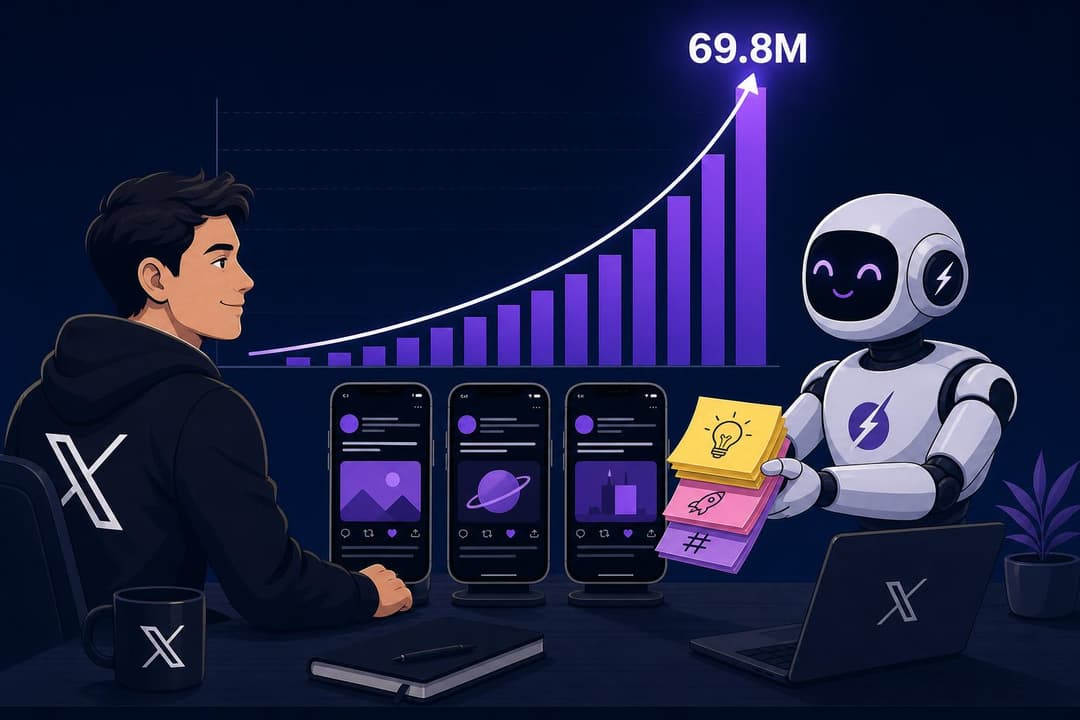
The cover from Daniel’s original article. Let the robots do the boring 90 percent.
The idea half of this system is a prompt you can copy in thirty seconds. The publishing half is where most agent setups stall, because someone still has to upload the file, pick the account, set the time and click.
Go to postiz.com, connect your X account and whichever other channels you post to, and grab your API key from Settings, Developers. Run the one-line MCP command above and your Bot can see your channels and create drafts in the same conversation where it found the idea. Every plan includes unlimited posts, and you can move a draft to the calendar with one click, or a voice note from the car if you are Daniel.
Pick one screenshot your niche already cared about. Ask the Bot for five hooks. Draft the best one in Postiz tonight. Get started with Postiz and give your agent somewhere to publish.
Learn 10 key content creation best practices for 2025 to boost engagement and growth. Use actionable tips and tools like Postiz’s LinkedIn post scheduler to plan and automate your content.
How to change instagram to business account - Discover how to change instagram to business account with our 2026 guide. Unlock powerful analytics, contact