When you hear “open source marketing automation,” what comes to mind? If it’s a bunch of technical jargon, let’s clear that up.
Think of it as a powerful marketing toolkit that puts you in the driver’s seat—without the hefty subscription fees and vendor lock-in that come with most big-name platforms. It’s about having complete control over your data, your features, and your budget.
What Is Open Source Marketing Automation Anyway?
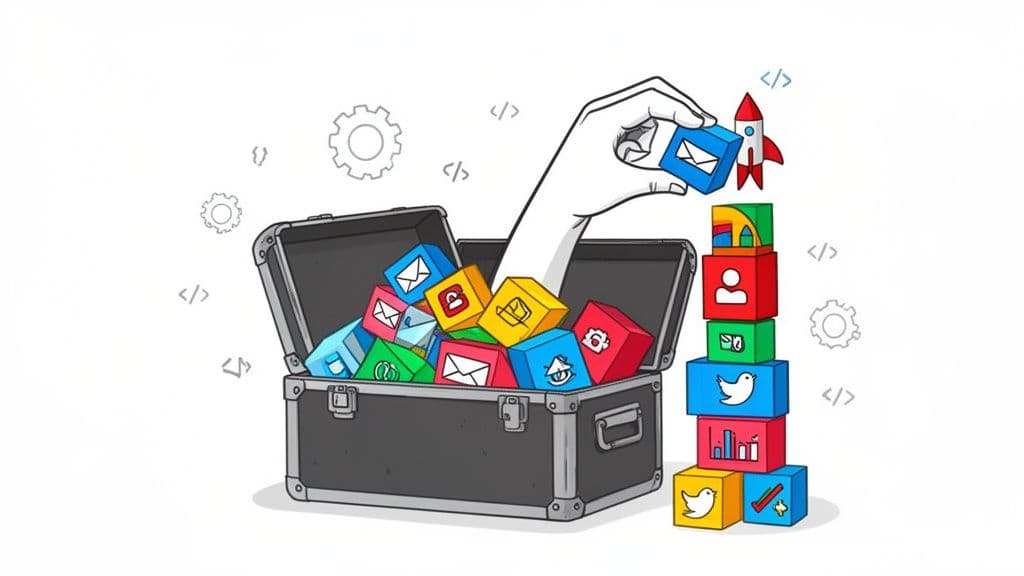
Let’s skip the dry, formal definitions and try an analogy. Imagine you’re building with Legos.
Proprietary software—the well-known marketing suites you see advertised everywhere—is like buying a pre-built Lego castle. It looks fantastic and works right out of the box, but you're stuck with its design. You can't just move a tower or change the color of the bricks. The instructions are set in stone, and the pieces aren't designed for anything else.
Open source marketing automation, on the other hand, is like being given a massive, unlimited box of Lego bricks. You get all the essential pieces for email campaigns, lead tracking, and social media, but you have the freedom to build anything. You can start with a simple car, design a complex spaceship, or create something totally unique that perfectly matches what your business actually needs.
This simple comparison gets to the heart of what makes these two approaches so different.
The Two Core Concepts
At its root, open source marketing automation brings together two powerful ideas:
Open Source: This is a philosophy grounded in transparency and collaboration. The source code isn't a secret locked away in a vault; it's shared openly. A whole community of developers and users can see it, improve upon it, and adapt it for their own purposes. This community effort often results in software that's more secure, flexible, and innovative.
Marketing Automation: This is simply the practice of using technology to handle repetitive marketing tasks. Instead of manually sending every email or posting on social media, the software runs these workflows for you, helping you nurture leads and engage customers at a scale you couldn't manage on your own.
When you combine these two, you get a marketing platform that you genuinely own. You’re no longer just renting a service; you are in complete command of your system.
Why This Combination Is A Game Changer
Marketing automation is no longer a "nice-to-have." Its adoption has soared, with 96% of marketers having used it or planning to, and 91% reporting that demand for automation is rising across their companies. You can dig into more of these marketing automation statistics to see the full picture.
In this climate, open source alternatives are becoming a critical option. They’re particularly compelling for privacy-focused businesses, developers, and agencies who are tired of being trapped in a single vendor's ecosystem.
To put these differences into perspective, here’s a quick side-by-side comparison.
Manage all your social media in one place with Postiz
Open Source vs Proprietary Marketing Automation At a Glance
Feature
Open Source Marketing Automation
Proprietary Marketing Automation
Cost
Free to acquire the software, but has costs for hosting, maintenance, and development.
Subscription-based (monthly/annual fees), often with tiered pricing and user limits.
Control & Customization
Total control. Modify the code, add custom features, and integrate with anything.
Limited. You're restricted to the features and integrations the vendor provides.
Data Ownership
You own your data. You decide where it's hosted (self-host or private cloud) and who can access it.
The vendor hosts your data on their servers, subject to their terms and privacy policies.
Vendor Lock-In
None. You can switch hosting providers or developers without losing the software.
High. Migrating your data, campaigns, and workflows to a new platform is difficult and costly.
Support
Community-based (forums, docs) or paid support from third-party experts and agencies.
Official support channels (email, phone, chat) included in the subscription plan.
Updates & Security
Managed by you or your team. You decide when to apply updates and security patches.
Managed by the vendor. Updates are pushed automatically, whether you're ready or not.
This table makes the trade-offs clear, but for many, the ultimate advantage of open source boils down to one thing: ownership.
The real power of open source marketing automation lies in owning your data. In a world of growing privacy concerns and regulations like GDPR, hosting your own platform means you decide where customer information is stored and who has access to it.
This level of control is something you simply can't get with most proprietary solutions, where your data is just another asset on a third-party's servers.
With an open source platform, you can build a marketing stack that guarantees digital sovereignty. This gives you a massive advantage in building customer trust and future-proofing your business. It's this freedom to customize, control, and truly own your marketing that makes it such a compelling choice for any business ready to take charge of its own destiny.
Of course, here is the rewritten section with a more natural, human-written tone.
Why Choose An Open Source Marketing Platform
It’s one thing to understand the idea of open source, but it’s another thing entirely to see how it can directly benefit your business. Switching from a big-name proprietary tool isn't just about changing software; it's a strategic decision to take back control over your costs, your data, and your marketing destiny. For anyone who's ever felt constrained by vendor lock-in or shocked by a renewal invoice, the case for open source is pretty compelling.
When you go with an open source platform, you're doing more than just installing a new tool. You're adopting a mindset of ownership. This shift unlocks four huge advantages that can completely change how your marketing team operates, finally giving you the power to build a system that truly works for you.
Unmatched Cost-Effectiveness
Let's start with the most obvious win: the cost. Proprietary marketing automation tools are known for their steep monthly or annual license fees, which often climb as your contact list grows or you need more features. Before you know it, a huge chunk of your marketing budget is eaten up by software subscriptions, leaving less for the activities that actually drive growth.
Open source software, on the other hand, is typically free to download. Right away, those recurring subscription fees disappear. Of course, it's not completely free—you'll have costs for hosting and maintenance. But these are usually much more predictable and far easier to manage than a non-negotiable vendor contract.
By ditching expensive license fees, you free up capital to reinvest directly into your business. Imagine what you could do with an extra few thousand dollars a year. Would you run more ads? Hire a new team member? Create that high-quality video series you've been putting off?
This simple change—turning a recurring operational expense into a strategic investment—is a game-changer, especially for startups and small to mid-sized businesses trying to make every dollar count.
Complete Data Ownership And Privacy
In a world full of data privacy laws like GDPR and CCPA, having control over your customer data isn't just a "nice-to-have" anymore. It's essential. When you use a proprietary platform, your data lives on their servers. You're essentially just a tenant, subject to their security rules, their terms of service, and their server locations.
An open source marketing automation platform hands you the keys. By hosting the software yourself, you decide exactly where your data is stored and who gets to touch it. This gives you what we call digital sovereignty.
This control has a few critical benefits:
Better Security: You manage the security environment from the ground up, letting you implement protocols tailored to your industry's specific needs.
Easier Compliance: Complying with regional data laws like GDPR is much simpler when you can choose to host your data within a specific country or region.
Stronger Customer Trust: When you can confidently tell customers that you are the sole guardian of their information, it builds incredible trust and strengthens your brand.
For an agency that handles sensitive client data or a business in a regulated field like healthcare or finance, this level of control is simply non-negotiable.
Limitless Customization And Flexibility
Let's be honest: proprietary platforms can feel like a box. You're stuck with the features, workflows, and integrations the vendor gives you. If you need something that isn't there, your only options are to create a clunky workaround or cross your fingers and hope the vendor adds it someday.
Open source tools are the exact opposite. Because you have access to the source code, you can tweak, extend, and rebuild the software to fit your exact needs.
For instance, an agency could build a completely custom reporting dashboard that pulls in unique data points for a high-value client—something a standard platform could never do. A startup could design a unique lead nurturing sequence that perfectly mirrors its specific sales process. This flexibility means your tools finally bend to your strategy, not the other way around.
A Strong Collaborative Community
When you buy a proprietary tool, your support is limited to one company's help desk. With a popular open source project, you get an entire global community of developers, marketers, and experts who actively contribute to the software. This community acts as a massive, built-in support network and an engine for innovation.
If you run into a problem, there’s a good chance someone else has already solved it and posted the answer in a forum. New features and security patches are often rolled out by the community much faster than a single corporation can manage. This collective effort keeps the platform modern and secure, all powered by the shared knowledge of its users. It's a big reason why the marketing automation market, which is projected to hit $81 billion by 2030, is seeing such quick adoption of these flexible tools. You can dive deeper into these marketing automation trends and statistics to see just how fast things are growing.
Essential Features Of A Great Open Source Tool
Finding the right open-source marketing automation tool can be overwhelming. There are dozens of options out there, and it’s easy to get bogged down in comparing feature lists. But here’s the thing: the best platform isn't the one with the most bells and whistles. It’s the one with the right features that actually work together to get you results.
So, let's cut through the noise and talk about the absolute must-haves. Think of these as the foundational pillars of any solid marketing automation setup. Without them, you’re just juggling a bunch of separate apps instead of running a truly unified marketing machine.
Campaign Management And Workflow Automation
At the end of the day, marketing automation is all about building customer journeys. Your campaign builder is where this happens. It's the visual canvas you'll use to map out multi-step experiences that react to what your users do, saving you a staggering amount of manual effort.
For instance, think about what happens when someone signs up for your newsletter. A good workflow builder lets you automate the entire sequence:
Instantly send a personalized welcome email.
Wait a few days, then follow up with a helpful guide or blog post.
If they click a link to your pricing page, tag them as a high-intent lead.
This goes way beyond just sending emails. It’s about creating a series of perfectly timed, relevant touchpoints across all your channels. A great open source marketing automation tool will give you a simple drag-and-drop interface to design these sequences, making sure no one gets left behind.
Lead Nurturing And Scoring
Let's be honest: not every lead is ready to buy. Some are just kicking the tires, while others have their credit cards out. This is where lead nurturing and scoring come in—they help you spot the difference.
Lead nurturing is simply the process of building a relationship with prospects through those automated campaigns we just talked about. It's how you provide value and stay top-of-mind.
Lead scoring is the magic that ranks those leads for you. Your platform should let you assign points for different actions, effectively letting leads raise their own hands. It might look something like this:
Opened an email? +10 points.
Visited the pricing page? +25 points.
Requested a demo? +50 points.
When a lead hits a certain threshold—say, 100 points—the system can fire off an alert to your sales team. This simple process ensures they spend their time talking to genuinely interested people, which has a massive impact on efficiency and sales.
A well-implemented lead scoring model can increase deal close rates by over 30%. It bridges the gap between marketing and sales by handing over leads that are not just qualified, but genuinely ready for a conversation.
Email Marketing And Segmentation
Yes, email is still king, but the days of "batch and blast" are long gone. To be effective today, your open-source platform needs to have some serious email marketing muscle, and that starts with segmentation.
Segmentation is just a fancy word for dividing your audience into smaller, more focused groups based on who they are and what they’ve done. This is what allows you to send messages that actually feel personal and relevant. You could create segments for "first-time buyers," "cart abandoners," or "people who haven't logged in for 30 days."
The key here is to look for a tool that handles dynamic segmentation, meaning the lists update themselves automatically as your customer data changes. This keeps your campaigns sharp and your engagement rates high.
Analytics And Reporting
You can't fix what you can't see. Actionable analytics are non-negotiable for figuring out what’s working and what’s a waste of time. A good platform will give you clean, easy-to-read dashboards that track the metrics that actually matter.
At a minimum, you need to see:
Email Performance: Open rates, click-through rates (CTR), and, most importantly, conversion rates for every campaign.
Campaign ROI: A clear view of which workflows are bringing in the most revenue and qualified leads.
Lead Funnel Reports: Visuals showing how people are moving (or getting stuck) in your funnel.
This data is your playbook for improvement. It helps you make smart, data-backed decisions to get more out of your marketing efforts. If you want to see how other tools handle performance tracking, our guide on open source scheduling software offers some great examples.
Social Media Management
While it isn't always a built-in feature, integrated social media management is a game-changer. Specialized tools like Postiz show just how powerful this can be. By using AI for content ideas, offering sophisticated scheduling, and enabling team collaboration, Postiz proves that specialized solutions can automate and dominate specific niches—turning social media from a time sink into a reliable growth engine.
Exploring The Top Open Source Platforms
Diving into the open source world can feel a bit overwhelming. There are a ton of options out there, so how do you pick the right open source marketing automation platform? Don't worry, I've done the homework for you. Let's walk through some of the best tools available and figure out which one fits you best.
Every platform has its own personality. Some are massive toolkits built for complex marketing funnels, while others are laser-focused on doing one or two things exceptionally well. Figuring out these differences is the secret to choosing a tool that actually helps you meet your goals without giving you a technical headache.
Mautic: The All-In-One Powerhouse
When people talk about open source marketing automation, Mautic is usually the first name that comes up. It's the most established and complete platform out there, with a set of features that goes toe-to-toe with some of the big-name proprietary systems.
Think of Mautic as the Swiss Army knife in this lineup. It’s built to manage just about everything in your marketing funnel, from capturing a new lead all the way to nurturing a long-term customer relationship.
Primary Focus: Full-funnel marketing automation, covering lead management, multi-channel campaigns, and in-depth reporting.
Ideal User: This is for marketers, agencies, and larger companies that need a powerful, do-it-all solution and are okay with a more hands-on setup. If you crave total control and deep customization, Mautic is for you.
Key Feature Highlight: The campaign builder is where Mautic really flexes its muscles. You can create incredibly detailed, multi-step workflows that react to user behavior. Pair that with its smart lead scoring and segmentation, and you have a machine for delivering personalized experiences at scale.
Because it can do so much, Mautic does have a steeper learning curve. But if you’re willing to put in the time, the power and flexibility you get in return are second to none.
Listmonk: The Email Purist
But what if you don't need a giant, all-encompassing system? Sometimes, you just need a tool that’s fantastic at one specific job. That’s exactly where Listmonk comes in. It’s a self-hosted tool for newsletters and mailing lists that’s all about speed, simplicity, and performance.
Listmonk is the complete opposite of bloated software. It's a lean, mean, email-sending machine.
Listmonk is for the email purist—the marketer who just wants a fast, reliable, and clean way to manage lists and send campaigns without any extra fluff.
This focused approach makes it incredibly quick and light on resources. If your main goal is to send beautiful, high-performance newsletters without the complexity of a full automation suite, Listmonk is a fantastic pick. It's easy to get running and maintain, which is why it’s so popular with developers and smaller teams. If you're curious about other focused tools, our guide to open source automation tools has a few more great options.
Postiz: The Social Media Specialist
While most marketing platforms are busy with email and web leads, social media automation has been a bit of a blind spot. That’s the exact problem Postiz was created to solve, making it the perfect choice for anyone whose marketing lives on social channels.
Postiz was designed from the ground up for creators, agencies, and businesses that need to manage a busy social media calendar without pulling their hair out. It blends smart scheduling with AI and tools for teamwork.
Primary Focus: Social media marketing automation, covering everything from creating and scheduling content to team collaboration and checking your performance.
Ideal User: Social media managers, content creators, and marketing agencies juggling multiple client accounts will feel right at home here.
Key Feature Highlight: Postiz puts AI-powered assistants right where you need them, helping you brainstorm content, write catchy captions, and even create images. This, combined with its simple approval workflows and clear analytics, turns social media management from a daily grind into a smooth, automated process.
Comparing Top Open Source Marketing Automation Tools
To make things even clearer, here's a quick side-by-side look at how these platforms stack up. Think of this as a cheat sheet to help you narrow down your options based on what matters most to you.
Platform
Primary Focus
Ideal User
Key Feature Highlight
Mautic
Full-Funnel Automation
Enterprises & technical marketers
Complex, behavior-driven campaign builder
Listmonk
Email Newsletters & Campaigns
Developers & small teams
Lightweight, high-performance email sending
Postiz
Social Media Automation
Agencies & content creators
AI content assistance & team workflows
Each of these tools offers a unique approach to automation. Your "best" choice really depends on your primary marketing channel and technical comfort. Whether you need an all-in-one system like Mautic, a pure email tool like Listmonk, or a social media command center like Postiz, there is a solution waiting for you.
How To Set Up Your Own Marketing Platform
Alright, you're sold on the idea of open source marketing automation. Now for the exciting part: actually getting it up and running. It might sound intimidating, but setting up your own platform is more straightforward than you might think.
Think of it as building your own custom workshop instead of renting a pre-fab space. You get to decide where it goes, what tools you need, and how everything is organized. This control lets you build a marketing engine that fits your business perfectly, not the other way around.
Let's walk through the three key stages of getting your workshop built.
Step 1: Choosing Your Hosting Environment
First things first, your platform needs a place to live online. This is your hosting environment, and you've got a few options. It’s like deciding on the right real estate for your workshop.
Shared Hosting: This is like renting a small corner in a huge, shared workspace. It's cheap and gets you in the door, but you're sharing resources, which can mean slower performance if your neighbors get busy.
Virtual Private Server (VPS): A VPS is the happy medium—your own private, sectioned-off studio within a larger building. You get dedicated resources, more power, and far more control than shared hosting, but without the cost of leasing the whole building.
Dedicated Server: This is the top-tier option. You're renting an entire physical server for yourself. It’s overkill for most, but for high-traffic sites needing maximum speed and security, it’s the ultimate setup.
For most businesses jumping into open source, a VPS is the sweet spot. It gives you the power and flexibility you need to grow without a massive upfront investment.
This diagram can help you think through which type of tool might be right for your specific needs before you even get to hosting.
It’s a simple way to visualize whether your priority is raw automation power, a specific niche function, or social media management.
Step 2: Installation and Initial Configuration
Once you've secured your hosting, it's time to install the software. Don't let the word "install" scare you off. Many open source projects have worked hard to make this a simple, guided process. For a tool like Postiz, it’s often as easy as uploading the files and walking through a step-by-step installer in your web browser.
With the software installed, you'll move on to configuration. This is where you bring your platform to life by connecting it to the rest of your tools.
Think of this stage as the plumbing and wiring for your new workshop. You’re connecting the power (your website), the data lines (your CRM), and the communication channels (your social accounts) so everything works together.
You’ll add a tracking script to your site, authorize your social media profiles, and maybe even link to your CRM. If you plan on building advanced workflows that connect multiple apps, you can explore our guide on how to use Postiz with integration platforms like n8n.
Step 3: Ongoing Maintenance and Security
A self-hosted platform isn't a "set it and forget it" machine. Just like any valuable asset, it needs a little upkeep to stay in top shape. The communities behind these tools are always releasing updates with new features, bug fixes, and critical security patches.
It’s your responsibility to apply these updates, but doing so is what keeps your platform secure and running smoothly. A good habit is to set a recurring calendar reminder for maintenance—a quick check-in to apply updates and run a backup of your data.
Of course, a powerful tool is only as good as the strategy behind it. Following established marketing automation best practices will ensure the system you've built delivers the results you’re after. By taking these steps, you’re not just using a tool; you’re taking full ownership of your marketing stack.
Common Questions About Open Source Marketing
Thinking about switching to open source marketing automation always brings up a few big questions. It’s a totally different approach to your marketing stack, so it’s smart to go in with your eyes wide open. Let's dig into the concerns I hear most often.
Is Open Source Marketing Automation Truly Free?
This is usually the first question, and the answer is a classic "yes and no."
The software itself is free. You can download it, install it, and use it without paying a dime in subscription fees. For businesses tired of watching monthly costs from proprietary platforms creep up, this is a massive win right out of the gate.
But “free software” isn't the same as "zero cost." You’re trading a recurring subscription fee for operational costs you control. Think of it like owning a car versus using a ride-share service. When you self-host, you're responsible for the "gas and maintenance." These costs usually look like this:
Hosting: You'll need a server, which could be a simple Virtual Private Server (VPS). This can start at just a few dollars a month and goes up depending on how much traffic you have.
Maintenance: This is more about your time than your money. You'll need to handle updates and make sure everything is running smoothly.
Customization: If you want a unique feature, you might need to hire a developer to build it.
The bottom line? You swap unpredictable vendor fees for manageable operational costs. You only pay for what you actually need and use.
How Technical Do I Need To Be?
Okay, the term "open source" can sound pretty intimidating, and it's fair to wonder if you need to be a coding genius to make it work. The truth is, it really depends on the platform you pick.
Some tools are definitely built for developers. Others, however, are made with regular marketers in mind. Platforms like Postiz focus heavily on the user experience, providing guided installers and clear instructions that make getting started surprisingly straightforward.
And you’re never alone. These projects thrive because of their communities. You’ll find forums, step-by-step guides, and support channels full of people who have already solved the same problems you’re facing.
For many, the learning curve is less about coding and more about understanding the new possibilities. The community support and increasing user-friendliness of modern tools mean you don't have to be a tech wizard to succeed.
Can Open Source Tools Scale With My Business?
Yes, and this is where open source truly shines. These platforms are built from the ground up to be scalable.
You can start small, running everything on a single, cheap server when you're just getting off the ground. As your business grows, your contact list expands, and your campaigns get more complex, you can easily scale up.
Because you own the entire stack, you're not trapped by a vendor's pricing tiers that penalize growth. Need more power? Upgrade your server. Seeing a huge spike in traffic? Spread the load across multiple machines. This gives you incredible flexibility, ensuring your marketing tools can grow with you—from a one-person startup to a full-blown enterprise.
Alright, you’ve seen what open-source marketing automation can do. It's about moving from "renting" your software to truly owning your marketing stack, and getting there is easier than you might think. The next step is simply taking what you've learned and putting it into practice.
So, how do you start? The trick is to think small. Don't try to boil the ocean or rebuild your entire strategy in a weekend. Instead, find the one thing that drives you crazy right now.
Is scheduling social media posts eating up your entire morning?
Are you struggling to send personalized follow-ups that don't sound robotic?
Do you have a gut feeling about which campaigns are working, but no real data to back it up?
That's your starting point. By focusing on a single, nagging problem, you make the switch feel less like a massive project and more like a quick win. It's the best way to build momentum and show your team (and yourself) just how powerful this approach can be. For most people, social media is the perfect testing ground.
Find the Right Tool for the Job
Once you've zeroed in on your goal, you can start looking at platforms. Your choice should come down to what you’re trying to fix right now.
If you need a beast of a system to manage a complex, multi-channel strategy, Mautic is a heavyweight contender.
If your world revolves around high-quality email newsletters and not much else, Listmonk is beautifully simple and effective.
And if you're looking to finally get a handle on your social media with smart automation, Postiz was built specifically for that.
As you look at your options, keep those three core benefits in mind: serious cost savings, total control over your data, and the freedom to customize everything. The right tool won't just solve today's problem; it will give you a foundation to build on for tomorrow.
The secret to a successful open-source adoption is starting with a laser-focused goal. Don't automate everything. Pick one channel or process, and nail it. This approach slashes your risk and gives you a quick, tangible victory.
This is exactly why specialized tools are often the best place to begin. You get all the features you actually need without the complexity of a massive, all-in-one suite you’re not ready for.
From Idea to Action
There’s no better time than now to take that first step. If reclaiming your time and building a powerful social media engine sounds like a good plan, a tool like Postiz is the perfect entry point. It's designed to get you up and running fast with its clean interface, simple self-hosting, and powerful AI features.
You can start automating your content calendar and scheduling your posts today, proving the value of open source marketing automation firsthand.
Ready to take back control of your social media? Explore Postiz and see how our AI-powered, agent-ready platform can change the way you work. Check out the project on GitHub or start your free trial.
Discover the 12 best AI content generation tools to automate writing, design, and marketing. Compare features, pricing, and pros/cons to boost productivity.
Learn how linking Instagram to TikTok boosts followers, fixes invalid request errors, and helps you grow both platforms with smart cross-promotion tips.