Using social media as a medical clinic is a fantastic way to connect with your community, share genuinely helpful health information, and ultimately grow your practice. But it’s not like marketing a coffee shop. Every post and every comment requires a careful approach that puts patient privacy and HIPAA compliance front and center.
Building Your Compliant Social Media Foundation
Before you even think about what to post, you need to lay the groundwork. This is the most important part of the whole process. Getting this right from the start isn’t just about avoiding hefty fines—it’s about building a strategy that protects your patients, your team, and your clinic’s hard-earned reputation. A solid framework transforms what feels like a major risk into a clear, manageable process.
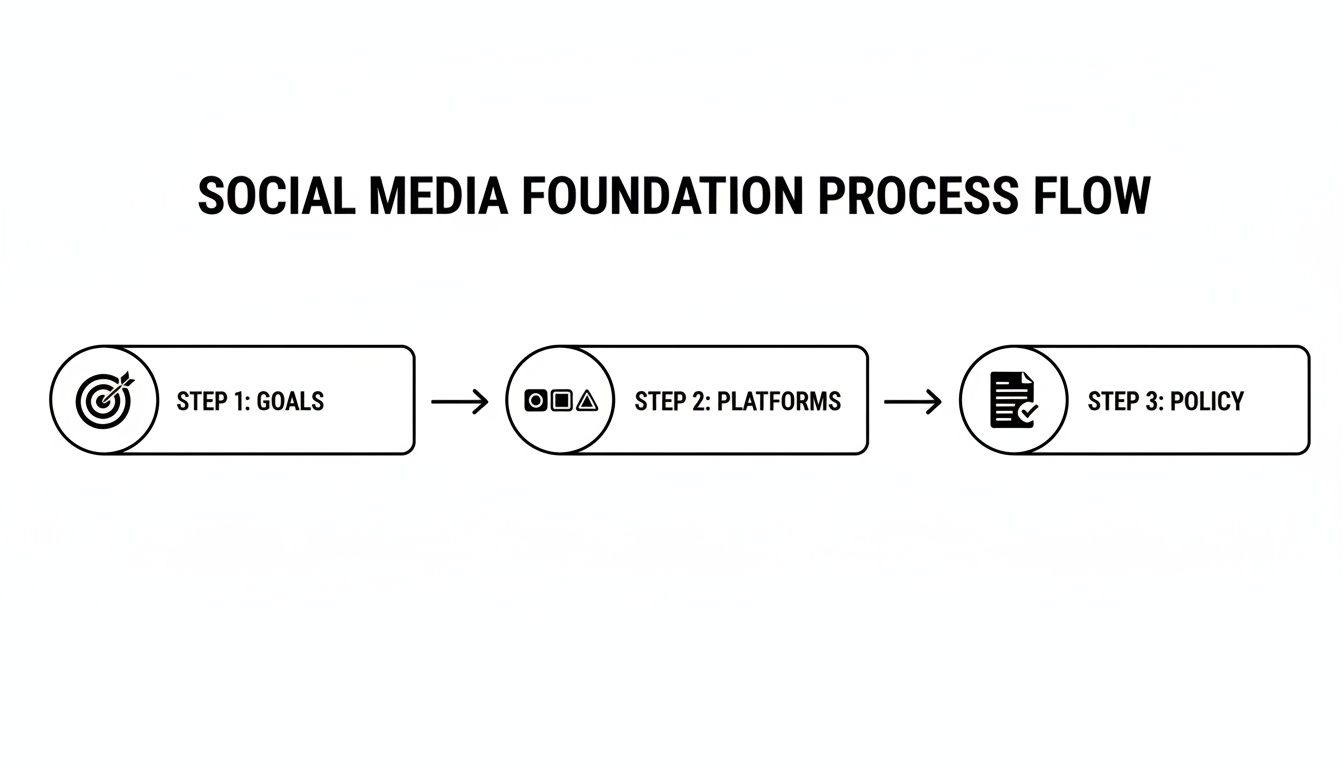
This simple flow shows the three pillars that hold up a successful and compliant social media strategy.
It all starts with defining your goals. From there, you choose the right platforms to reach those goals, and you wrap the entire operation in a rock-solid internal policy.
Set Goals That Drive Practice Growth
Likes and follower counts are nice, but they don’t pay the bills. Your social media goals need to be directly linked to real-world outcomes for your practice. What do you actually want to accomplish?
Here are a few practical examples:
Reduce patient no-shows. A simple reminder post about the importance of follow-up care can make a surprising difference.
Generate inquiries for a new service. Let’s say your dermatology clinic just invested in a new laser treatment. You could run a small campaign focused on educating people about its benefits.
Boost patient portal sign-ups. Create a series of posts highlighting how much easier it is for patients to access their records or message a nurse through the portal.
Promote a community event. Are you hosting a free flu shot clinic or a health awareness webinar? Social media is the perfect tool to drive attendance.
When you set specific, measurable goals like these, your social media efforts have a clear purpose. It also makes it much easier to see if what you’re doing is actually working.
Develop a Clear Social Media Policy
Let’s be honest: your biggest compliance risk probably isn’t a sophisticated hacker. It’s more likely a well-meaning team member who accidentally posts something they shouldn’t. That’s why a detailed social media policy is your best line of defense. This needs to be a clear, easy-to-understand document for everyone in the clinic.
Your social media policy isn’t about telling your team “no.” It’s about empowering them to engage online with confidence, knowing exactly where the boundaries are. It should spell out who can post, what they can post, and how to handle any interactions from patients.
The policy must have a zero-tolerance rule for sharing any Protected Health Information (PHI). This means no names, no photos, and no specific details that could even remotely identify a patient. It also needs a clear protocol for what to do when someone comments or sends a direct message about their health. The golden rule is simple: take it offline immediately to a secure channel like a phone call or your patient portal. To learn more about maintaining privacy in all communications, you might find these insights on HIPAA-compliant AI Receptionists helpful.
Finally, this policy should fit into your clinic’s overall security plan. It’s a good idea to brush up on https://postiz.com/blog/data-security-best-practices to make sure you’re protected on all fronts, not just social media. With a clear policy in place, you turn a major source of anxiety into a routine, manageable part of your daily operations.
Manage all your social media in one place with Postiz
Trying to be everywhere at once on social media is a fast track to burnout. A much smarter approach is to be selective. You need to focus your time and budget on the platforms where your ideal patients are already active.
This isn’t about jumping on the latest trend. It’s about a strategic choice that reflects your clinic’s specialty, the community you serve, and what you hope to achieve. A pediatric clinic’s audience hangs out in different online spaces than patients seeking an orthopedic surgeon. By choosing carefully, you’ll build a genuine community instead of just shouting into the void.
To help you decide where to plant your flag, here’s a quick breakdown of the major players.
Platform Selection Guide for Medical Clinics
Ultimately, the best platform is the one you can commit to consistently. It’s better to excel on one or two channels than to have a weak presence on five. Now, let’s look a little deeper at the top three for most medical practices.
Facebook: The Community Hub for Building Trust
For most medical clinics—especially primary care, family practices, and anyone serving a broad local area—Facebook is still the foundation. Think of it as your digital town square, the perfect place to become a familiar, trusted name in your community.
A patient scrolling their feed and seeing a timely post from your clinic about flu season isn’t just possible; it’s happening every day. Facebook is a powerhouse for healthcare marketing. In fact, healthcare companies on the platform see an average 10% weekly follower increase, a rate that beats other networks. With 98% of U.S. healthcare providers already on Facebook, it’s clear this is where patient conversations happen. You can find more insights on digital marketing in healthcare to see just how crucial it is.
Use Facebook to:
Share clinic updates: Post new hours, introduce a new doctor, or promote a community health fair.
Post educational content: Create simple graphics or short posts explaining common health questions.
Build community: Engage with comments (always in a HIPAA-compliant way) and establish yourself as a helpful local expert.
Instagram: The Visual Storytelling Platform
If your specialty has a strong visual element, Instagram is where you can truly set your practice apart. Practices in dermatology, medical aesthetics, plastic surgery, and even physical therapy can use the platform’s visual-first nature to their advantage.
Instagram is all about showing, not just telling. A high-quality photo or a well-made Reel can stop a potential patient mid-scroll and grab their attention in a way a text-heavy post never could.
Think of Instagram as your clinic’s digital portfolio. It’s your chance to showcase expertise, humanize your team, and present your practice in a modern, approachable way. The key is finding that sweet spot between professional and authentic.
For example, a physical therapy clinic could share a Reel demonstrating a simple stretch for desk workers. A med spa could create a carousel post busting common skincare myths. Just remember: you must get explicit, written consent before ever sharing patient images or “before and after” results. No exceptions.
LinkedIn: The Professional Networking and Recruiting Tool
While Facebook and Instagram face your patients, LinkedIn faces your professional world. This platform is your clinic’s public-facing resume, making it the perfect place to build credibility in the medical community and attract top-tier talent.
Your LinkedIn strategy shouldn’t be about patient health tips. It should focus on positioning your clinic and its physicians as leaders in the field.
Consider using LinkedIn for:
Sharing professional milestones: Announce when a physician speaks at a conference, publishes research, or receives an award.
Recruiting new team members: Post job openings and share content that highlights your clinic’s culture.
Networking with colleagues: Connect with other healthcare professionals and potential referral sources in your region.
By treating LinkedIn as your professional hub, you strengthen your clinic’s reputation in the industry. That authority indirectly builds patient trust and fuels your long-term growth. A strong professional brand is a major asset in today’s competitive healthcare environment.
Creating Content That Connects and Complies
The toughest part of social media for any medical clinic is walking a fine line. You have to create content that’s compelling enough to stop someone from scrolling, but also professional and compliant enough to protect patient privacy and your practice. This is where a smart content strategy becomes your most valuable tool.
Let’s move past the generic “eat your vegetables” health tips. The real goal is to build a library of content that earns trust, showcases your expertise, and puts a human face on your practice—all without getting anywhere near a HIPAA violation.
Developing Your Core Content Pillars
Instead of just posting randomly and hoping for the best, a little organization goes a long way. Ground your strategy in a few core “content pillars.” Think of these as the main themes you’ll circle back to consistently. They give your content a clear purpose and make it much easier to plan.
Here are a few content pillars I’ve seen work wonders for medical practices:
Patient Education: This is your bread and butter. Your job is to make complex medical topics simple. Think posts like, “What’s the real difference between a cold and the flu?” or “Three signs it’s time to see a dermatologist.”
Meet the Team: People connect with people, not logos. Putting a regular spotlight on your doctors, nurses, and office staff makes your clinic feel approachable and real. A quick video of a physician explaining why they chose their specialty can be incredibly powerful.
Myth-Busting and FAQs: Set your clinic up as the go-to source for reliable health information. Tackle common health myths or answer the questions you get from patients every single day. This builds authority and provides genuine value.
With these pillars in place, you’ll find that coming up with ideas gets a lot easier. For a deeper dive, you can find more social content ideas to get the wheels turning.
The Power of Video in Healthcare Marketing
Images and text are great, but video is where you really build a connection. It could be a quick 30-second tour of your clinic on Instagram Reels or a more detailed Q&A with a doctor on YouTube. Video just makes your practice feel more accessible and human.
The impact of video is undeniable. In fact, experts predict that short-form video like Reels and TikToks will account for over 50% of paid social engagement in 2026 healthcare campaigns. Patients are craving authenticity; campaigns showing real clinicians explaining a health topic build trust 2-3x more effectively than polished, corporate-style ads.
To get the most out of your video content, you have to understand what works on each platform. It’s worth exploring some proven strategies to increase TikTok video views and engagement to make sure your helpful content actually gets seen.
Sharing Patient Stories the Right Way
Patient testimonials are marketing gold, but they are also a minefield for HIPAA violations. Sharing a patient’s journey can build incredible social proof, but you absolutely must handle it with extreme care.
A patient’s story is their own. Your role is simply to provide a platform for them to share it, but only after receiving their explicit, informed, and written permission. Verbal consent is never enough.
There’s only one safe way to do this. No shortcuts.
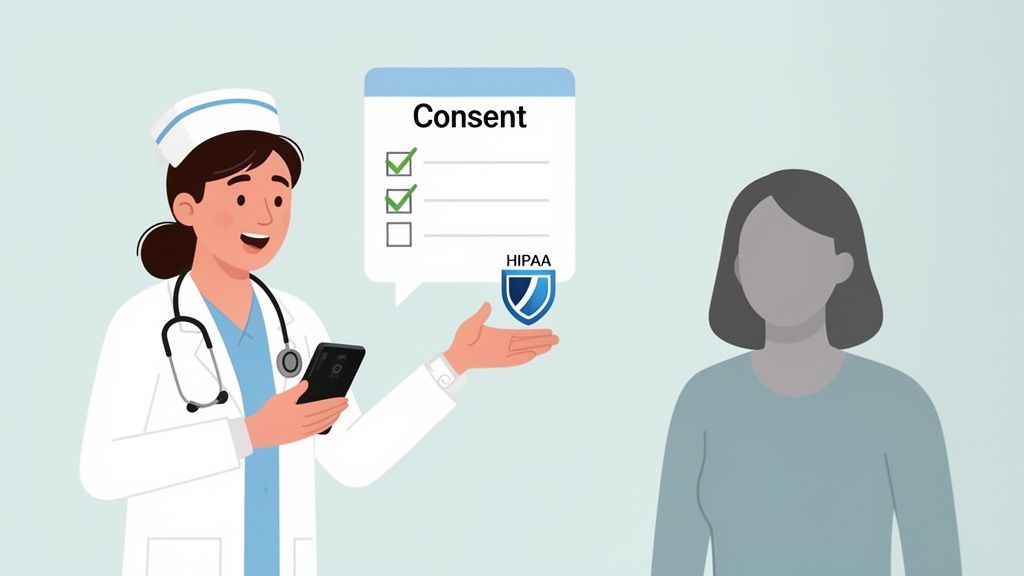
Get Written Consent: Use a specific social media consent form. It needs to spell out exactly where their story or image will be shared (Facebook, Instagram, etc.), what information will be included, and that they can withdraw their consent at any time.
Anonymize Everything: Whenever possible, don’t use a patient’s full name. Vague descriptions like “a recent patient” are usually enough. Never share details that could indirectly identify them, like their specific treatment date or a one-of-a-kind circumstance.
Get Final Approval from the Patient: Before anything goes live, send the final post—text, image, and all—to the patient for their approval. This one extra step builds massive trust and prevents any future issues.
Stick to this process religiously. It allows you to harness the power of patient stories to connect with your community while upholding the highest ethical and legal standards.
Managing Your Online Reputation and Patient Engagement
It’s easy to think of social media as just another place to post announcements, but it’s really a conversation. Every single comment, review, and message is a moment that can either build up or tear down your clinic’s reputation. How you handle these interactions is what separates a good social media presence from a great one.
The trick is to have a plan before you need it. This isn’t just about putting out fires; it’s about actively building a community, showing you listen, and turning a tough situation into a public display of your clinic’s professionalism.
Responding to Positive Feedback and Comments
When a patient leaves a glowing comment, it’s a golden opportunity. Your response can turn that one happy person into a vocal advocate for your practice. A simple “thank you” is fine, but a personalized, thoughtful reply makes a much bigger impact. The key is to acknowledge them without ever publicly confirming they are a patient.
Here are a few HIPAA-safe ways to respond that build goodwill:
Acknowledge and appreciate: “We’re so glad to hear this! Our team works hard to provide great care, and comments like yours make our day.”
Connect it to your mission: “Thank you for the kind words! Our goal is always to create a welcoming and supportive environment for everyone in our community.”
Encourage others gently: “We appreciate you sharing your thoughts. Positive feedback helps others in the community find the care they’re looking for.”
Notice what’s missing? There’s no mention of “your visit” or a specific doctor’s name. The replies are warm and genuine but general enough to protect patient privacy at all costs.
Navigating Negative Feedback with Professionalism
It’s going to happen. No matter how great your clinic is, a negative comment or review will eventually appear. Your reaction in that public forum tells everyone else watching everything they need to know about your practice. The worst thing you can do is get defensive or, even worse, ignore it.
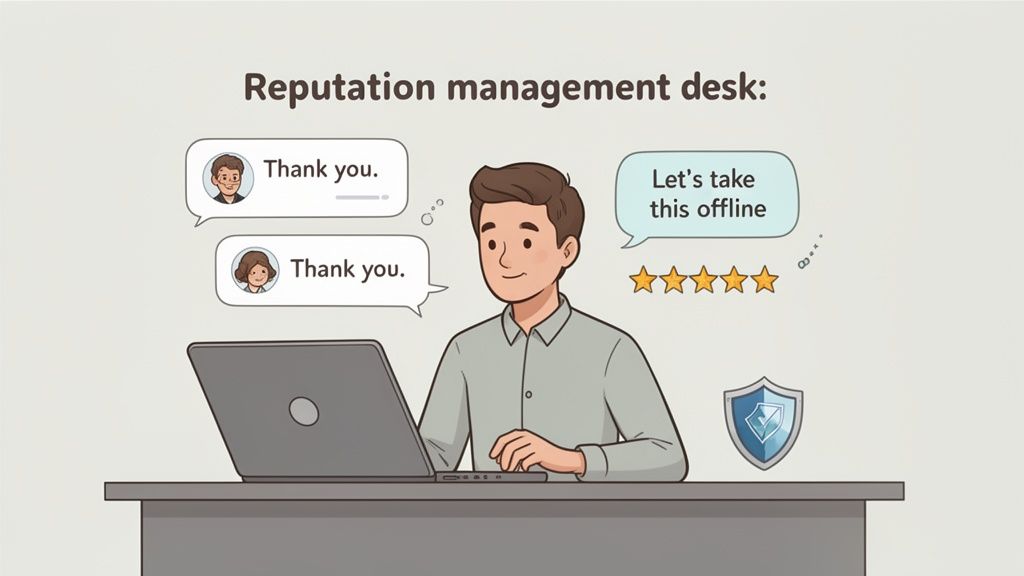
Your one and only goal in this moment is to move the conversation offline—fast. This stops a public argument before it starts and gets the issue into a private, secure channel where you can actually resolve it.
Your public response to a negative comment isn’t really for the person who wrote it; it’s for everyone else reading it. Show empathy, acknowledge their frustration, and immediately offer a private way to connect. This shows you’re transparent and truly care about making things right.
I recommend creating a simple, go-to response template that your team can adapt. It should always follow this three-part formula:
Acknowledge their feeling: “We’re sorry to hear you had a frustrating experience.”
State your commitment: “Providing excellent patient care is our top priority, and we take feedback like this very seriously.”
Move it offline: “To protect your privacy, we can’t discuss any details here. Please call our office manager, [Name], at [Phone Number] or email us at [Secure Email Address] so we can listen to your concerns.”
This simple script is your best defense. It shows you’re listening and ready to solve the problem without ever confirming the person is a patient or discussing any protected health information (PHI). Make sure everyone on your team knows this approach by heart. It can turn a potential PR nightmare into a masterclass in patient care.
Measuring What Matters for Practice Growth
It’s easy to get a good feeling from seeing a post get a lot of likes and comments. But for a medical clinic, that warm and fuzzy feeling doesn’t pay the bills. The real goal here isn’t just to be popular online; it’s to grow your practice.
An effective social media strategy is one that directly leads to more patients walking through your door and a healthier appointment schedule.
This means we need to stop obsessing over vanity metrics and start focusing on actionable metrics. A “like” is nice, but it’s passive. A click on your “Book an Appointment” link? That’s a potential patient actively raising their hand. That’s the kind of action that directly impacts your bottom line.
Identifying Your Key Performance Indicators
To actually prove your social media efforts are paying off, you have to track the right numbers. These are your Key Performance Indicators, or KPIs—the specific data points that bridge the gap between your online activity and your real-world business goals.
For most clinics, the KPIs that truly matter are the ones that signal patient intent:
Website Clicks: How many people are clicking the link in your bio or from a post to land on your website? This is often the very first step in their journey to becoming a patient.
Appointment Link Clicks: This one is even better. It tells you exactly how many people are moving from social media to your booking page.
Phone Call Clicks: Platforms like Instagram and Google Business Profile have a “Call” button. Tracking taps on this is a direct line to new patient inquiries.
Direct Message Inquiries: Keep an eye on the legitimate, non-spam messages you get asking about your services or how to book a visit.
These metrics draw a straight line from a social media post to a potential appointment. That’s how you demonstrate a real return on your investment.
Using Platform Analytics to Your Advantage
You don’t need fancy, expensive software to get started. Every major social platform comes with its own built-in analytics dashboard, and they are packed with useful information. Facebook and Instagram Insights, for example, will show you everything from post reach to engagement rates and—most importantly—clicks on the links in your profile.
Don’t just glance at your analytics—dig in. Start looking for patterns. Do video posts get more DMs? Which topics drive the most clicks to your website? This data is your roadmap for what to create next.
For example, you might discover that your “Meet the Staff” videos consistently get the most website clicks. That’s your audience telling you they want to see the human side of your practice. This kind of insight lets you confidently double down on what works and stop wasting time on content that falls flat.
Streamlining Your Workflow with the Right Tools
Trying to manage content, scheduling, and analytics across several different platforms is a recipe for burnout. This is where a good social media management tool becomes your best friend. Platforms like Postiz are designed to pull all of these functions under one roof, saving your team a ton of time while giving you much clearer data.
With a single dashboard, your team can:
Schedule content ahead of time: Plan your posts for weeks or even months out, which means you’ll maintain a consistent presence without the last-minute daily scramble.
Analyze performance in one spot: See how your content is doing across all your channels without having to log in and out of different analytics reports.
Collaborate effectively: Assign tasks, leave feedback, and approve posts in an organized workflow that helps prevent mistakes.
This level of organization is what allows you to make smart, data-backed decisions. When all your performance data is consolidated, it’s much easier to spot what’s working and fine-tune your strategy. You can learn more about building powerful reports in our guide to social media analytics and reporting.
By consistently measuring what matters, you can transform your social media from a simple communication channel into a powerful engine for growing your practice.
Common Questions We Hear from Medical Clinics
Jumping into social media for a medical practice can feel like navigating a minefield. You’ve got patient privacy, tight schedules, and the pressure to get it right. It’s no surprise that a few key questions come up again and again.
Let’s break down the most common concerns we hear from practice managers and physicians. Think of this as a candid conversation about what really matters when you’re taking your clinic online.
How Can Our Clinic Use Social Media Without Violating HIPAA?
This is, without a doubt, the number one concern. The good news is, it’s entirely manageable if you operate from one simple, unbreakable rule: never, ever share Protected Health Information (PHI) without explicit, written patient consent. That means no patient names, no photos, and no specific case details that could even remotely identify someone.
Your best defense is a rock-solid internal policy combined with regular staff training. The safest and most effective approach is to use your social media channels for general, community-focused content.
Educate: Post about seasonal health tips (think flu shots or allergy season), explain common conditions, or offer general wellness advice.
Introduce: Put a face to your practice. Feature your doctors, nurses, and administrative staff to show the human side of your clinic.
Announce: Share updates about clinic hours, new services you’re offering, or any community health events you’re hosting.
What happens if a patient asks a health question in the comments? Your only response should be to take the conversation offline. Never confirm they are a patient or give medical advice publicly. A simple, “For your privacy, we can’t discuss medical details here. Please give our office a call at…” is the perfect, compliant way to handle it.
What Type of Content Actually Works for a Clinic?
The content that truly connects is helpful, authentic, and human. Patients are looking for a trustworthy source of information, not a hard sell.
Time and time again, we see short-form video featuring your own clinicians outperforming everything else. Imagine one of your doctors taking 60 seconds to explain what to expect during a routine check-up. That single video builds more trust and authority than a dozen stock photos ever could.
Beyond video, focus on content that offers real value and demystifies the healthcare experience:
Behind-the-Scenes Glimpses: A quick video tour of your newly renovated waiting room or a “day-in-the-life” of a nurse makes your practice feel familiar and less intimidating.
Myth-Busting Graphics: Create simple “Myth vs. Fact” posts that tackle common health misconceptions in your specialty. This positions you as a knowledgeable leader and a valuable community resource.
The goal isn’t just to get likes; it’s to become the go-to health resource in your community. When people see you as a source of clear, reliable information, they’re far more likely to trust you with their care.
How Much Time and Budget Do We Realistically Need?
This really depends on the size of your clinic and what you want to achieve, but you can absolutely make an impact without a massive budget.
For a starting point, plan on dedicating 5-10 hours per week. This should be enough to handle creating a few pieces of content, scheduling them out, and checking in to respond to comments.
On the budget side, you can start small. An initial ad spend of $300-$500 per month is a great way to test the waters. Pick one specific, measurable goal for that money. For example, maybe you want to generate appointment requests for a new cosmetic procedure or fill all the slots for an upcoming health screening.
Once you see a clear return on that investment—like new patient bookings you can trace directly back to your ads—you can feel confident about scaling up your budget.
Ready to save time and streamline your entire social media workflow? Postiz provides the scheduling, analytics, and collaboration tools your clinic needs to build a powerful online presence efficiently. Manage your content calendar and prove your ROI all in one place. Explore Postiz today!
Meta opened Muse connectors to developers eleven days after launch. This guide keeps the story, explains what a Meta Muse AI connector is, and shows how to add Postiz as a custom MCP connector so Muse can schedule social media posts across 30+ platforms from one chat.
Learn how the new LinkedIn algorithm works and what boosts reach today, from expertise signals to meaningful engagement and top-performing content formats.