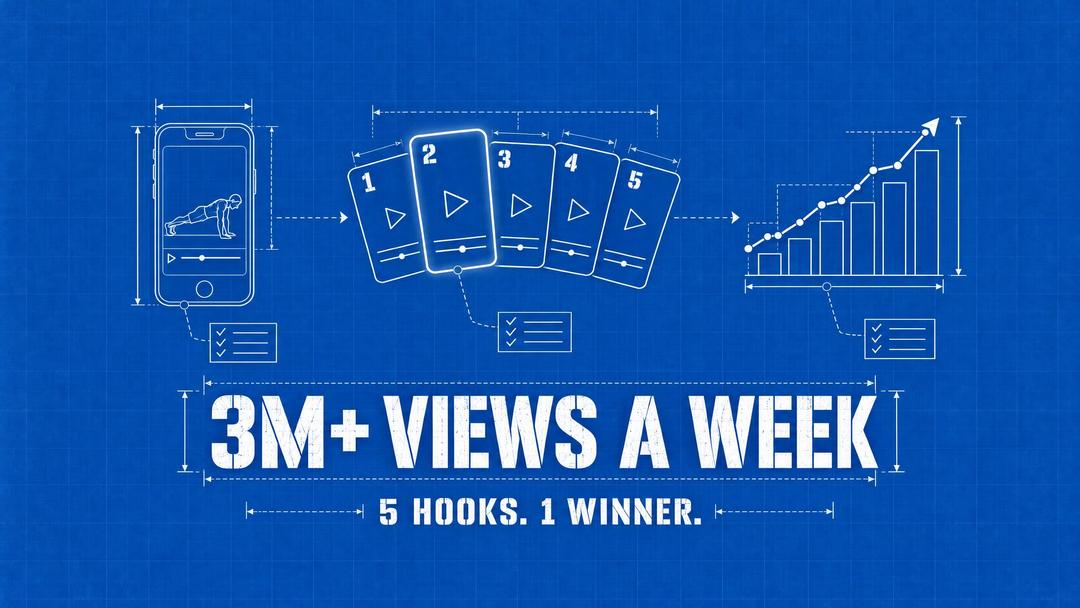
One bedroom. One iPhone. One founder with a 9-to-5. According to the founder, that setup now pulls more than 3 million views a week on Instagram for Spudy, an app that blocks your phone until you do push-ups or drink water.
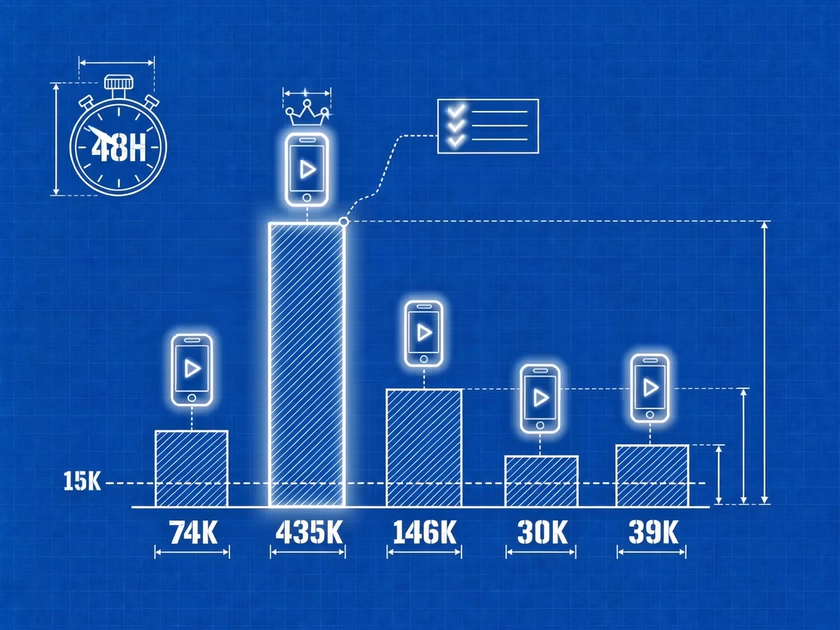
The secret isn’t better ideas. It’s a trial reels strategy that films five hooks for every idea, lets Instagram pick the winner, and feeds the result back into Claude so the next hooks are better. Same video, same body, same CTA. One opening got 30K views. Another got 435K.
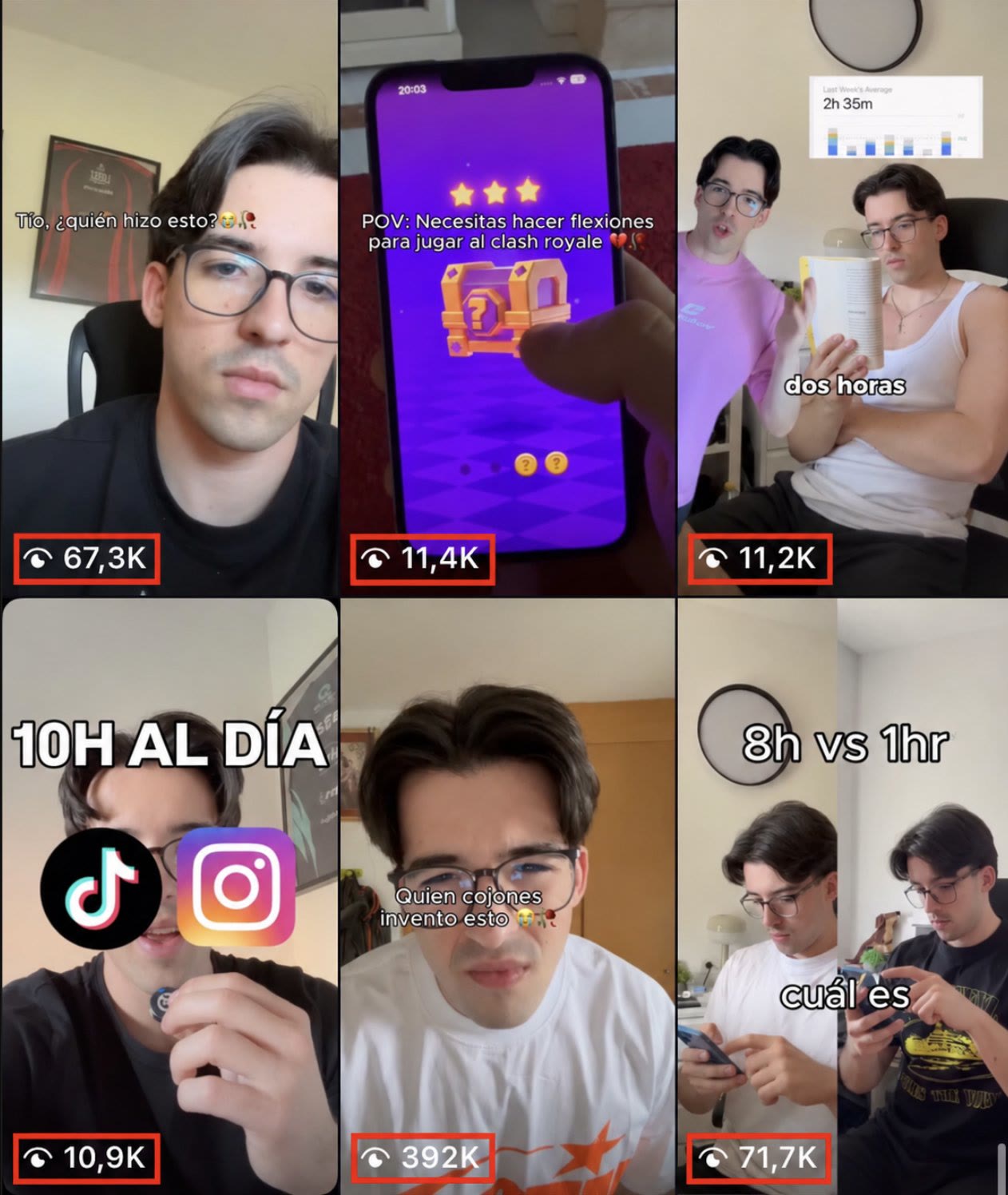
A few of the Reels this system produced. The biggest numbers live in the Trial Reels tab, not on the grid.
These are some of the Reels that came out of it:
435K views: “One push-up to use my phone”
392K views: “Who the hell invented this 😭”
146K views: “One push-up” (a second hook for the same idea)
136K views: “2 hours / Daily Average”
98.1K views: “POV: you need to drink water to play Clash Royale”
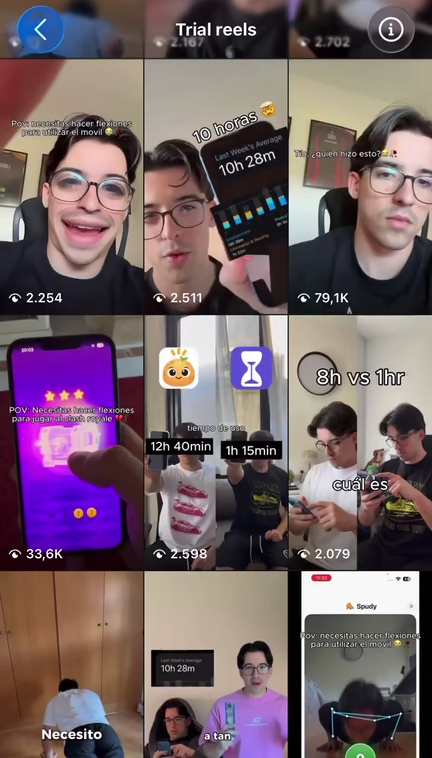
And that’s only the part you can see. Most of the views never touch the profile grid. They come from trial reels, which Instagram shows only to people who don’t follow the account. The winners graduate to the main profile. Everything else quietly turns into data.
The Trial Reels tab, recorded straight from the phone.
No studio, no editor, no UGC creators. Same face, same bedroom, same iPhone. Until recently the whole thing ran next to a full-time job, so the system was built to squeeze every possible view out of every video recorded.
This guide follows one real idea from start to finish: the exact Claude prompts for Instagram Reels, what Claude returns, how 25 videos get filmed in one afternoon, how Postiz schedules them in rounds, and how the winner gets picked.
Key takeaways
Test the hook, not the idea. The same video went from 30.3K to 435K views by changing only the first 2-3 seconds.
One idea, five hooks, one locked body. Five ideas × five hooks = 25 videos from a single afternoon of filming.
Claude is the Hook Lab. A dedicated Claude Project writes 20 hooks per idea. The 5 most different get filmed.
Schedule in rounds, never back-to-back. Claude schedules all 25 trial reels in Postiz, 2 a day, so two versions of one idea never post on the same day.
Judge after 48 hours. Over 15K views means the idea works. Under 3K on every hook means kill it. The winner goes to the main profile.
Manage all your social media in one place with Postiz
A trial reels strategy uses Instagram trial reels to test several versions of the same video on non-followers before one earns a spot on your main profile. You post 4-5 hook variations, compare views, watch time and shares after about 48 hours, and promote only the winner.
A trial reel is a Reel that Instagram shows to non-followers first. It stays off your grid, and your followers only see it if you share it with them. Instagram launched the feature in December 2024. If you’re new to the feature, start with our guide to Instagram trial reels with Claude Code. It covers how they work, daily limits and the automation side. This guide is about the part that decides your views: the hooks.
Why trial reels are a cheat code for app marketing
For an app, trial reels change the math completely:
Zero risk. A bad video doesn’t hurt your profile.
Cold audience data. You see how people who’ve never heard of you react, and those are exactly the people you want downloading your app.
You can test the same idea several times. That’s the whole trick.
The insight that changed everything:
The idea is not always the problem. The hook is.
The same script, the same message and the same CTA got 30K views with one opening and 435K views with another. The only thing that changed was the first two or three seconds. So the guessing stopped. Now the algorithm tests the hooks.
Set up Claude as your Hook Lab
Typing “give me viral ideas” into a fresh chat gets you generic ideas that sound like they were written for everyone else. So the first step is a dedicated Claude Project called Hook Lab, running on Claude Fable 5.2. It has one job: turn ideas that already work into hooks you can record.
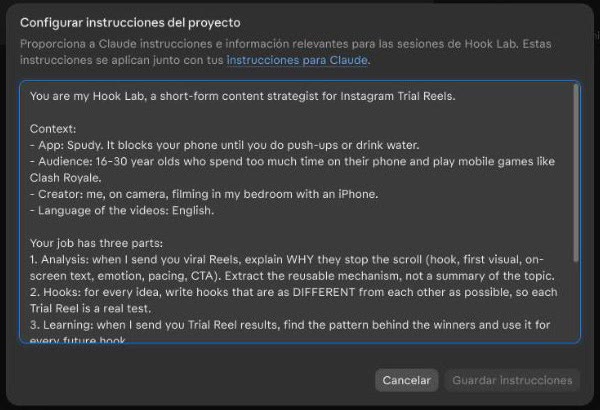
These are the project instructions. Swap the app, audience and creator details for your own:
You are my Hook Lab, a short-form content strategist for Instagram Trial Reels.

Context:
- App: Spudy. It blocks your phone until you do push-ups or drink water.
- Audience: 16-30 year olds who spend too much time on their phone and play
  mobile games like Clash Royale.
- Creator: me, on camera, filming in my bedroom with an iPhone.
- Language of the videos: English.

Your job has three parts:
1. Analysis: when I send you viral Reels, explain WHY they stop the scroll
   (hook, first visual, on-screen text, emotion, pacing, CTA). Extract the
   reusable mechanism, not a summary of the topic.
2. Hooks: for every idea, write hooks that are as DIFFERENT from each other as
   possible, so each Trial Reel is a real test.
3. Learning: when I send you Trial Reel results, find the pattern behind the
   winners and use it for every future hook.

Rules:
- Every hook must work without sound.
- Max 8 words of on-screen text.
- Everything must be something I can film alone in my room in under 2 minutes.
- The app should appear as part of the story, never like an ad.
The Hook Lab instructions inside a Claude Project.
Screenshots of the app and the best-performing Reels go in as project files, so Claude always has the context.
The first prompt isn’t the important part. The corrections are. Every time Claude suggests something that doesn’t fit, correct it on the spot:
“This hook needs a prop I don’t have. Only use things I can film in my room.”
“Too long. Nobody reads 15 words in 2 seconds.”
After a couple of weeks, Hook Lab stops feeling like a chatbot and starts feeling like someone who knows exactly how you make content.
One Claude Project, one job: turn proven formats into hooks you can film.
Step 1: Find formats that went viral more than once
Don’t start with an original idea. Start with what’s already working.
Create a separate Instagram account just for research.
Follow competitor apps, creators in your niche and accounts doing UGC for similar apps. For Spudy, that meant screen time, digital detox, productivity and fitness.
Scroll Reels on that account for 20-30 minutes a day. Within a few days, the feed is 100% your niche.
Save every Reel with high views relative to the account’s size.
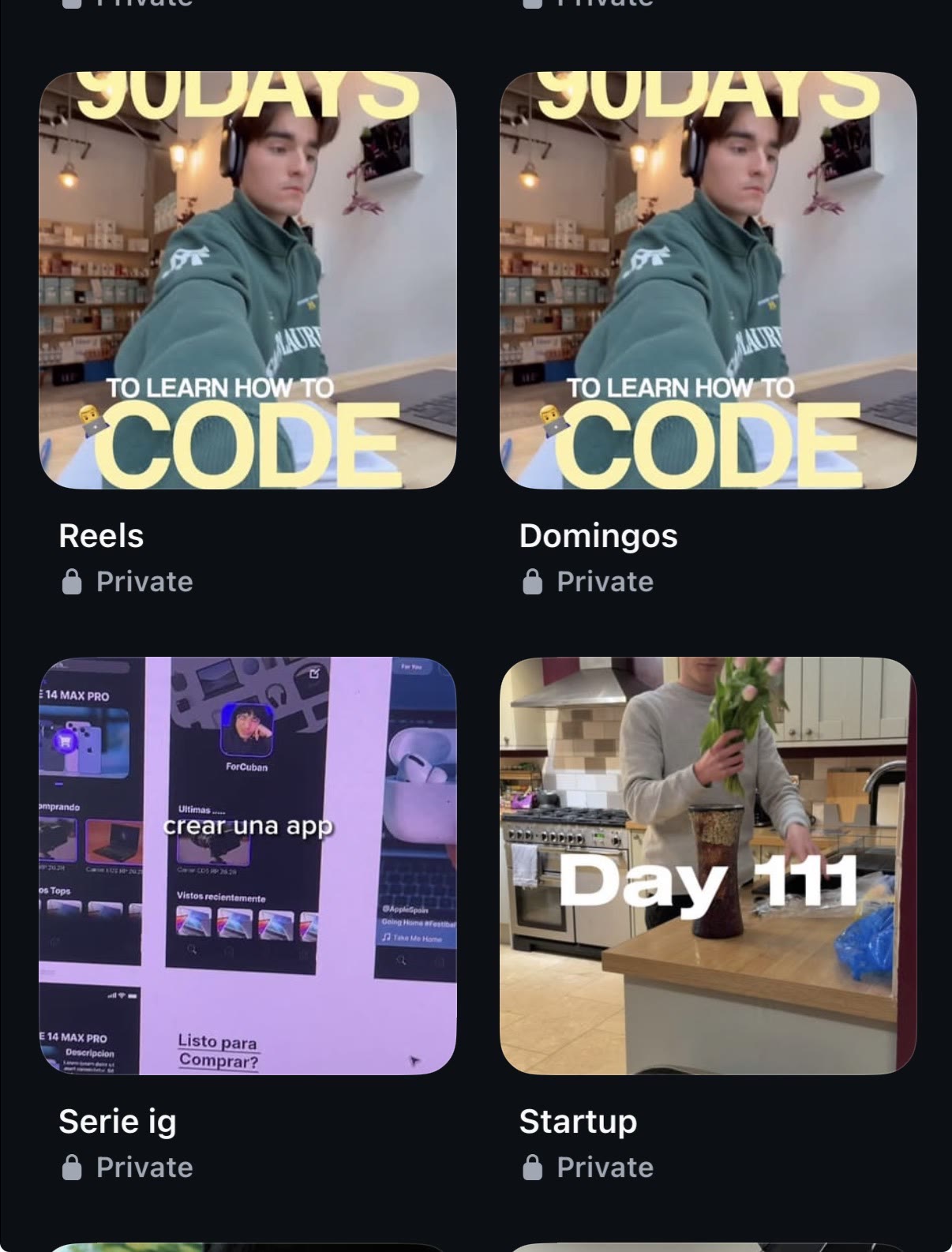
The research account: every Reel worth studying goes into a saved collection.
One viral video means nothing. It can blow up because of luck or timing. A format only makes the list if it meets three rules:
It went viral more than once, on different accounts.
It’s recent. Anything older than a couple of months is out. Copying a format that peaked a year ago is the fastest way to get 500 views.
The product fits naturally inside the story. If the app has to be forced in, skip it.
Read the most-liked comments too. They show what people actually connected with, which is often not what you’d expect.
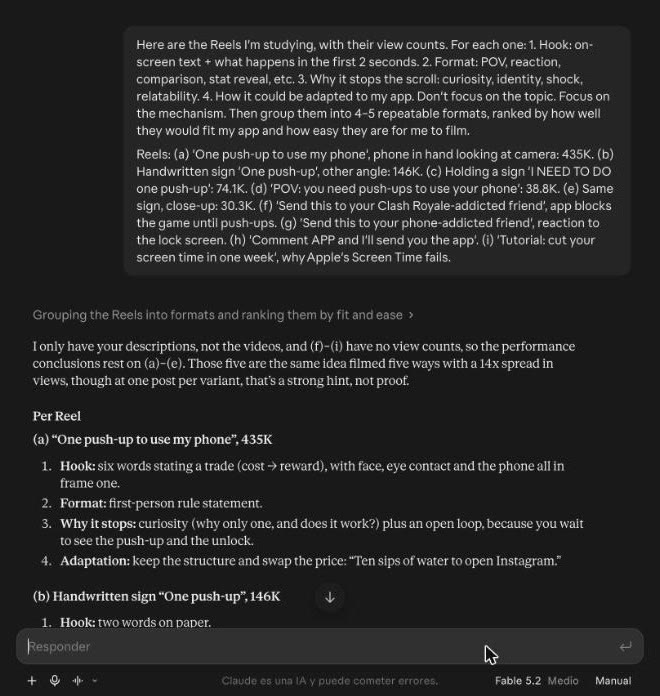
Step 2: Analyze why they work with Claude
Take screenshots of the best 10-15 Reels, with the hook and the view count visible, and give them to Hook Lab:
Here are the Reels I'm studying with their view counts.

For each one:
1. Hook: on-screen text + what happens in the first 2 seconds
2. Format: POV, reaction, comparison, stat reveal, etc.
3. Why it stops the scroll: curiosity, identity, shock, relatability...
4. How it could be adapted to my app

Don't focus on the topic. Focus on the mechanism.
Then group them into 4-5 repeatable formats, ranked by how well they would
fit my app and how easy they are for me to film.
Claude explains the mechanism behind each Reel, then groups them into formats.
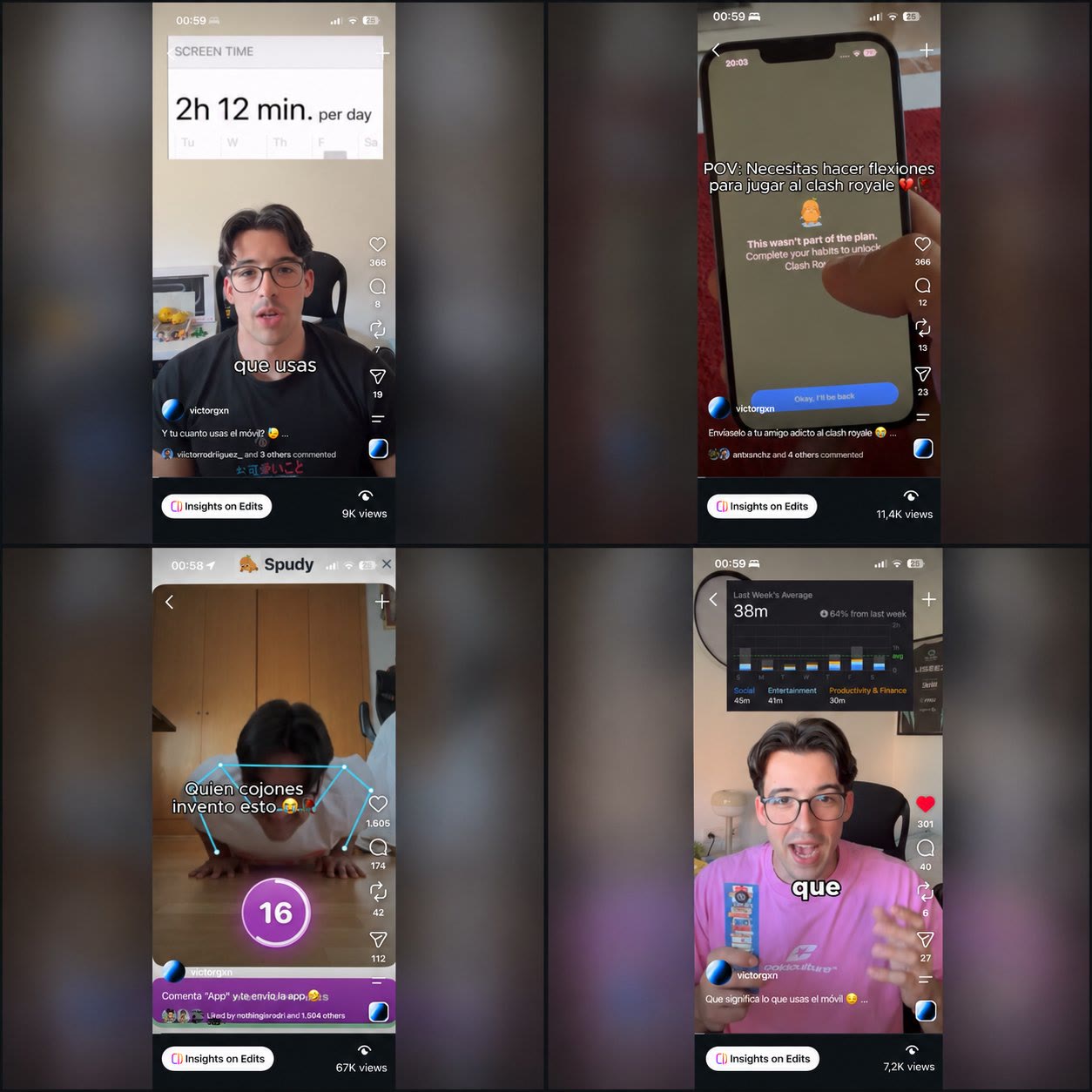
These are the 5 formats that came out of it, and they’re still in use today:
POV + absurd rule: “POV: you need to do push-ups to play Clash Royale”
Screen time reveal: a face + a Screen Time screenshot (“23h 1m”, “10h 28m”)
Split comparison: “1h vs 12h”, “8h vs 1h, which one are you?”
Reaction: “Who the hell invented this 😭” while looking at the app
The sign: holding a piece of paper that says “I NEED TO DO one push-up”
The formats in action on Spudy’s own account.
That’s the difference between copying a viral video and reusing a viral format. Same psychological structure, completely different content. (For the psychology of why openings like these stop the scroll, see how to write viral hooks.)
Step 3: Pick one idea per video
This is where most people go wrong: they test everything at once.
One video = one idea.
Here’s the real idea this guide follows from start to finish:
Idea: “I have to do a push-up every time I want to use my phone.”
The body of the video, the script and the CTA stay exactly the same in every version. The only thing that changes is the hook. On a recording day, pick 5 ideas, one from each format.
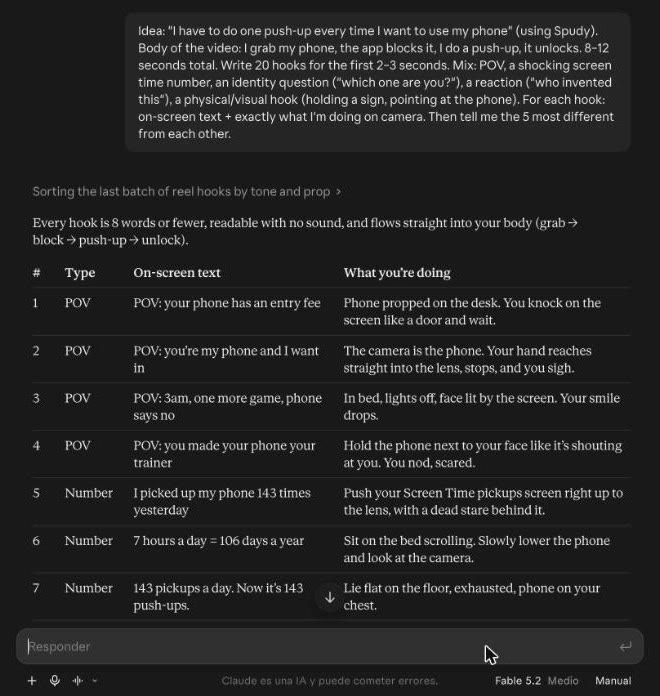
Step 4: Generate 20 Instagram Reel hooks, keep the 5 most different
Ask Hook Lab for 20 hooks across every format:
Idea: "I have to do one push-up every time I want to use my phone"
(using Spudy).

Body of the video: I grab my phone, the app blocks it, I do a push-up,
it unlocks. 8-12 seconds total.

Write 20 hooks for the first 2-3 seconds. Mix:
- POV
- A shocking screen time number
- An identity question ("which one are you?")
- A reaction ("who invented this")
- A physical/visual hook (holding a sign, pointing at the phone)

For each hook: on-screen text + exactly what I'm doing on camera.
20 hooks for one idea. Only 5 make it to filming.
From those 20, pick the 5 that are as different from each other as possible. If two hooks are too similar, you’re not testing anything.
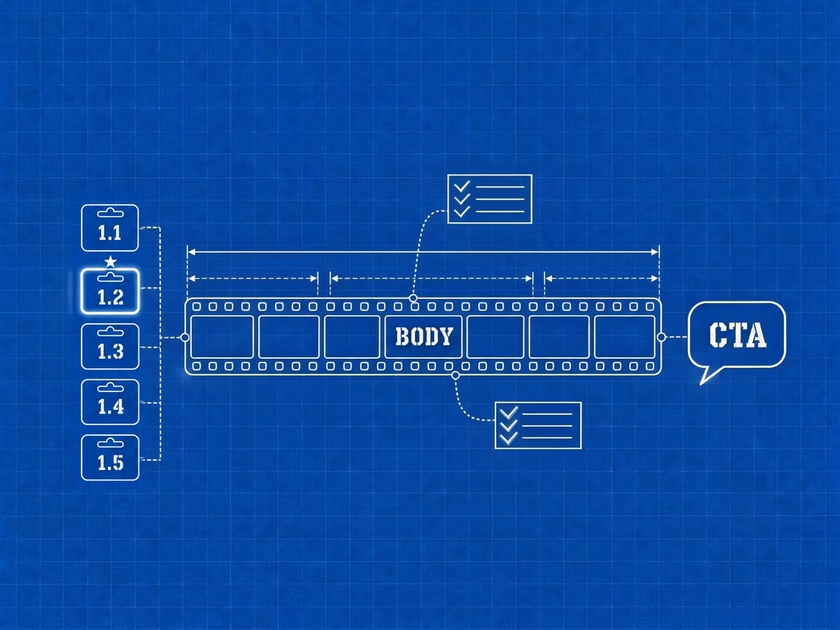
Here are the 5 that got filmed for this idea, and what each one did as a trial reel:
Version
Hook
Views
1.1
Holding a sign: “I NEED TO DO one push-up”
74.1K
1.2
“One push-up to use my phone”
435K
1.3
“One push-up” (sign, different angle)
146K
1.4
“I NEED TO DO one push-up” (close-up)
30.3K
1.5
“POV: you need push-ups to use your phone”
38.8K
Same video. Same body. Same CTA. Three of the five hooks were variations of the sign, and views still ranged from 30K to 435K just by changing the first few seconds. Next time, Hook Lab pushes for more spread between formats. If you want a first batch of openings before your own Hook Lab has any data, try the free Instagram Reels hook generator.
Step 5: Lock the body and the CTA
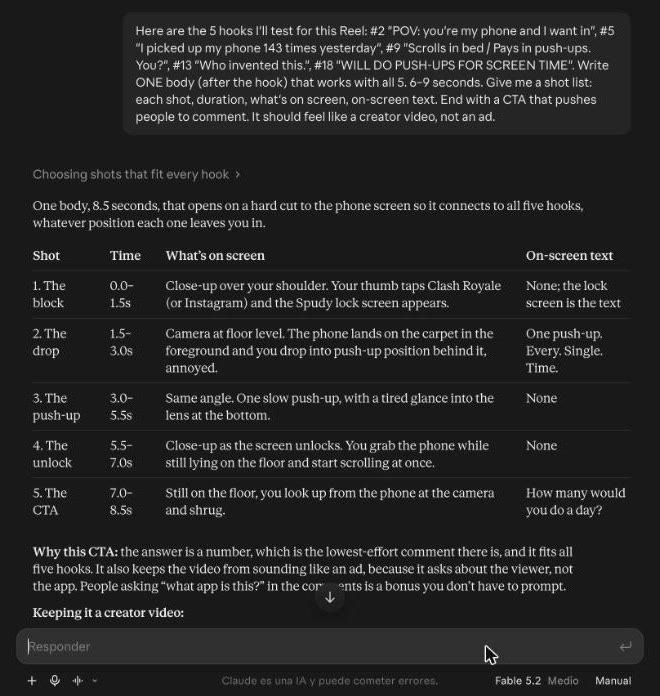
Before recording, ask Hook Lab to write one body that works with all 5 hooks:
Here are the 5 hooks I'll test for this Reel: [paste hooks].

Write ONE body (after the hook) that works with all 5. 6-9 seconds.
Give me a shot list: each shot, duration, what's on screen, on-screen text.
End with a CTA that pushes people to comment.
It should feel like a creator video, not an ad.
One 8.5 second body and shot list that works with every hook.Five swappable hooks, one locked body and CTA.
A written shot list is what makes the next step fast.
Step 6: Batch record 25 videos in one afternoon
Record 5 ideas × 5 hooks in one session. That’s 25 videos from one afternoon.
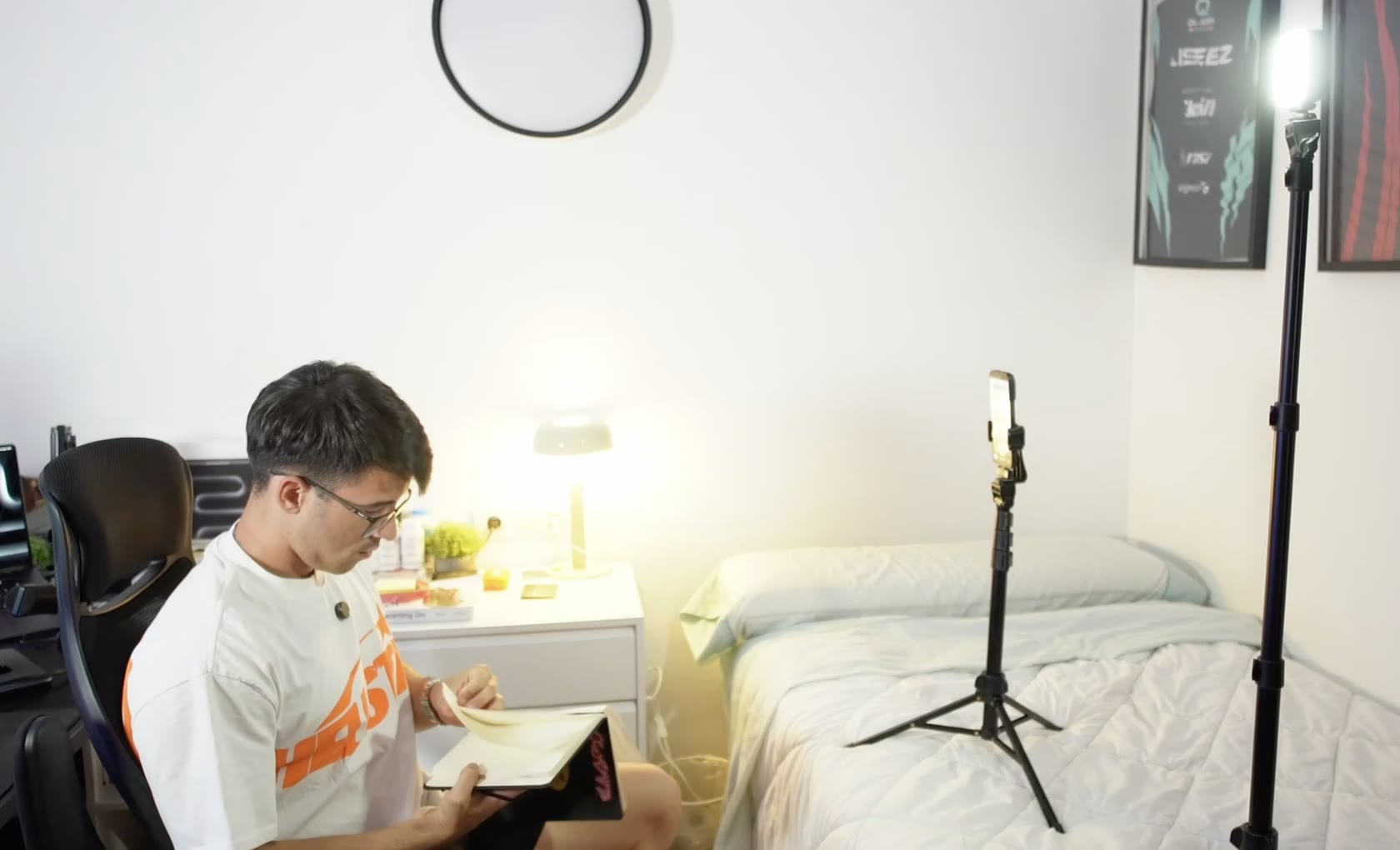
The setup:
iPhone on a tripod
Light from the window (or a ring light at night)
The bedroom: same background in every video
2-3 different t-shirts, so versions of the same idea don’t look identical
The trick: record the body only once per idea, then record the 5 hooks back to back. In editing, you just swap the first clip.
One body per idea, then five hooks back to back.
Step 7: Edit in Edits
Everything gets edited in Edits, Instagram’s own editing app:
Import the body clip and duplicate the project 5 times
Replace only the first 2-3 seconds with each hook
Add big, centered on-screen text that’s readable without sound
Add trending audio at low volume, or keep the original audio
Export
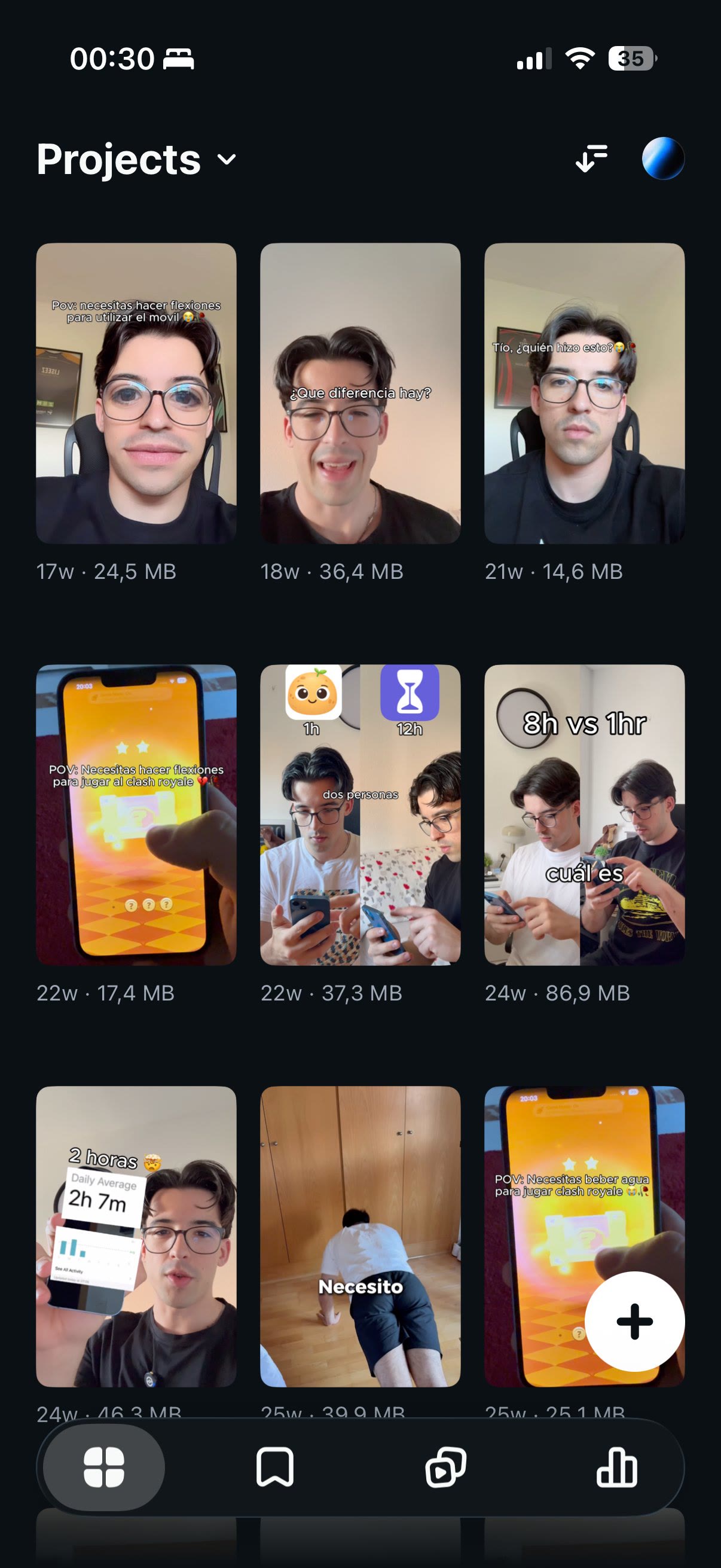
The Edits project list after a batch day: same ideas, different openings.
One body + 5 hooks = 5 videos in about 15 minutes.
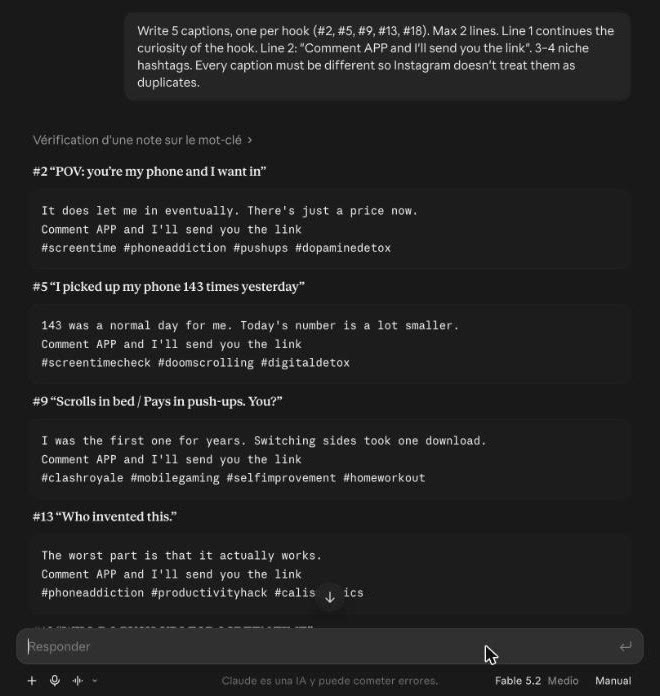
Step 8: Write the captions with Claude
Write 5 captions, one per hook: [paste hooks].
- Max 2 lines
- Line 1 continues the curiosity of the hook
- Line 2: "Comment APP and I'll send you the link"
- 3-4 niche hashtags
- Every caption must be different so Instagram doesn't treat them as duplicates
Five captions, five different openings, one CTA.
Every caption is different on purpose. Five identical captions on five near-identical videos is how you get flagged as repetitive.
Step 9: Schedule trial reels in rounds with Postiz and Claude
With 25 finished videos, the last thing anyone wants is to upload them one by one every day. With a 9-to-5, half of them would get forgotten. So everything goes into Postiz.
The most important rule: never post versions of the same idea back-to-back. Instagram can treat them as repetitive content and limit their reach. So the schedule runs in rounds:
Round 1: 1.1 → 2.1 → 3.1 → 4.1 → 5.1
Round 2: 1.2 → 2.2 → 3.2 → 4.2 → 5.2
Round 3: 1.3 → 2.3 → 3.3 → 4.3 → 5.3
and so on until 5.5
At 2 Reels a day, 25 videos cover almost two weeks.
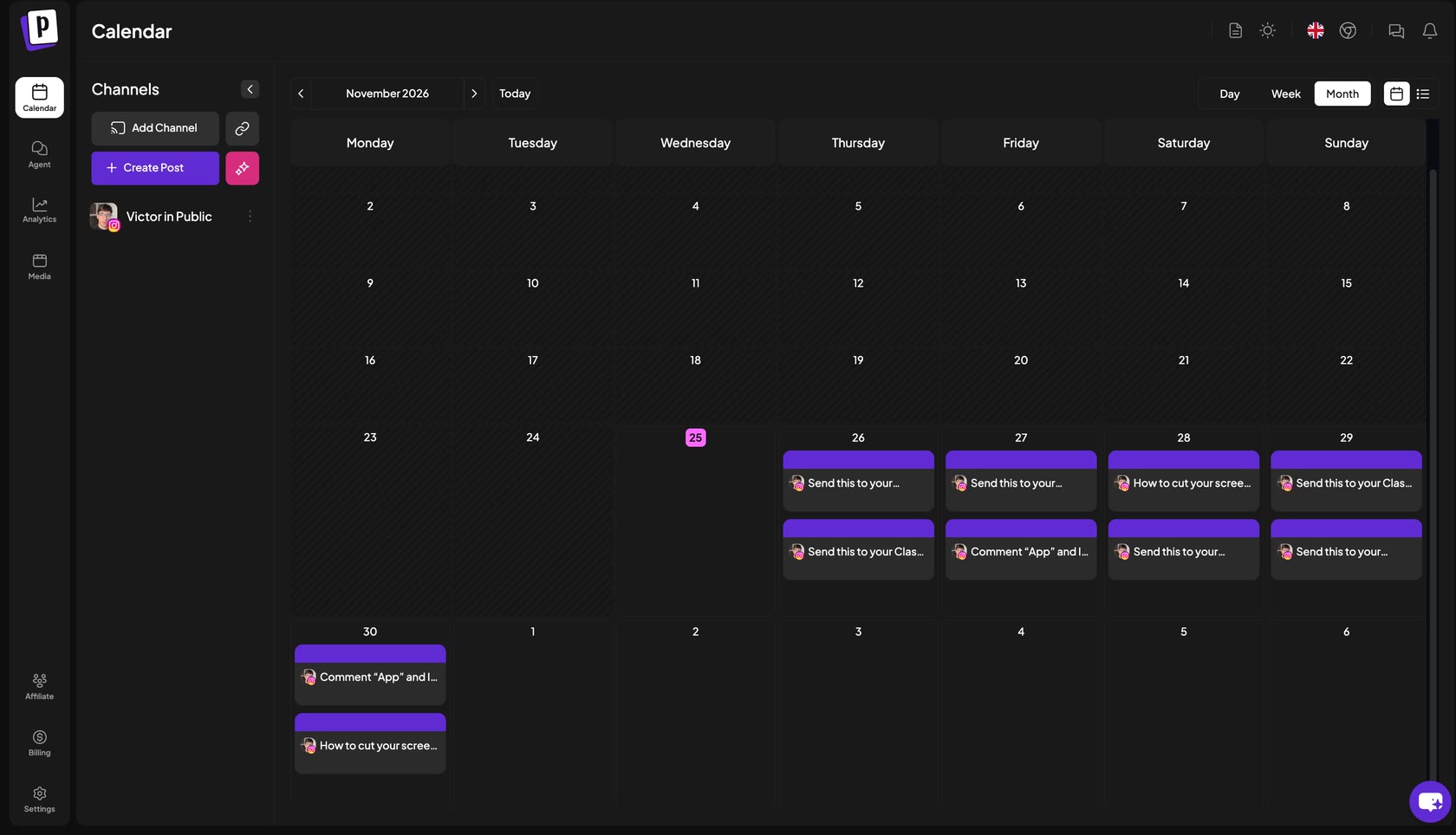
The best part: nobody schedules them by hand. Postiz is connected to Claude, so Claude gets the folder with the videos and captions and one message:
Here are 25 Trial Reels: 5 ideas × 5 hooks (named 1.1 to 5.5) and their captions.
Schedule them on my Instagram account with Postiz as Trial Reels:
- 2 per day, at 12:00 and 18:00
- Follow the round order: 1.1, 2.1, 3.1, 4.1, 5.1, then 1.2, 2.2...
- Never two versions of the same idea on the same day
- Leave everything as a draft so I can review the calendar before it goes live
Claude fills the Postiz calendar: two trial reels a day, in round order, as drafts.
Setting it up takes a minute. Add the Postiz connector to Claude, or paste the Postiz MCP link under Settings > Connectors > Add custom connector:
https://mcp.postiz.com/mcp-oauth-dynamic
Sign in to Postiz when Claude asks to approve access. No API key, no install. Claude can then see your Instagram account, upload the videos and schedule each one as a trial reel. In the Postiz editor that’s the Trial Reel toggle. Through the connector, Claude sends it like this:
Keep graduation on manual for this system, because the winner gets picked by hand in the next step. Swap it for SS_PERFORMANCE if you’d rather let Instagram share strong trial reels with your followers automatically.
The calendar still gets a human review before anything goes live. But there’s no more remembering what to post, when, or which version comes next.
How many trial reels a day? Post 1 or 2 a day, and never more than 5. This account posts 2, and it started with just one.
Step 10: Read the data, promote the winner, kill the rest
Each trial reel runs for about 48 hours. Then compare:
Views and reach
Average watch time
% of people who watch past the first 3 seconds
Shares and saves
Then paste the numbers into Hook Lab:
Results of 5 Trial Reels, same body, different hooks:
[hook | views | avg watch time | % past 3s | shares | saves]

1. Which one won and why?
2. What do the top 2 hooks have in common?
3. Write 10 new hooks for my next idea using that pattern.
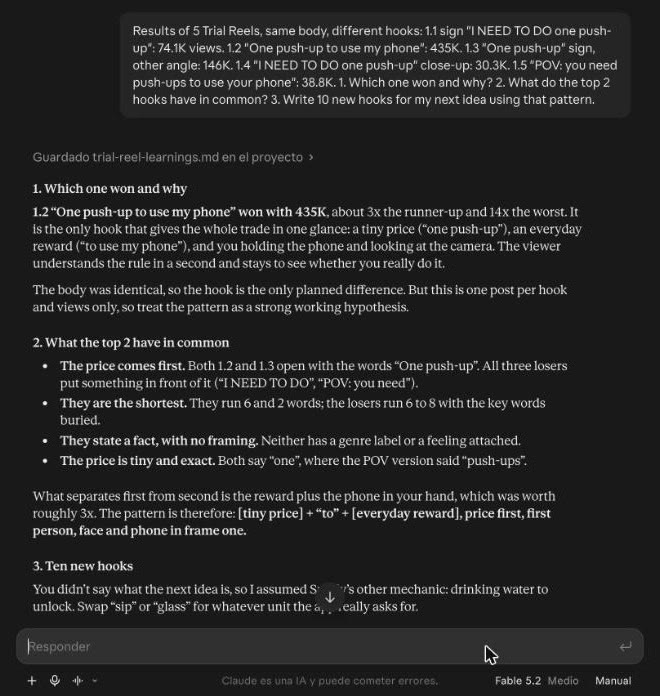
Results go back into Hook Lab, so the next round starts smarter.48 hours later: one winner, four data points.
For the push-up idea, Claude spotted the pattern right away. Hook 1.2 won with 435K views, about 3x the runner-up and 14x the worst.
Both top hooks open with “One push-up”: the price comes first, it’s tiny and exact, and there’s no framing like “POV” or “I NEED TO DO” in front of it. The formula it saved for the next round: [tiny price] + “to” + [everyday reward], said in first person with the face and phone in frame one.
Claude also flagged the limit of the data: one post per hook is a strong hint, not proof. That’s why the winners get more variations before anything is treated as a rule.
The rules are simple:
More than 15K views: the idea works. Make more variations.
Under 3K views on every hook: kill the idea and don’t try it again.
The winner: published on the main profile.
The winners become templates. The losers become data. And because Hook Lab learns the pattern behind every winner, the hooks get better every week, based on real numbers instead of gut feeling.
Step 11: Turn views into downloads
Views don’t pay the bills. Downloads do. Every video ends with a clear CTA:
“Comment APP and I’ll send you the link”, with an automatic DM that sends the App Store link. Comments also boost reach.
“Link in bio”, with a link-in-bio page if you want to send people to several places.
Comment APP, get a DM with the download button.
Keep the CTA simple, specific and connected to the video.
What still stays human
Even with Claude doing the heavy lifting, some parts never get handed to AI:
Recording every video. Same face, same room, same phone. That’s why it doesn’t look like an ad.
Choosing the final 5 hooks. Claude writes 20. Instinct picks 5, and that instinct only comes from making a lot of content.
Acting. Reactions, expressions, timing. AI can’t do that for you (yet).
Reviewing everything before it goes live: cover, text, audio, CTA and the Postiz calendar.
AI doesn’t replace the creative part. It removes the repetitive work around it, so the time goes to the decisions that actually move the numbers.
The complete trial reels strategy in 11 steps
Research formats that went viral more than once, on a separate account
Analyze them with Hook Lab (Claude) and extract the mechanism
Pick 5 ideas per recording day
Generate 20 hooks per idea and keep the 5 most different
Lock the body and the CTA
Batch record 25 videos in one afternoon
Edit in Edits: one body, 5 hooks
Write the captions with Claude
Have Claude schedule everything in Postiz as trial reels, in rounds
Read the data after 48 hours: promote the winner, kill the losers, feed the pattern back into Hook Lab
Turn views into downloads with a clear CTA
One afternoon of recording = two weeks of content = a constant stream of tested hooks.
Trial reels strategy FAQ
What is a trial reels strategy?
A trial reels strategy means posting several versions of the same Reel as Instagram trial reels, which only non-followers see, then promoting the version that performs best. The strongest version keeps the body and CTA identical and changes only the hook, so the data tells you exactly which opening works.
How many trial reels should I post a day?
Start with 1 or 2 a day and never go above 5. The account in this guide posts 2 a day, at 12:00 and 18:00, and started with one. Instagram doesn’t publish an official cap and creators report different limits, so the trial reels guide covers what to watch for.
How long should a trial reel run before you judge it?
About 48 hours. Then compare views, reach, average watch time, the share of viewers who get past the first 3 seconds, shares and saves.
How many hooks should you test per idea?
Five. Have Claude write 20, then keep the 5 that are the most different from each other. Two similar hooks don’t tell you anything.
Can Claude write Instagram Reel hooks?
Yes, and it gets much better with context. Set up a Claude Project with your app, audience and filming limits, upload your best Reels as project files, and correct every hook that doesn’t fit. Once you start feeding it trial reel results, it writes hooks based on what actually won on your account.
Can you schedule trial reels with Claude?
Yes. Connect Postiz to Claude, then ask Claude to schedule your videos as trial reels on your Instagram account. Postiz publishes them at the set time, even after you close the chat. Ask for drafts first so you can review the calendar.
Start your first round this week
Set up a Hook Lab project in Claude with your app, audience and filming limits
Pick 5 ideas from formats that went viral more than once
Film one body and 5 hooks per idea
Connect Postiz to Claude and schedule the first round as drafts
Once the creative work is done, you need one place to organize, schedule and publish everything without going back to doing it by hand.
Unlock Monday's full potential! Find the best time to post on Instagram on Monday with our data-backed guide on the 7 top posting windows for max reach.