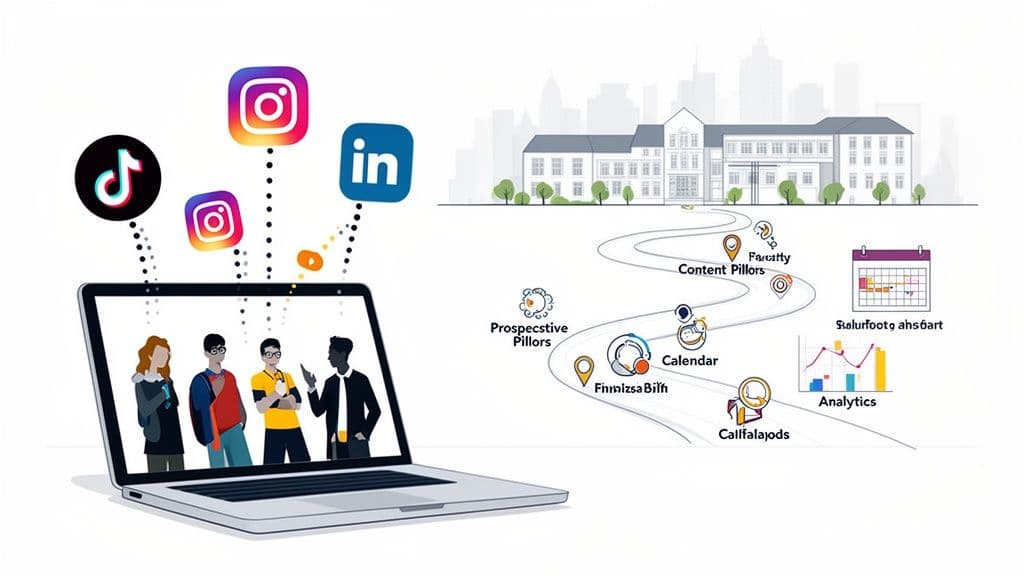
Social media isn’t just part of a university’s marketing mix anymore. It’s where enrollment decisions begin.
For today’s students, especially Gen Z, platforms like TikTok, YouTube, and Instagram are often the first stop in their research journey. This is where they explore campus life, hear from real students, and decide whether a university feels like the right fit long before visiting an admissions page.
Winning on social media means moving beyond announcements and polished brochures. Universities that succeed build real communities by highlighting student voices, academic culture, and authentic campus experiences. This guide shows how to do exactly that and turn social media into a true enrollment driver.
Why Social Media Is the Most Important Enrollment Channel for Universities
The old marketing playbook? It’s gathering dust on a shelf. College fairs and slick brochures just don’t have the pull they used to. Today, the journey to enrollment starts scrolling through TikTok, YouTube, and Instagram—long before a student ever clicks over to your official website.
This isn’t a fleeting trend. It’s a fundamental shift in how young people find and evaluate universities. They aren’t just comparing programs. They’re looking for a place they can belong.
Students want to see what life on campus is really like, hear directly from current students, and engage with content that feels real, not overly polished.
For university marketers, this means social media has to be the core of your recruitment strategy, not just a side project.
Social Media Is the New Search Engine for Prospective Students
Think of YouTube and TikTok as the search engines for the next generation of students. A high school senior isn’t typing “best engineering programs” into Google.
They’re searching “day in the life of an engineering student” on YouTube, looking for a raw, peer-to-peer perspective that a polished viewbook could never provide.
A university’s social media presence is now a direct reflection of its brand and culture. If your channels feel stale or overly corporate, prospective students will assume your campus is, too. Authenticity isn’t just a buzzword; it’s the currency of trust with Gen Z.
To succeed here, your strategy needs to be built on three clear pillars:
Deep audience understanding: You can’t talk to a high school junior the same way you talk to a mid-career professional exploring a master’s program.
Authentic content: Lean into user-generated content, student takeovers, and behind-the-scenes moments that build trust.
Meaningful metrics: Go beyond follower counts and track metrics tied directly to applications and enrollment.
Mastering these pillars is how you show the world what makes your institution special. A powerful social media presence is essential for increasing brand awareness and making sure you don’t get lost in the noise. This guide will walk you through a framework for building a social strategy that doesn’t just reach prospective students, but turns them into proud members of your campus community.
Manage all your social media in one place with Postiz
Understanding University Audiences and How They Use Social Media
If you treat your entire university community as one audience on social media, you’re going to get tuned out fast. Sending the same message to a high school junior, a PhD candidate, and a 50-year-old alum just doesn’t work. The secret to great university social media is knowing exactly who you’re talking to and what they care about.
The same audience-first approach applies across regulated and trust-based industries. For example, our guide on social media marketing for mental health clinics shows how tailoring tone, content, and platforms to audience expectations builds credibility and engagement.
A generic post is just noise. But a targeted one? That feels like a real conversation, and that’s how you build connections that lead to applications, engagement, and even donations.
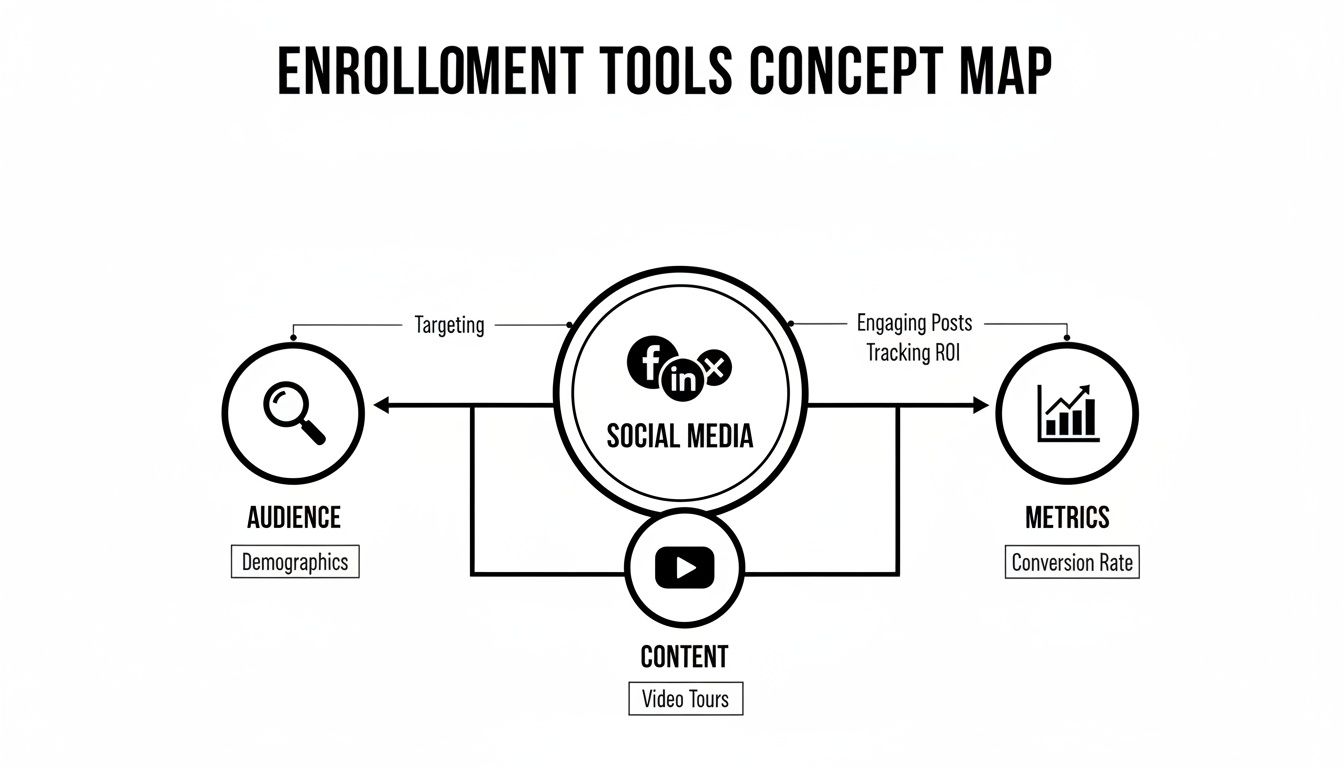
The map below really drives this home—it shows how everything starts with your audience. The people you’re trying to reach dictate the content you create and the metrics you use to see if it’s actually working.
Let’s break down the major groups you’ll be engaging with.
Reaching Prospective Undergraduate Students on TikTok and Instagram
This is your largest and most important audience for enrollment growth.
High schoolers, especially Gen Z, aren’t just shopping for a degree—they’re looking for a home for the next four years. They want to see the real, unfiltered campus experience, not the glossy version from the viewbook.
You have to meet them where they are, and that means visual, fast-paced platforms.
TikTok & Instagram Reels: This is their world. They want to see “day in the life” clips, student takeovers of the university account, and authentic peeks into dorms, dining halls, and campus traditions. A stuffy, corporate-style video will get scrolled past without a second thought.
YouTube: Don’t count it out. While they love short-form video, they’ll head to YouTube for the deeper dive. Think student-led campus tours, vlogs about specific academic programs, and casual Q&A sessions with current students.
Your content here needs to feel energetic and relatable. The goal is simple: help them picture themselves here.
How to Attract Graduate Students Through LinkedIn and YouTube
Recruiting for grad programs is a completely different ballgame. This audience is older, laser-focused on their careers, and sees a master’s or PhD as a serious investment. They care far less about the social scene and far more about research opportunities, faculty reputation, and what your degree will do for their career trajectory.
Trying to reach a potential MBA candidate with the same TikTok strategy you use for a 17-year-old is a waste of everyone’s time. For this group, it’s all about career advancement, which makes a platform like LinkedIn your best friend.
Their social media habits reflect this professional mindset.
LinkedIn: This is ground zero for grad student recruitment. It’s the perfect place to share faculty publications, spotlight alumni career wins, and post in-depth details about your programs.
YouTube: They’re on YouTube too, but they’re looking for different things. Think webinars with department heads, virtual info sessions about the application process, and testimonials from current grad students discussing their research and career support.
Here, the message is all about ROI. How will this degree pay off? This audience responds to data, credibility, and direct access to the people who can advance their careers.
Using Social Media to Build Long-Term Relationships With Alumni
Your alumni are your most powerful advocates. They’re a built-in network that can mentor current students, burnish the university’s reputation, and become lifelong supporters. The goal on social media is to keep them feeling connected, proud, and part of the community long after they’ve graduated.
Your content should play on nostalgia while also keeping them in the loop.
Facebook & LinkedIn: These platforms are fantastic for reaching alumni across different generations. This is the spot for throwback photos from the archives, celebrating major alumni accomplishments, and sharing updates on new campus developments.
Instagram: Use strong visuals to tell stories of alumni success, promote regional networking events, and get them excited for homecoming.
The key is to give them value beyond just asking for a donation. Make them feel like they’re still an essential part of the university family. If you want to get really granular with this, our guide on how to create detailed buyer personas gives you a solid framework for building out these profiles.
University Audience Segmentation and Platform Strategy
To tie it all together, think about your strategy with a table like this. It helps ensure you’re matching the right message and platform to the right audience.
Audience Segment
Primary Platforms
Key Motivations
Effective Content Pillars
Prospective Undergrads
TikTok, Instagram, YouTube
Campus life, social belonging, finding their "fit," affordability
Student takeovers, "Day in the Life" videos, campus tours, explainer videos on financial aid & admissions
Graduate Students
LinkedIn, YouTube, X (Twitter)
Career advancement, research opportunities, faculty reputation, ROI
Faculty research highlights, alumni career spotlights, program-specific webinars, virtual info sessions
Current Students
Instagram, TikTok, X (Twitter)
Campus events, academic deadlines, resources, building community
Event reminders, club spotlights, wellness tips, important announcements, user-generated content features
Alumni
Facebook, LinkedIn, Instagram
Nostalgia, networking, staying connected, school pride, giving back
Professional development, research promotion, internal news, industry recognition
Sharing publications, conference presentations, staff achievements, important university updates
Parents & Families
Facebook
Student success, safety, university news, value of investment
Key academic dates, parent weekend info, stories of student achievement, messages from university leadership
Mapping it out this way prevents you from just “posting stuff” and moves you toward a strategic plan where every piece of content has a clear purpose and a specific audience in mind. It’s the foundation for everything else you’ll do.
Creating a Social Media Content Strategy for Universities
Okay, so you know who you’re talking to. Now comes the fun part: figuring out what to say and where to say it.
This is where a clear content and channel strategy separates universities that get results from those simply posting for visibility. It’s all about being intentional.
You can’t be everywhere at once, and honestly, you shouldn’t try. The goal is to focus your energy on the channels where your different audiences actually spend their time. A high school junior looking at undergrad programs isn’t scrolling LinkedIn for white papers, and an MBA candidate isn’t likely to be won over by a TikTok dance challenge. Matching the message to the medium is everything.
Choosing the Right Social Media Platforms for Higher Education
Since your team’s time and budget aren’t infinite, you have to be smart about where you invest your efforts. The data is clear: social media is a huge part of the decision-making process for students. In fact, nearly 7 in 10 prospects say seeing frequent social media recommendations makes them more likely to consider a university program.
When it comes to research, YouTube is king, with 57% of prospective students using it. LinkedIn isn’t far behind at 49%, and Facebook still holds strong at 43%. These platforms are more than just social spaces; they’re powerful recruitment tools.
So, let’s break down the heavy hitters for universities:
YouTube: This is your home for longer, more immersive video. Think in-depth campus tours, detailed program explainers from faculty, and student testimonial videos that give prospects a genuine feel for your school.
Instagram: Treat this as your university’s visual portfolio. Reels are perfect for quick, vibrant clips of campus life, while Stories are your go-to for interactive Q&As, event promotions, and behind-the-scenes content.
TikTok: The vibe here is authentic and fun. This is the place for raw, unpolished “day in the life” vlogs, student takeovers, and jumping on relevant trends in a way that shows off your university’s unique personality.
LinkedIn: This is your professional powerhouse. It’s non-negotiable for graduate program recruitment, sharing groundbreaking faculty research, and highlighting the impressive career paths of your alumni.
Building Authentic Content Pillars That Attract Students
Forget the glossy, overproduced marketing materials of the past. Today’s students can spot an ad from a mile away, and they crave authenticity above all else. Your content needs to feel less like a commercial and more like a real window into life on campus. This is why raw, user-generated content (UGC) and student-led vlogs consistently crush polished institutional ads—they build trust.
We see the same pattern in other trust-driven fields. In social media marketing for chiropractors, authentic storytelling and educational content consistently outperform polished ads, just as they do in higher education.
Prospective students don’t want to be sold to; they want to connect. They’re looking for proof that your university is a place where they can thrive, learn, and belong. Your content must provide that proof.
To build a content strategy that actually connects with people, ground it in these essential pillars:
Student Experience & UGC: This is your secret weapon. Actively encourage and showcase content created by your current students. Run hashtag campaigns during big campus events, host photo contests, and make student takeovers a regular feature on your Instagram Stories.
Academic & Faculty Spotlights: Show off the brilliant minds that make your university what it is. Short video interviews with professors discussing their passion projects or a cool class they teach can highlight academic rigor in a totally accessible, human way.
Campus Life & Traditions: What makes your university your university? Is it a quirky annual event? A beloved campus landmark? Showcase the traditions, clubs, and moments that build your community and help prospects truly picture themselves there.
Developing a Video Strategy That Drives Student Interest
In today’s social media world, video isn’t optional, especially on a platform like YouTube. A key part of a winning content strategy is knowing how to make your video content work for you. That means understanding the nuts and bolts, so learning from a guide on how to optimize a YouTube channel for rapid growth can give you a serious leg up and ensure your videos find the right audience.
Think about how different video formats serve different purposes:
Short-Form (Reels & TikToks): These are built for grabbing attention and showing off your school’s personality. Think quick-cut campus tours, myth-busting admissions facts, or energetic clips from a packed student section at a game.
Long-Form (YouTube): This is where you tell a deeper story. It’s perfect for full “day in the life” vlogs, detailed financial aid explainers with the experts, or panel discussions with current students from a specific major.
When you ground your strategy in the right channels and authentic content pillars, you stop just posting and start building genuine connections. This is the approach that doesn’t just attract followers—it attracts future students who are already excited to join your community.
Building an Efficient Social Media Workflow for University Teams
Let’s be honest: even the best social media strategy fails if your team is constantly putting out fires.
Using an Instagram post scheduler allows university teams to plan content in advance, maintain consistency during busy admissions cycles, and avoid last-minute posting stress across multiple departments.
Without a smooth, repeatable system, even the best content ideas get lost in the chaos of last-minute scrambles and missed deadlines. An efficient workflow is what turns your strategic goals into real, consistent, high-quality posts.
This is about moving your social media management from a reactive mess to a proactive, well-oiled machine. It’s about having one single source of truth where your team can plan, create, approve, and schedule content—without the endless email chains and version control nightmares.
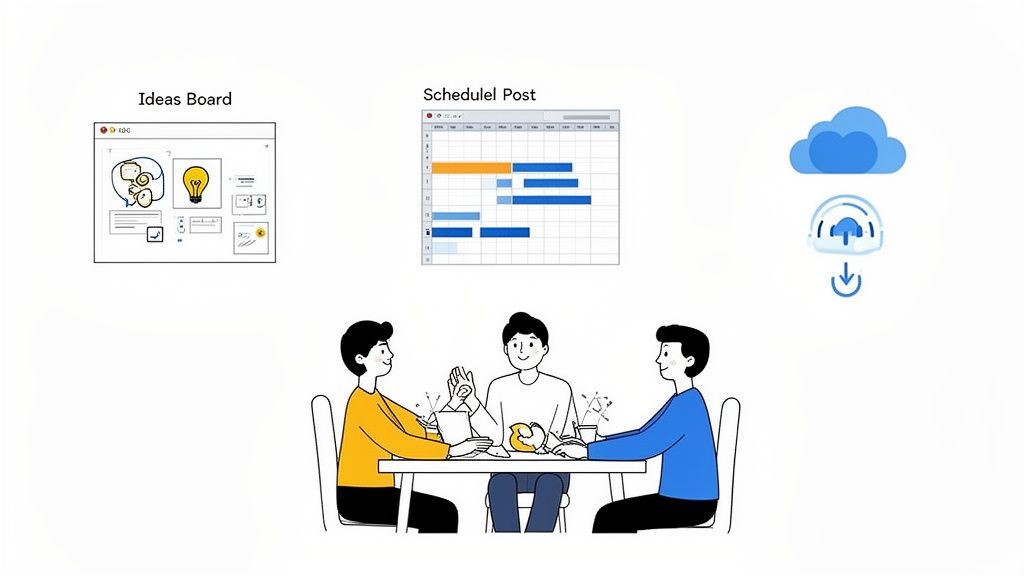
A shared digital space like this is the key. It gets everyone on the same page about what’s going out and when, making collaboration so much simpler.
How to Create a Repeatable Content Pipeline
First things first, you need to map out your content’s journey, from a simple idea to a published post. This isn’t just a task list; it’s a clear process that defines who does what and when. For a university, a solid pipeline usually involves a few key stages:
Ideation: Sourcing ideas from all corners of campus—think student life events, new faculty research, or upcoming admissions deadlines.
Creation: This is the hands-on part: writing the copy, designing the graphics, and editing the video clips.
Review & Approval: Getting the green light from the right people, whether that’s department heads, the alumni association, or legal.
Scheduling: Loading the finished, approved content into a management tool so it’s ready to go live.
Engagement: Once a post is live, the work isn’t over. This stage is all about monitoring comments and responding to questions.
By clearly defining these stages, you get rid of the guesswork and give everyone clear ownership. This is crucial for keeping things consistent, especially if you’re managing accounts for multiple departments. If you want to dig deeper into setting this up, our guide on https://postiz.com/blog/content-workflow-management is a great place to start.
Centralize Your Editorial Calendar
Your editorial calendar is the heart of your entire workflow. Think of it as more than just a schedule—it’s a strategic document that aligns your content with critical university dates and marketing campaigns. Ditching scattered spreadsheets for a central platform is an absolute game-changer.
An editorial calendar isn’t a to-do list; it’s a strategic asset. It ensures your social media activity is purposeful, timely, and aligned with your university’s broader enrollment and engagement goals.
Using a tool like Postiz gives your team a bird’s-eye view of the entire month or quarter. You can map out major themes, assign tasks, and make sure you have a healthy mix of content for each audience segment.
Here’s how to build it out:
Key Dates: Start by plugging in the non-negotiables: academic deadlines, admissions events, holidays, and campus traditions.
Campaigns: Next, layer in your specific recruitment or alumni engagement campaigns.
Content Pillars: Finally, make sure you’re regularly hitting all your content pillars, from student life to faculty research.
Streamline Collaboration and Approvals
One of the biggest bottlenecks for any university social media team? The approval process. I’ve seen a single post need sign-off from admissions, an academic department, and the central marketing office. This is where a unified platform becomes your best friend.
Instead of chasing approvals through email, you can manage the entire process right where the content lives. Team members can leave feedback directly on a post draft, tag the right people for approval, and see a full revision history. This doesn’t just save a ton of time; it also creates a clear audit trail.
To speed things up even more, look for ways to boost your team’s productivity during the creation phase. For instance, learning how marketers can use voice typing to write faster can be a surprisingly effective trick for drafting copy more quickly. By adopting better tools and smarter habits, you’ll keep the content pipeline full without ever sacrificing quality.
Measuring What Matters for Student Enrollment
Let’s be honest. Likes, shares, and follower counts feel good, but they don’t pay the bills. If you want to prove the real-world value of your social media efforts, you have to look past those surface-level vanity metrics and connect your work directly to what really matters: student enrollment.
Your university’s leadership isn’t losing sleep over your engagement rate. They want to know how your team is impacting applications and, ultimately, tuition revenue. When you can walk into a meeting and clearly show how social media is driving new students through the door, you’re not just managing an account anymore—you’re a key part of the university’s growth engine.
From Clicks to Applications
The first step is getting your tracking in order. This isn’t optional. It’s about connecting the dots between a prospective student seeing one of your posts and actually filling out an application.
Your best friends here are simple but powerful tools. You absolutely need to use UTM parameters on every single link you share. These little tags tell your analytics exactly where your website traffic is coming from—which platform, which campaign, and even which specific post convinced someone to click.
Beyond that, installing a tracking pixel (like the Meta Pixel or TikTok Pixel) on your application portal and “request for information” pages is non-negotiable. This is how you’ll know that a user who saw your ad on Instagram actually went on to complete an application. Without this foundation, you’re just guessing.
KPIs That Actually Prove Your Worth
Once you have proper tracking in place, you can start measuring the metrics that make leadership sit up and listen. Forget reporting on reach and impressions alone; it’s time to focus on the numbers that tell a clear financial story.
Cost Per Inquiry (CPI): How much does it cost to get a prospective student to fill out a “request for information” form? This is your first real indicator that you’re generating qualified leads efficiently.
Cost Per Application (CPA): Taking it a step further, what’s the price tag for getting a student to submit a full application? This metric ties your social ad spend directly to the admissions pipeline.
Cost Per Enrolled Student (CPES): This is the holy grail. It tells you exactly how much you spent on social media to secure one new, tuition-paying student. This is the number that gets you more budget.
Universities are already investing heavily in digital ads, with the average institution spending $800,970 annually. But the efficiency isn’t always there—the industry benchmark for the cost per enrolled student is a steep $2,849. What’s even more surprising is that only 43% of institutions are even tracking this crucial metric. For a deeper dive into these numbers, you can explore the full 2026 enrollment playbook.
When you can confidently report your Cost Per Enrolled Student from a TikTok campaign, you completely change the conversation. It’s no longer about “social media is important.” It’s about “this campaign generated $X in revenue.” That’s how you prove undeniable ROI.
Using Data to Sharpen Your Strategy
Tracking these metrics isn’t just about creating year-end reports; it’s about making your campaigns better in real-time. When you know which platforms and which types of content are driving the most applications for the lowest cost, you can make much smarter decisions with your budget.
Imagine you find out your Instagram Reels campaign is bringing in inquiries for $50 a pop, but your LinkedIn ads are costing $200 per inquiry for the exact same program. That’s not a failure—it’s a crystal-clear signal to shift your ad spend over to Instagram and get more bang for your buck.
This data-first mindset empowers you to:
Optimize Ad Spend: Stop wasting money on what isn’t working and double down on your winners.
Refine Your Content: Get a real sense of what resonates with high-intent prospects and create more of it.
Prove Your Value: Walk into any meeting with the confidence that comes from knowing your team is directly contributing to the university’s biggest goals.
By focusing on these enrollment-centric KPIs, you elevate your role from a social media manager to a strategic partner in the university’s success.
Your Top Social Media Questions, Answered
Even with the best strategy in place, the world of university social media can throw you a curveball now and then. Let’s tackle some of the most common questions that pop up, with practical answers to help you stay on track.
How Can a Small University Marketing Team Actually Manage Multiple Channels?
If you’re on a small team, this is probably the question that keeps you up at night. The biggest mistake I see is trying to be everywhere at once—it’s a surefire recipe for burnout. The secret isn’t doing more; it’s doing less, but doing it exceptionally well.
First, you have to be ruthless about where you spend your time. Instead of trying to maintain a presence on five different platforms, dig into your data and pick the two or three channels where your most important audiences are actually hanging out. For prospective undergrads, that’s almost always going to be TikTok and Instagram. For graduate programs or alumni engagement, LinkedIn and maybe YouTube are your best bets.
Once you’ve narrowed your focus, batching your content is a game-changer. Dedicate a specific block of time—say, three hours on a Monday morning—to plan and schedule out the entire week’s worth of posts using a social media management tool. This simple workflow shift gets you off the daily content treadmill.
A few other survival tips for small teams:
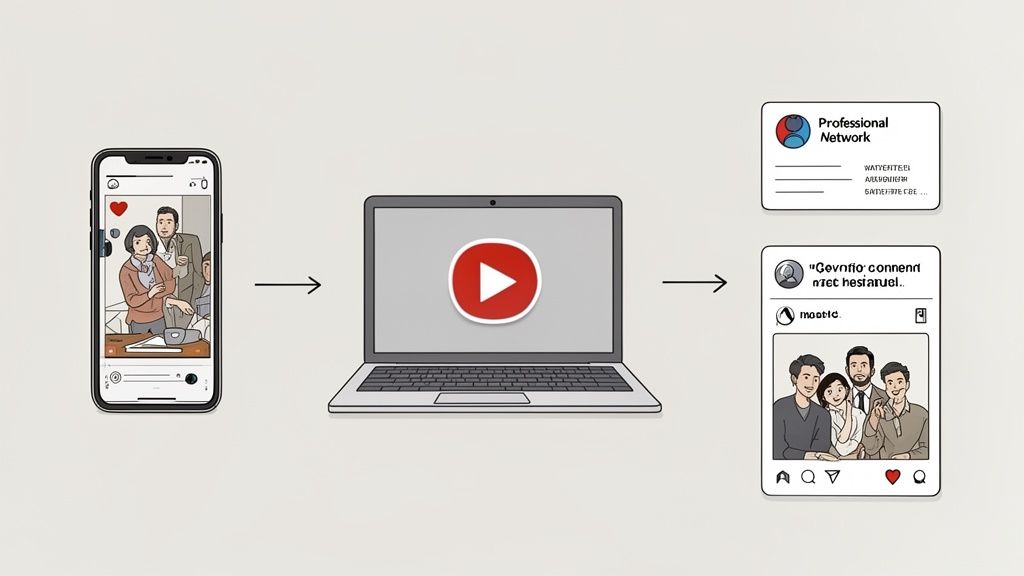
Repurpose, don’t reinvent. That long-form campus tour video you posted on YouTube? It can easily be sliced into ten different engaging clips for Instagram Reels and TikToks.
Automate the small stuff. Set up automated responses for common DMs or use a tool to schedule the first comment on your posts to get the conversation started.
Focus on high-value interactions. When scheduling is off your plate, you can put your energy where it really counts: having genuine conversations with people in the comments and DMs.
What’s the Best Way to Get More User-Generated Content?
User-generated content (UGC) is pure gold for university marketing. It’s authentic, it’s trustworthy, and it’s compelling. But it rarely just happens. You need to build a system that encourages and rewards students for sharing their experiences.
It all starts with a simple, memorable campus hashtag. Think #StateUAdventures or something similar. Then, put it everywhere: on digital screens in the student union, in your email signatures, at campus events. You want it to become part of the campus culture.
The most powerful university marketing doesn’t come from the marketing department; it comes directly from the students. When you amplify their voices, you build a level of trust and authenticity that no ad campaign can buy.
Then, you need to give them a reason to use it. Here’s what works:
Run regular contests. A weekly or monthly giveaway for the best photo using the hashtag can work wonders. Offer prizes students actually care about, like bookstore credit, a prime parking spot for a month, or limited-edition university merch.
Feature them constantly. The biggest reward is often just recognition. When you feature a student’s post on your official channels (always ask for permission and give them a shout-out!), it shows you’re paying attention. That social proof is what motivates everyone else to start sharing, too.
How Do We Actually Measure the ROI of Social Media for Student Recruitment?
This is the big one. To prove your value, you have to move beyond vanity metrics like likes and followers and connect your social media efforts directly to applications and enrollments. This requires a bit of technical setup, but it’s absolutely worth it.
First, you need to use UTM parameters on every single link you share on social media. These are little tags you add to your URLs that tell your analytics exactly where your website traffic is coming from. Instead of just seeing “traffic from Instagram,” you’ll see “traffic from the Fall 2024 engineering program campaign on Instagram Stories.”
Next, get your tracking pixels—like the Meta Pixel or TikTok Pixel—installed correctly on your university website. The most important places are your “Request for Information” forms and, crucially, the application portal itself. This is what closes the loop, allowing you to see which specific ads or posts led to someone actually submitting an application.
With that foundation in place, you can finally track the KPIs that leadership truly cares about:
Cost Per Inquiry (CPI): How much social media spend it takes to get one prospective student to request more information.
Cost Per Enrolled Student (CPES): This is the ultimate metric. It shows the exact ad spend required to bring in one new, tuition-paying student.
The data is clear: social media is a critical part of the decision-making process. By 2026, nearly 90% of Gen Z will say a brand’s social presence impacts their trust, and 82% are already watching college vlogs to get the real story. The era of perfectly polished ads is over; students want to see real content from their peers. You can find more data on these higher education digital marketing trends at MSSmedia.com.
Ready to pull all these pieces together and run a more efficient social media operation? Postiz gives you a single hub to plan, schedule, collaborate, and analyze everything. Stop wrestling with spreadsheets and chaotic email threads and start building a strategy that works. See how Postiz can help your team.