Social media has become one of the most effective ways for mental health clinics to connect with people where they already feel comfortable. It offers a rare opportunity to educate, reduce stigma, and create a sense of safety long before someone ever reaches out for care. When done thoughtfully, social media isn’t just promotion. It becomes your clinic’s first point of connection, support, and trust.
Instead of feeling clinical or sales-driven, your online presence can act as a welcoming entry point. It helps people understand your values, your approach, and whether your clinic feels like the right place for them. In many cases, it’s the very first step someone takes toward asking for help.
Why Social Media Is Your Clinic’s New Front Door
Think about your physical clinic. The waiting room is calm. The front desk is welcoming. Every detail is designed to help people feel safe and at ease. Today, your social media profile plays the same role, just digitally.
For many people considering therapy, the search begins quietly online. They scroll, read, and observe long before they ever book an appointment. They aren’t just looking for services. They’re looking for reassurance, empathy, and signs that a clinic truly understands what they’re going through.
Your social media presence is often that first impression. It’s your digital handshake and your opportunity to show that your clinic is professional, compassionate, and trustworthy.
Meeting Patients Where They Already Are
A large portion of people seeking mental health support are active on social media. These platforms are where they learn, look for reassurance, and evaluate potential providers. Long before someone fills out a contact form, they’re paying attention to how clinics communicate, what they share, and how approachable they feel.
By building a thoughtful presence, your clinic can:
Normalize mental health care through education and open conversation
Show the human side of your practice and your team
Share clear, accessible information about services and what to expect
Social media isn’t just about attracting new clients. It’s about making mental health care more visible, approachable, and part of everyday life. When people feel understood and informed, taking the next step becomes much easier.
From Passive Scrolling to Active Help-Seeking
Every post is a small touchpoint.
A simple anxiety tip. A short video explaining a therapy method. A post acknowledging Mental Health Awareness Month.
Individually, they seem small. Together, they build trust.
Over time, your clinic shifts from:
A name someone scrolls past to A resource someone remembers.
Your social media becomes a place that offers:
Support
Education
Reassurance
24/7.
And when someone is finally ready to take that next step, your clinic already feels familiar.
Visual storytelling plays a powerful role in trust-building, something we also explore in social media marketing for photographers, where authenticity and consistency directly influence engagement and conversion.
Manage all your social media in one place with Postiz
Building a Foundation of Trust with Ethical Marketing
In mental health marketing, trust isn’t optional.
It’s everything.
Every post, reply, and direct message shapes how safe your clinic feels online. That means your social media presence must reflect the same care and professionalism as your in-person services.
Think of your profiles as your digital front door.
They should feel:
Secure
Respectful
Professional
Ethical marketing and privacy compliance aren’t add-ons. They’re the foundation of everything you do.
Navigating HIPAA in a Public Space
Social media is public by nature. Mental health care is not.
That tension makes privacy non-negotiable.
The most common mistake clinics make is acknowledging patients publicly. Even a friendly reply can become a HIPAA violation.
Golden rule: Never confirm, deny, or imply that someone is a patient.
That includes:
Comments
Reviews
Public replies
A safe response always redirects to private communication.
Proactive Strategies for Protecting Privacy
The best approach is prevention.
Clear rules and boundaries protect your clinic, your staff, and your patients.
Start with these essentials:
Staff social media guidelines to prevent accidental disclosures
Profile disclaimers stating your page isn’t a crisis or therapy channel
A crisis response protocol for high-risk comments
Being proactive builds confidence. Both for your audience and your team.
Balancing Authenticity with Professional Boundaries
Sharing helpful, valuable content is the heart of any good social media strategy. But you have to draw a hard line between education and medical advice. Your goal is to empower and inform, not to diagnose or treat.
Do: Share evidence-based coping skills, explain what different therapy modalities look like, and debunk common mental health myths. Don’t: Answer specific questions about a user’s personal struggles or suggest treatments for their symptoms.
By keeping your focus on general wellness education, you position your clinic as an authority without stepping over critical professional boundaries. This approach not only protects your practice legally and ethically but also helps you build a social media presence that’s both sustainable and trustworthy. For a deeper dive into protecting sensitive information, our guide on https://postiz.com/blog/data-security-best-practices offers some key insights for any healthcare provider.
Developing a Content Strategy That Builds Authority
Posting on social media without a plan is like shouting into the wind. A thoughtful content strategy is what turns random posts into a cohesive voice that establishes your clinic as a trusted, authoritative presence in the mental health space.
Think of it as your blueprint. It ensures every single thing you share provides real value, builds a sense of community, and quietly reinforces your expertise. You wouldn’t build a house without a foundation, right? For social media, that foundation is built on content pillars.
If you’re still shaping your overall approach, this framework aligns closely with what we recommend in our social media marketing plan for startups, where strategy, consistency, and realistic execution are prioritized over volume.
Establishing Your Core Content Pillars
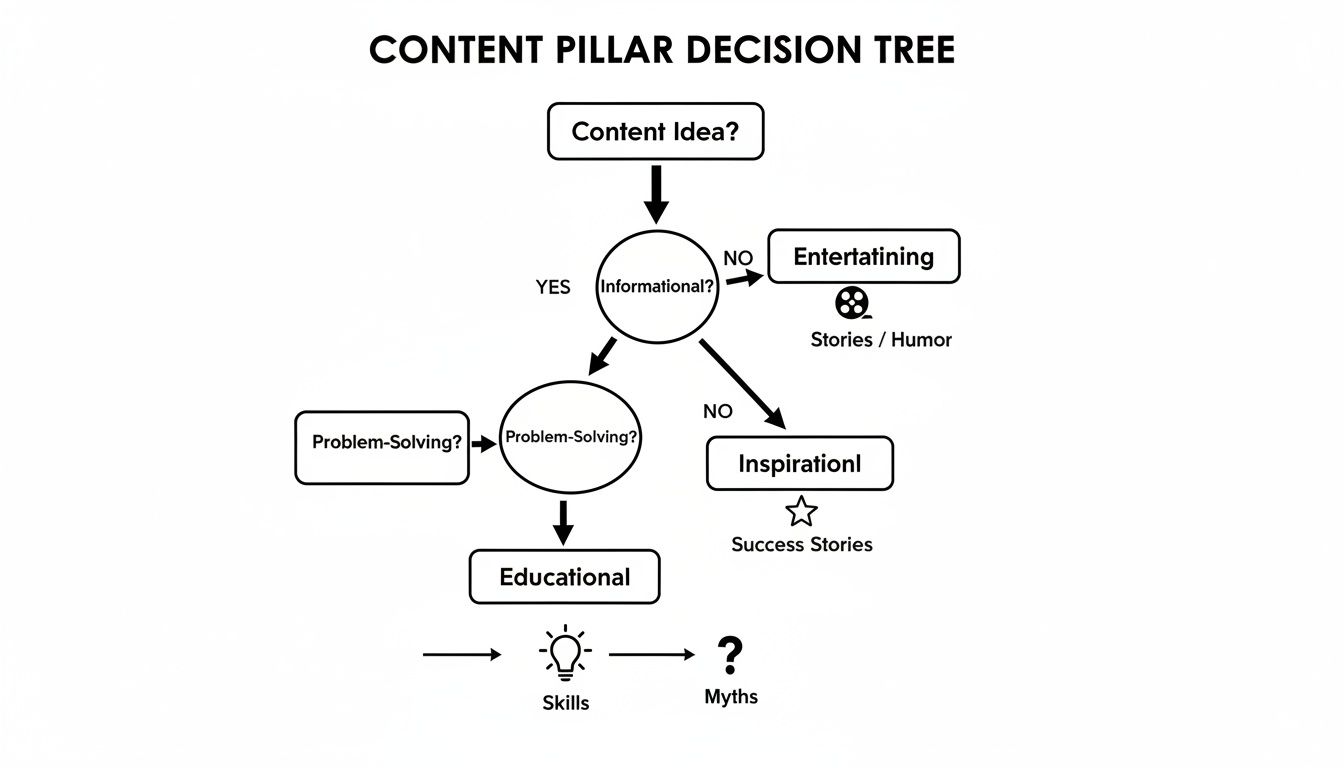
Content pillars are simply the handful of core themes you’ll talk about over and over again. They give your feed structure and purpose, making it much easier to come up with ideas that actually connect with your audience.
By sticking to a few key areas, you create a reliable, valuable experience for your followers. They know what to expect from you, which keeps them coming back for more.
For a mental health clinic, these four pillars are a fantastic starting point:
Mental Health Education: This is all about demystifying mental health. You can share factual, easy-to-understand information that debunks common myths, gently explains different conditions, or highlights interesting statistics about mental wellness.
Practical Coping Skills: This is where you give people something they can use right now. Think short, actionable tips for managing a moment of anxiety, simple mindfulness exercises, or communication scripts for healthier relationships.
Behind the Scenes and Team Spotlights: Let people see the human side of your practice. Introduce your therapists with short Q&A videos, share photos of your calming office space (with no patients, of course), or talk about your clinic’s mission and what drives your team.
Service and Process Explanations: This pillar gently informs your audience about what you actually do. You could create posts explaining what someone can expect in their first therapy session, clarifying the types of therapy you offer (like CBT or EMDR), or answering common questions about insurance.
This balanced approach means you’re always leading with value, which is how you build the trust necessary for someone to eventually reach out for your services. For a deeper dive, check out our complete guide to building a content strategy for social media.
Turning Pillars into Engaging Posts
Once your pillars are set, it’s time for the fun part: brainstorming actual post ideas. The key here is variety. Don’t just post blocks of text; mix it up with different formats that are easy for people to digest on the go.
This is where a platform like Postiz can make a world of difference. It lets you plan, design, and schedule everything from one central dashboard instead of jumping between different apps.
The screenshot above gives you a peek at how you can lay out your posts in a visual calendar, making sure you have a consistent and balanced mix of content covering all your pillars.
An organized workflow like this saves you from the last-minute scramble to find something to post and helps you maintain a professional, steady presence. And make no mistake, people are actively looking for credible sources. Over 32% of global social media users follow therapists for mental health content, showing a clear hunger for expert voices over generic influencers. You can see the data for yourself on Statista.com—clinics are perfectly positioned to meet this demand.
By consistently creating high-quality, educational content under your core pillars, you transform your social media profile from a simple marketing tool into a vital community resource. This is the foundation of ethical and effective social media marketing for mental health clinics.
Let’s look at a few concrete examples of how these pillars translate into actual posts:
This structured approach makes sure your content always has a purpose. You’re not just posting for the sake of it; you’re building a library of genuinely helpful resources that positions your clinic as the go-to authority in your community. That’s how you build trust, long before someone even thinks about booking an appointment.
Choosing the Right Platforms and Using Paid Ads Wisely
You’ve got your core message figured out. Now, where do you share it? This is a critical step, because not all social media platforms are a good fit for the nuanced world of mental health. Think of it like choosing a location for your physical practice—you want to be somewhere your clients feel safe and understood.
Instead of stretching yourself thin across every platform, it’s far more effective to focus on one or two. The goal is to match the platform’s community and style with your clinic’s mission. A scattered approach just leads to burnout for you and a confusing experience for potential clients.
We see this approach work well across service-based industries. For example, many of the same trust-building principles apply in social media marketing for real estate agents, where credibility and visibility matter long before a client makes contact.
Finding Your Clinic’s Digital Home
Every social media platform has its own personality. Before you commit, take a moment to picture who you’re trying to help. Are they young adults just starting out, new parents navigating postpartum life, or seasoned professionals looking for ways to manage workplace stress?
This is where you need to be strategic. The platform you choose is the digital room where you’ll have these important conversations.
To help you decide, here’s a look at the major players and how they might fit your clinic’s needs.
Platform Selection Guide for Mental Health Clinics
Think of these platforms as different tools for connection. Your choice depends entirely on who you want to reach and what you want to say.
Once you have your content ideas, you can organize them around your core themes. This ensures your social media presence is consistent and builds on itself over time.
This structure helps you see how every piece of content—whether it’s an educational tip or a client success story—plays a part in your bigger strategy to build trust and authority.
Using Paid Ads Ethically and Effectively
While your day-to-day posts build community, paid ads help you reach specific people who might not find you otherwise. If organic content is like tending to a beautiful community garden, paid ads are like putting up a sign inviting others to come and enjoy it.
Many people think ads are just about selling, but for a mental health clinic, they are really about amplification. You can use them to promote a free webinar on managing anxiety, announce a new support group, or make sure a helpful blog post reaches local families who need it.
This isn’t just a theory; it’s a proven strategy. A recent report found that 87% of mental health clinic owners use paid social media ads. In fact, 28% said it was their second-highest source of ROI, right after client referrals. You can discover more insights in the full 2024 report.
Paid advertising shouldn’t replace your organic strategy; it should amplify it. Use ads to get your most valuable educational content in front of the people who need it most, building a bridge from awareness to action.
The key to ethical and effective advertising is to always lead with value. Offer a resource, an insight, or a supportive message first. This approach shows you genuinely care about people’s well-being, which builds the trust necessary for them to take the next step. A thoughtful mix of community-focused posts and strategic, value-first ads is the recipe for successful social media marketing.
How to Streamline Your Social Media Workflow
Keeping up with social media can feel like another full-time job on top of everything else. You’re trying to create good content, post at the right times, and respond to comments—it’s easy for a busy clinic to get overwhelmed. This is exactly why building a smart, streamlined workflow is non-negotiable.
Instead of scrambling to post every day, think of a social media management platform as your clinic’s digital command center. It’s one central hub where you can plan, schedule, and measure everything. This turns a potentially chaotic process into something calm and controlled.
This approach isn’t just about saving time, though it absolutely does. It’s about building a consistent, professional presence that people can rely on. A steady drumbeat of helpful content is what builds trust and keeps your community connected in the long run.
Tools like Postiz are built specifically to bring some order to the chaos. At their heart, they let you schedule posts in advance. You can sit down for a few hours and map out an entire week—or even a month—of content. This frees your team to focus on what matters most: your patients.
This “batching” approach is a total game-changer for clinics. It takes away that daily pressure of “What should I post today?” and makes sure your profiles stay active and helpful, even on weekends or holidays.
But it’s not just about scheduling. These platforms have a few key features that are especially useful when doing social media marketing for mental health clinics:
Visual Content Calendars: You can see your whole month laid out in front of you. This helps you make sure you’re hitting all your content pillars and not just talking about the same thing over and over.
Team Collaboration: Multiple team members can draft, review, and approve posts before they go live. This is essential for making sure everything is compliant and sounds like it’s coming from your clinic.
Centralized Analytics: Forget logging into five different apps. You can see how everything is performing from one dashboard and quickly spot what types of content are actually connecting with your audience.
Protecting Patient Privacy with Smart Tools
For any healthcare provider, privacy is everything. Many management tools are cloud-based, which can be a concern. However, platforms like Postiz connect each channel through the network's own OAuth sign-in and keep each account in its own workspace, so no passwords are shared and each account's data stays in its own place.
This level of data control is a significant advantage. It provides an extra layer of security and peace of mind, ensuring that sensitive analytics and internal communications remain private and compliant with your clinic’s strict data policies.
A well-organized system also leads to better internal processes. If you’re looking to nail down your team’s approach, our guide on building an effective content creation workflow walks you through the entire process, from idea to execution.
Putting It All Together for an Efficient Process
A smooth workflow does more than just save you a few hours a week. It directly improves the quality of what you share. When you aren’t rushing, you can be more thoughtful with your words, double-check for compliance, and strategically plan your content around key events like Mental Health Awareness Month.
Ultimately, a streamlined process makes having a professional, impactful social media presence attainable for any mental health clinic, no matter how big or small. By using a central command center, you can build a sustainable strategy that supports your clinic’s mission without adding more stress to your team’s plate.
Measuring Your Impact and Planning for Growth
You’ve done the hard work of building an ethical, helpful social media presence. So, is it actually working? Just posting into the void without checking the results is a bit like talking into an empty room. The final, critical piece of your strategy is connecting all that effort to real growth for your clinic.
This means looking past the vanity metrics. Sure, a high follower count or a flood of “likes” can feel great, but they don’t keep the lights on. More importantly, they don’t always translate into helping people find the care they need. Real success is found in the numbers that show genuine interest from your community.
Key Performance Indicators That Matter
For a mental health practice, Key Performance Indicators (KPIs) are simply the specific data points that show you whether your strategy is hitting the mark. Instead of getting overwhelmed by every chart and graph, focus on the numbers that signal someone is leaning in and paying attention.
These are the KPIs that give you a clear picture of what’s really going on:
Meaningful Engagement: Forget just counting likes. I’m talking about comments, shares, and saves. These actions mean your content struck a chord, sparking a conversation or prompting someone to save it for later.
Website Click-Throughs: How many people are actually clicking the link in your bio or in your posts to check out your website? This is a direct line showing if your social media is successfully opening the door to your practice.
Direct Message Inquiries: Pay close attention to DMs asking about your services, clinician availability, or which insurance you accept. This is a huge buying signal—it shows your content is inspiring people to take the next step.
“How Did You Hear About Us?” Data: This one is pure gold. Add a “social media” option to your intake forms. Tracking how many new clients say they found you on Instagram or Facebook is the clearest proof of your return on investment.
Using Data to Sharpen Your Strategy
Once you start keeping an eye on these KPIs, you can answer the questions that really matter for creating future content. The analytics tools built right into platforms like Facebook and Instagram, or a dedicated tool like Postiz, will become your best friend.
Think of your analytics as direct feedback from your community. The numbers tell you what they value, what they scroll past, and what makes them want to learn more. Listening is the key to sustainable growth.
Set a recurring calendar reminder for a quarterly review. Sit down with your data and ask some tough questions:
Which of our content themes—like coping skills versus myth-busting—got the most shares and comments?
What time of day did our posts seem to land best with our audience?
Did that small ad we ran for the new support group actually lead to more website clicks or DMs?
This simple review process transforms your social media from a guessing game into a smart, data-informed growth plan. And to plan for that growth, it’s essential to have a solid grasp of understanding social media marketing costs and ROI to manage your budget effectively. When you fine-tune your approach based on what’s actually working, you ensure every post is a step toward fulfilling your mission.
Got Questions? We’ve Got Answers.
Jumping into social media for your clinic can feel like a huge leap. You’re not alone in wondering where to even start. Here are some of the most common questions we hear from practitioners, answered in a way you can actually use.
How Much Time Does This Really Take Each Week?
Let’s be realistic. You’re busy. A good starting point is setting aside 3-5 hours per week. The trick is to work smarter, not harder.
Try “batching” your work. Spend an hour or two at the beginning of the week to plan, write, and schedule all your posts. A tool like Postiz makes this incredibly simple. After that, all you need is 15-20 minutes each day to check in, reply to comments, and engage with your community. Remember, it’s about quality, not quantity. Three genuine, helpful posts a week will always beat seven rushed ones.
What Do We Do About Negative Comments or a Follower in Crisis?
This is a big one, and having a plan in place before you need it is absolutely critical. It protects everyone involved.
Handling Negative Feedback: Your public response should always be calm and professional, with the goal of taking the conversation private. Something as simple as, “We’re sorry to hear about your experience. Could you please email our office manager directly so we can better understand and address your concerns?” works perfectly.
Responding to a Follower in Crisis: Your social media page is not a clinical setting. Never, ever offer therapy or advice in the comments. Your protocol should be to post a supportive but clear message that directs them to immediate help, like the National Suicide Prevention Lifeline. Don’t delete these comments unless they violate clear policies (like spam or hate speech), as that can cause more harm.
Think of your social media as a community hub for education, not a replacement for therapy. A clear protocol helps you maintain those essential professional boundaries while guiding people toward the real help they need.
Is It Okay to Share Content from Other Accounts?
Yes, absolutely! In fact, it’s a great way to build connections and show you’re part of the larger conversation around mental wellness. Just make sure you do it right.
Always give clear, obvious credit. Tag the original creator in the caption and, if possible, on the image or video itself. Even more importantly, be selective about who you share from. Stick to reputable sources like licensed therapists, professional organizations, and well-respected mental health publications. Sharing credible, evidence-based content helps build your clinic’s reputation as a trusted resource, not just another business trying to make a sale.
Ready to manage your social media with a workflow that’s both efficient and secure? Postiz is an all-in-one platform built to help you schedule posts, work with your team, and see what’s working—all while keeping data privacy front and center. Take the next step in building your clinic’s online community by visiting https://postiz.com to learn more.
A practical guide to marketing automation for agencies. Learn how to choose the right tools, build workflows, and use AI to drive real growth and efficiency.
Discover how white label marketing software helps agencies scale. Learn to choose, implement, and monetize a branded platform to accelerate your growth.