You post regularly. You save references. You try a carousel one day, a Reel the next, a quote graphic after that. But when you open your profile, it doesn’t feel like one brand. It feels like a pile of decent posts that were made by slightly different versions of you.
That’s the frustration most creators hit before they build a real social media aesthetic. The feed isn’t weak because you lack taste. It’s weak because the visual system hasn’t been defined yet.
Why Your Social Media Feed Feels Inconsistent
A common pattern looks like this: on Monday you post a clean product shot with beige tones. On Wednesday you share a bright meme in neon colors. On Friday you upload a selfie with a heavy filter and a totally different font in the caption graphic. Each post may work on its own. Together, they create friction.
Followers notice that friction faster than creators do. They may not say, “your visual identity lacks cohesion,” but they feel it. The account becomes harder to recognize and harder to remember.
Aesthetics don’t just shape perception. They shape behavior. According to a 2024 Credit Karma study on social media aesthetics and spending, the “Old Money” aesthetic prompted 28% of Gen Z and 20% of millennial social media users to make purchases. The same study found that 48% of Gen Z admitted social media trends led them to spend money they didn’t have. That tells you something important. Aesthetic choices can move people from browsing to buying.
What inconsistency usually looks like
Mixed signals: Your photos say calm and premium, but your captions sound chaotic and ironic.
Too many templates: Every post uses a different layout, so nothing feels connected.
Trend chasing: You borrow styles from creators you like, but the borrowed pieces don’t fit together.
No repeatable rules: You design every post from scratch instead of following a system.
If your feed feels random, don’t start by making prettier posts. Start by making clearer decisions.
Practical rule: A strong feed isn’t a collection of your favorite posts. It’s a collection of posts that feel like they belong to the same world.
If you need inspiration for how visual sequencing works on a profile, these Instagram layout ideas for a cohesive feed can help you study rhythm, spacing, and post variety. And before you touch colors or fonts, it also helps to define what you talk about consistently. This guide to content pillars for social media is useful for that foundation.
Manage all your social media in one place with Postiz
Beyond Pretty Pictures What Is a Social Media Aesthetic
A social media aesthetic is the interior design of your digital home.
When someone walks into a well-designed room, they understand the mood fast. The furniture, lighting, wall color, and objects all point in the same direction. Your social presence works the same way. Your colors, image style, typography, caption tone, and recurring themes tell people what kind of brand they’ve entered.
A lot of new creators think aesthetic means “make it look nice.” That’s too shallow. A working aesthetic does three jobs at once:
The visual layer
This is often the first thing noticed.
It includes your color palette, lighting style, crop choices, filters, graphic layouts, typography, and how much white space you use. A wellness coach might use soft neutrals, natural light, and quiet composition. A streetwear brand might use flash photography, sharp contrast, and tighter crops.
The voice layer
Your feed also has a sound, even when no audio is playing.
Short captions, reflective captions, playful captions, educational captions. They all create tone. If your visuals feel luxurious but your writing feels rushed, the brand loses clarity.
The values layer
This is the part people feel over time.
Are you selling precision, warmth, rebellion, simplicity, credibility, intimacy, or status? Your aesthetic should express those values without needing to explain them in every post.
A useful way to think about it is this:
Layer
What it answers
Visuals
What does this brand look like?
Voice
What does this brand sound like?
Values
What does this brand stand for?
That’s why aesthetics matter beyond decoration. A 2021 VIAUM study on visual aesthetics and social commerce intentions found that visual aesthetics directly impact social commerce intentions. The same source connects that effect to the broader shift toward visual-first platforms after Twitter enabled image uploads around 2011.
So when you refine your social media aesthetic, you’re not polishing the edges of your brand. You’re improving the way people understand and respond to it.
If you’re deciding what formats fit your style, this list of top 10 types of social media content can help you match content format to brand personality.
Exploring Popular Social Media Aesthetics in 2026
Most creators don’t need a completely original aesthetic on day one. They need a direction. The easier path is to study a few recognizable styles, then adapt one into something that fits your brand.
Minimalist
This style removes visual noise.
Think muted tones, simple layouts, restrained typography, and a lot of breathing room. It works well for consultants, premium product brands, wellness creators, and founders who want to signal clarity.
The voice usually matches the look. Fewer words. Cleaner hooks. No clutter.
Vintage vibe
Vintage leans into nostalgia.
You’ll often see warm tones, grain, soft contrast, retro type choices, film-inspired edits, and objects that feel tactile or storied. A café, thrift seller, book creator, or lifestyle brand can make this feel natural.
The tone tends to be reflective, personal, and a little slower. It feels collected rather than rushed.
Vibrant pop
This aesthetic is energetic and loud in a controlled way.
Bright color blocking, playful compositions, bold headlines, expressive stickers or shapes, and punchy edits all fit here. It works for entertainment brands, event promotion, youth-focused products, and creators with high-energy personalities.
This style can go wrong fast if every post shouts. The key is using intensity with rhythm, not chaos.
Authentic raw
This is the major shift many brands are trying to understand.
The look is less polished. Natural light, imperfect framing, behind-the-scenes clips, quick photo dumps, unretouched moments, and conversational captions all belong here. According to research on the rise of unfiltered authenticity, Gen Z engagement is 40% higher on unedited content, and “imperfect” posts can gain 30% more comments globally. That’s a strong signal that polish isn’t always the point.
Sometimes the most effective post is the one that looks like a person made it, not a content machine.
Raw doesn’t mean careless. The smartest version of this aesthetic still uses intentional choices. It just hides the effort better.
Dark academia
Dark academia is moody, thoughtful, and textured.
Expect deep neutrals, shadows, serif fonts, old books, handwritten notes, wood, coffee, layered fabrics, and an intellectual tone. It suits writers, educators, niche lifestyle brands, and creators whose content feels reflective or literary.
Quick comparison
Minimalist: Calm, premium, clear
Vintage vibe: Nostalgic, warm, human
Vibrant pop: Bold, playful, high-energy
Authentic raw: Relatable, casual, candid
Dark academia: Moody, scholarly, artistic
You don’t need to copy one of these exactly. Most strong brands blend two. For example, a creator might pair minimalist design with raw photography, or use vintage visuals with a modern educational voice.
A Step-by-Step Workflow for Crafting Your Aesthetic
A good aesthetic doesn’t appear in a lucky week of posting. You build it the way a designer builds a brand system. Piece by piece, with rules you can repeat.
Research on visual consistency suggests that accounts with strong visual signal strength perform better in organic reach. The same Adobe resource states that accounts using four or more consistent aesthetic components can achieve 2-3x higher distribution than less coherent accounts, as explained in this piece on types of social media aesthetics. That’s why this process matters. Consistency is both a brand choice and an operating advantage.
Start with three brand words
Before mood boards, pick three words that describe how your brand should feel.
Not what you sell. What people should sense.
Examples:
Calm, expert, modern
Playful, bright, approachable
Thoughtful, grounded, premium
These words become your filter. If a design choice doesn’t match them, it doesn’t belong.
Build a private mood board
Collect references before you create anything.
Use Pinterest, a saved Instagram folder, Canva whiteboard, Milanote, or a simple slide deck. Pull in photos, packaging, websites, interiors, outfits, magazine spreads, type samples, and creators whose tone feels right.
Don’t copy posts. Study patterns.
Look for:
Repeated colors: Do earthy tones keep showing up?
Image style: Are the photos airy, dark, close-up, documentary-like?
Typography mood: Clean sans serif or classic serif?
This step reveals problems fast. A single great post can still break the feel of a feed. When you view multiple posts together, you’ll spot things like overused colors, random text styles, or one template that feels out of place.
A short walkthrough can help you think visually about planning before you post:
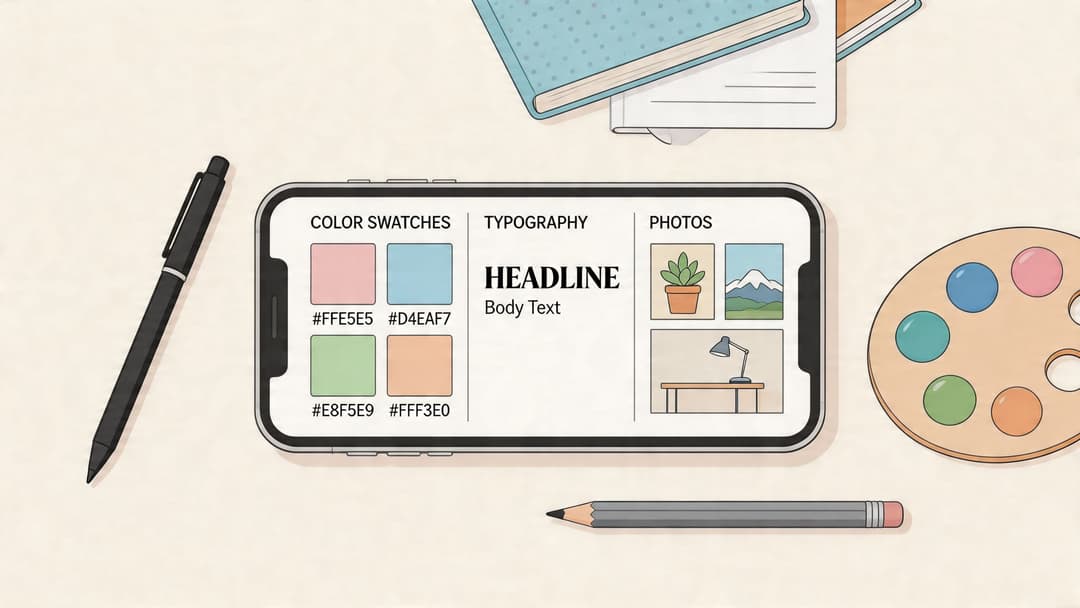
Make a one-page style guide
Keep it simple. One page is enough.
Include:
Your three brand words
Color palette
Font choices
Editing direction
Example post layouts
Caption tone notes
Things you won’t do
That last part matters. Knowing what your brand doesn’t look like prevents drift.
Tools and Workflows to Bring Your Aesthetic to Life
Once your aesthetic is defined, the next challenge is staying consistent when life gets busy.
Most feeds fall apart not because the creator lacks vision, but because the system for producing content is too loose. If your process changes every week, your feed will change with it.
Use templates for repeatable structure
Templates protect your brand from decision fatigue.
Create a small set of reusable designs for recurring post types:
Educational carousel
Quote or opinion post
Product or offer highlight
Behind-the-scenes update
Announcement graphic
Canva is an easy place to start. Adobe Express also works well if you already use Adobe tools. The point isn’t to make every post identical. It’s to make every post feel related.
Batch by content type, not by platform
A lot of creators batch poorly. They try to make one week of content in one sitting without any system.
A better approach is to batch in layers:
Shoot all photos first
Edit visuals next
Write captions after that
Schedule in one final session
This keeps your visual decisions more stable because you stay in one creative mode at a time.
Fill gaps without breaking the brand
Some weeks you won’t have fresh photos. That doesn’t mean your feed has to become random.
AI image tools, stock libraries, and graphic systems can help fill visual gaps if you use them with rules. Match the color palette, keep composition consistent, and avoid generating styles that feel disconnected from your established look. If you’re comparing options, this roundup of best AI tools for content creators is a useful starting point.
One practical option is AI content creation tools for social teams, especially if you want image generation and planning in the same workflow. Postiz, for example, combines scheduling, AI-assisted content support, design features, and analytics in one platform. For teams, that can reduce the handoff problems that often damage consistency.
Aesthetic consistency doesn’t come from motivation. It comes from reducing how many visual decisions you have to make from scratch.
Preview the feed before publishing
A single post might look good in isolation and still weaken the overall profile.
That’s why visual planning matters. Use a scheduler or layout planner to view posts together before they go live. Rearranging the order can improve the rhythm of the feed without changing the content itself.
A simple review checklist helps:
Check color balance: Are all recent posts dark, bright, or text-heavy?
Check format mix: Do you have variety without losing identity?
Check tone alignment: Does the caption voice match the visual style?
Check transitions: Do adjacent posts feel jarring?
Build an approval habit
If you work with a client, assistant, or team, create a short approval process.
Use a shared folder, a planning board, or comments inside your scheduling tool. Review visuals before captions are finalized. It’s easier to fix aesthetic drift early than after a week of off-brand posts has already gone live.
How to Measure Your Aesthetic's Performance
A social media aesthetic should do more than make your profile look polished. It should help the right people recognize you, trust you, and act.
That means you need to measure it like a working part of your strategy.
Look beyond likes
Likes can tell you a post got a quick reaction. They don’t tell you whether your aesthetic is helping your brand grow in the right direction.
Pay closer attention to:
Engagement quality: Are people leaving thoughtful comments, saving posts, and sharing them?
Follower fit: Are new followers the kind of people you want to attract?
Click behavior: Are profile visits and link clicks improving when your branding is more consistent?
If the feed looks cleaner but business actions stay flat, the aesthetic may be attractive without being relevant.
Compare patterns, not single posts
Don’t judge your style based on one winner or one flop.
Look at groups of posts over time. Compare similar post types with similar goals. You’re trying to answer questions like these:
Question
What to watch
Does this style hold attention?
Saves, shares, comments
Does it attract the right audience?
Follower quality, DMs, profile visits
Does it support conversion?
Link clicks, inquiries, replies
This kind of review helps you separate a temporary trend from a useful brand system.
If people engage with your content but can’t describe your brand, the aesthetic may be eye-catching without being distinctive.
Add qualitative review
Numbers matter, but language matters too.
Read comments. Notice the words people use when they describe your content. If followers keep calling your brand “clean,” “cozy,” “smart,” or “fun,” your visual identity is landing. If the responses are all over the place, your signal may still be mixed.
A simple monthly audit works well:
Review your top-performing posts.
Look for repeated visual traits.
Check whether those traits match your intended brand words.
Adjust your templates, image style, or caption tone.
That’s how you keep your aesthetic useful instead of precious.
Your Aesthetic Is an Evolution Not a Final Destination
A strong social media aesthetic isn’t a costume you put on once. It’s a living system. It should become easier to manage over time, clearer to your audience, and more natural for you to create within.
That’s why rigid copying doesn’t work for long. Trends move. Platforms change. Your audience matures. Your offers shift. If your visual identity can’t bend, it eventually breaks.
Keep the core, change the expression
The smartest brands evolve by protecting the core and updating the surface.
Your core might be calm expertise, candid storytelling, or bold playfulness. That stays. But the way you express it can change through new formats, different crops, looser editing, or stronger typography.
That kind of evolution keeps your brand recognizable without making it stale.
Stay aware of platform influence
There’s another layer many creators miss. Platforms shape aesthetic behavior too.
Research on Aesthetic Design Power in social platforms argues that platforms such as TikTok and Instagram use visual design choices like contrast and movement as persuasive tools to heighten engagement, in ways similar to dark patterns. That means you’re not designing in a neutral space. The platform is already nudging what gets attention.
A creator may prioritize the algorithm’s visual appetite over the brand’s actual identity. The resulting feed, while more stimulating, risks being less honest.
Your job isn’t to reject platform trends completely. It’s to know when a trend supports your brand and when it starts rewriting it.
The best approach is steady, not dramatic. Build a visual system. Document it. Use tools that help you repeat it. Review performance. Then refine. Not every week. Not because you got bored. Because your brand learned something.
If you want one place to plan, create, schedule, and review a consistent social media aesthetic, Postiz is worth exploring. It brings content planning, publishing, AI-assisted creation, collaboration, and analytics into a single workflow, which makes it easier to turn a visual identity into a repeatable operating system.
Learn how to monetize YouTube Shorts with our complete guide. Discover proven strategies for YPP, brand deals, and affiliate income to maximize your earnings.