Let's get right to it. If you want to win on Facebook in 2026, your playbook needs to be all about short-form video, authentic user-generated stories, and interactive posts. The days of simply broadcasting a message are over. Facebook's algorithm has made a hard pivot, now rewarding content that actually builds a community and sparks real conversations.
The State of Facebook Content in 2026
Think of Facebook in 2026 less like a digital billboard and more like a bustling town square. Success isn't about who shouts the loudest anymore; it's about who can start the most interesting conversations. The algorithm is designed to keep people on the platform, and it does that by prioritizing content that gets users talking to each other.
This is a massive shift from a few years ago when a simple image with a link could get you decent reach. Now, that kind of static content just gets buried. The stuff that cuts through the noise is dynamic, human, and invites people to join in. It asks for an opinion, shares a relatable moment, or delivers a quick hit of entertainment.
The New Pillars of Facebook Success
To really get a handle on this new environment, you need to focus on three content pillars that are consistently crushing it. These aren't just passing fads; they're a direct result of how people's habits have changed and what Facebook's tech is built to reward.
Immersive Video: Short-form video, especially Reels, is the undisputed king of the feed. These snappy, engaging clips are tailor-made for today's attention spans, and Facebook is pushing them hard.
Authentic Storytelling: People are burned out on slick corporate-speak. They're craving realness, which is why user-generated content (UGC), customer stories, and behind-the-scenes content are so powerful for building trust.
Interactive Engagement: Posts that ask for participation—think polls, quizzes, and livestreams—are pure gold. They stop the scroll and turn passive viewers into active participants, which sends a huge positive signal to the algorithm.
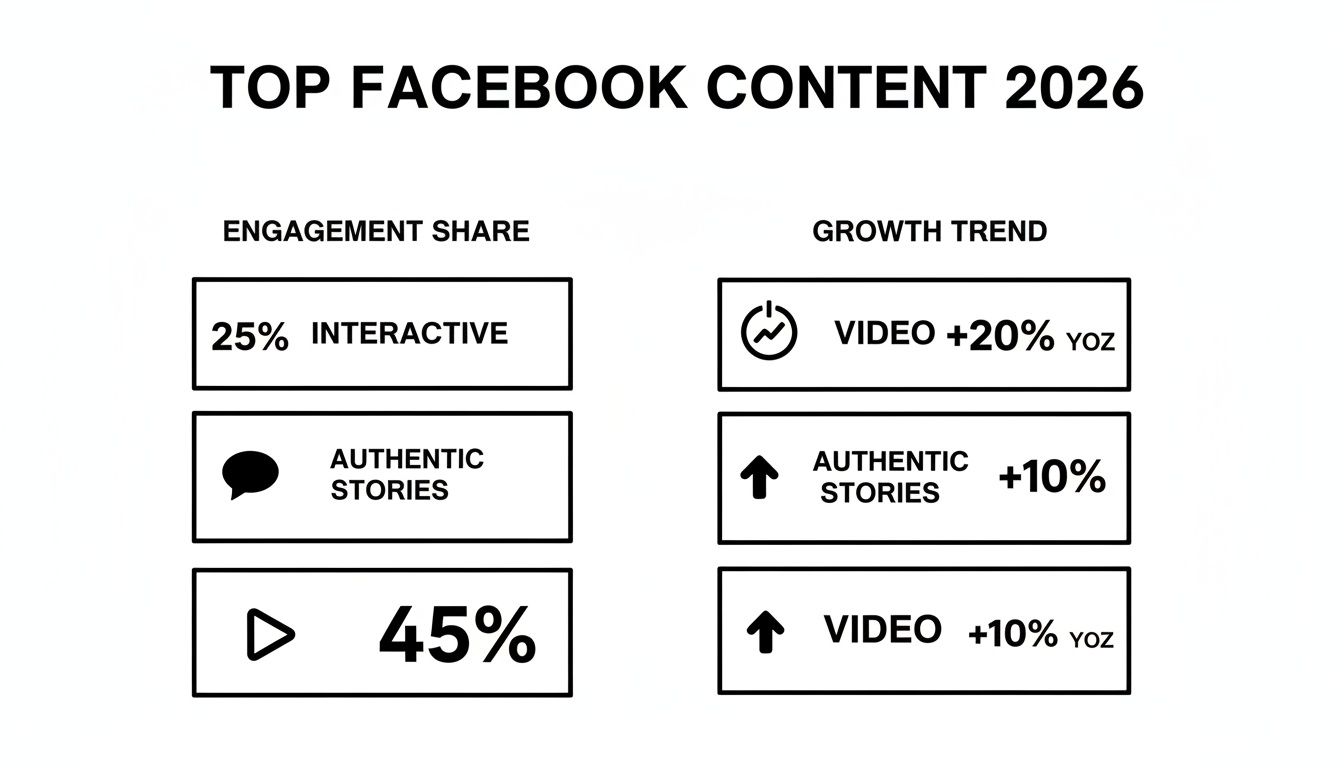
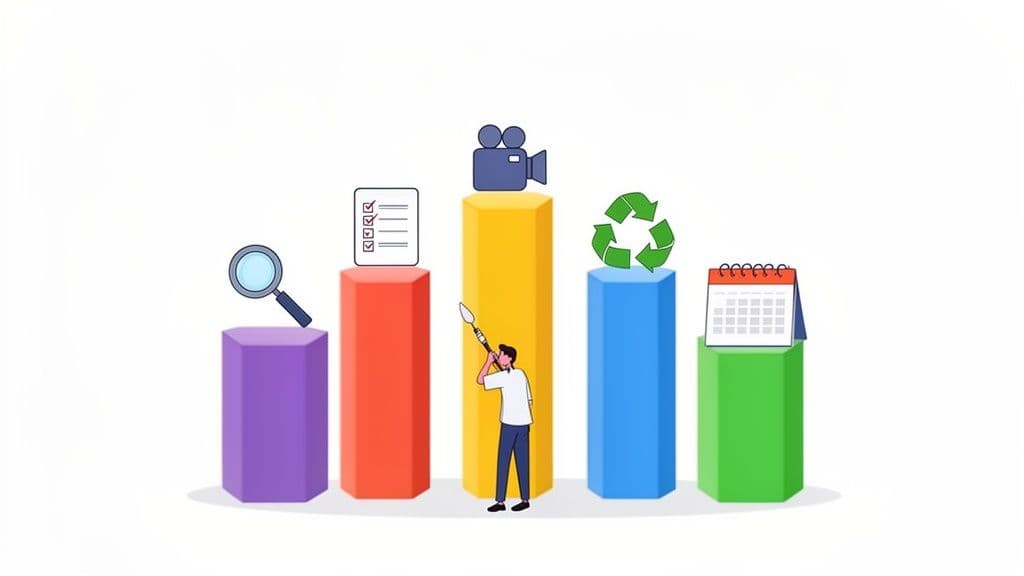
This infographic lays out exactly which content types are driving the most engagement right now.
As you can see, it's not even a close race. Video, authentic stories, and interactive formats aren't just doing well—they're the whole game.
To help you quickly reference what works, here's a simple breakdown of the top-performing formats.
Facebook Content Performance at a Glance for 2026
Content Type
Primary Strength
Key Metric to Watch
Short-Form Video (Reels)
Grabbing attention and driving reach
Views (3-second) and Shares
User-Generated Content (UGC)
Building trust and social proof
Engagement Rate and Comments
Livestreams
Fostering deep community connection
Peak Live Viewers and Watch Time
Interactive Posts (Polls/Quizzes)
Boosting engagement and gathering feedback
Votes/Responses and Reach
Long-Form Video
Educating and building authority
Audience Retention and Minutes Viewed
Carousel Posts
Storytelling and showcasing products
Click-Through Rate (CTR) and Saves
This table is your cheat sheet for matching the right format to your specific goal.
The big takeaway here is simple: stop broadcasting and start connecting. The brands and creators who are winning on Facebook in 2026 act less like faceless companies and more like genuine members of the community, creating content that serves, entertains, and engages on a human level.
In this guide, we'll dive deep into exactly how to master these content types. You’ll get actionable advice for creating killer videos, encouraging authentic community stories, and designing interactive posts that get real results. Consider this your roadmap to not just surviving on Facebook, but truly thriving.
Manage all your social media in one place with Postiz
Think about how you scroll through Facebook. It’s fast, almost subconscious. In that blur, something has to be powerful enough to make you stop. Right now, and for the foreseeable future, that something is short-form video.
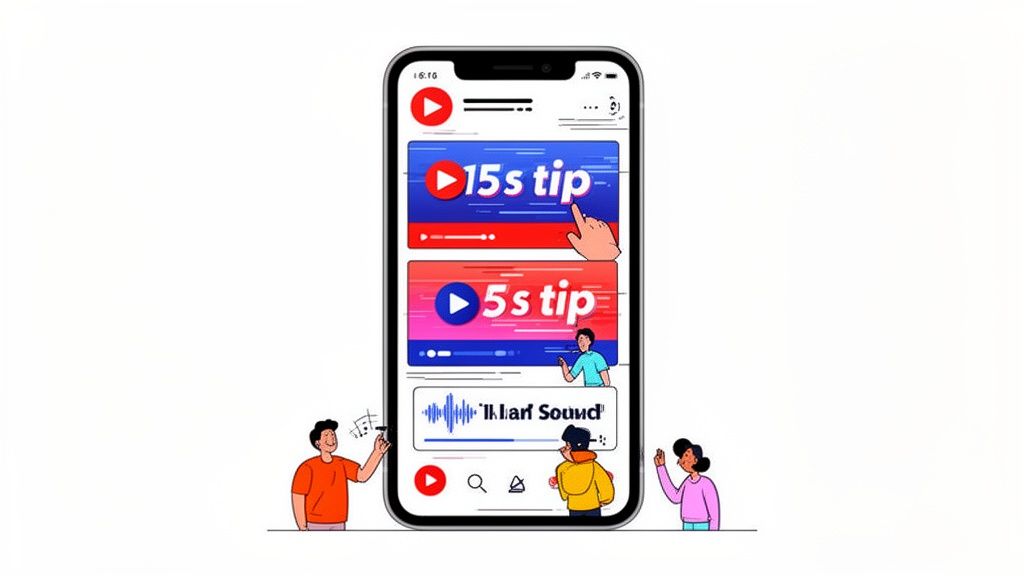
These quick, punchy clips—especially Facebook Reels—are like a shot of espresso for our brains. They deliver a burst of entertainment, a quick tip, or a laugh in seconds. It’s a format perfectly built for our shrinking attention spans. This isn't just a phase; it's a deep shift in how we consume content.
The Science of the Scroll Stop
So, why do these little videos work so well? It’s simple psychology. Our eyes are naturally drawn to movement, which immediately gives video an edge over a static photo. When that video is short, it feels like a low-risk investment for the viewer. They don’t have to commit to watching a ten-minute epic; they just need a few seconds.
This is exactly why these formats are the undisputed kings of the Facebook feed in 2026. The numbers don't lie. Video content pulls in a 0.30% engagement rate, easily beating out images (0.24%) and links (0.06%). This effect is even stronger on your phone, where video ads get almost four times more clicks than they do on a desktop.
And here’s the kicker: videos under 15 seconds have a 53.7% completion rate. That’s huge. It proves that short and sweet is the secret to keeping people hooked.
At its core, short-form video respects the user's time. By delivering value right away, it wins their attention and gets a thumbs-up from the Facebook algorithm.
Turning Theory into High-Performing Content
Okay, so we know short video is the way to go. But how do you actually make one that people want to watch? The trick is to play by the rules of the format. Don’t just upload a random clip—build an experience.
Here’s what every great short video needs:
A Killer Hook: The first 1-3 seconds are make-or-break. You need to grab them immediately. Ask a bold question, show something unexpected, or use text that promises a solution (e.g., "Stop making this mistake…").
Trending Audio: Using a popular song or sound is a shortcut to relevance. It tells both your audience and the algorithm that your content is fresh and timely.
Fast Pacing: Think quick cuts and snappy transitions. You want to keep the energy high so there’s no time for their thumb to get bored and keep scrolling.
On-Screen Text: A lot of people watch videos with the sound off. Captions and text overlays are essential to make sure your message still gets across.
You don’t need a massive production budget to make great videos. A smartphone and a good idea are often all it takes. (And if you need a refresher on the basics, our guide on how do you share a video on Facebook covers the technical side.)
Here are a few proven concepts you can steal and adapt right now:
Bite-Sized Tutorials: Show someone how to do one small thing. A coffee shop could show a 15-second latte art pour. A marketing agency could reveal a quick Canva hack.
Behind-the-Scenes: People are nosy—they love seeing how the sausage gets made. Show your team packing an order, a peek at your workspace, or even a funny blooper from a meeting. It makes your brand feel real.
Before-and-After: This is pure visual satisfaction. It works for a messy desk becoming organized, a sketch turning into a final design, or a complex recipe coming together.
Myth vs. Fact: Take a common misconception in your industry and bust it in under 30 seconds. It’s quick, valuable, and positions you as the expert.
Lean into Authentic, User-Driven Content
If there's one currency that matters most on Facebook in 2026, it's not likes or shares. It's trust.
After years of seeing perfectly polished ads, people are tired of slick corporate messaging. They're looking for something real—real people, real experiences, and real stories. This is where your own audience becomes your single greatest marketing asset.
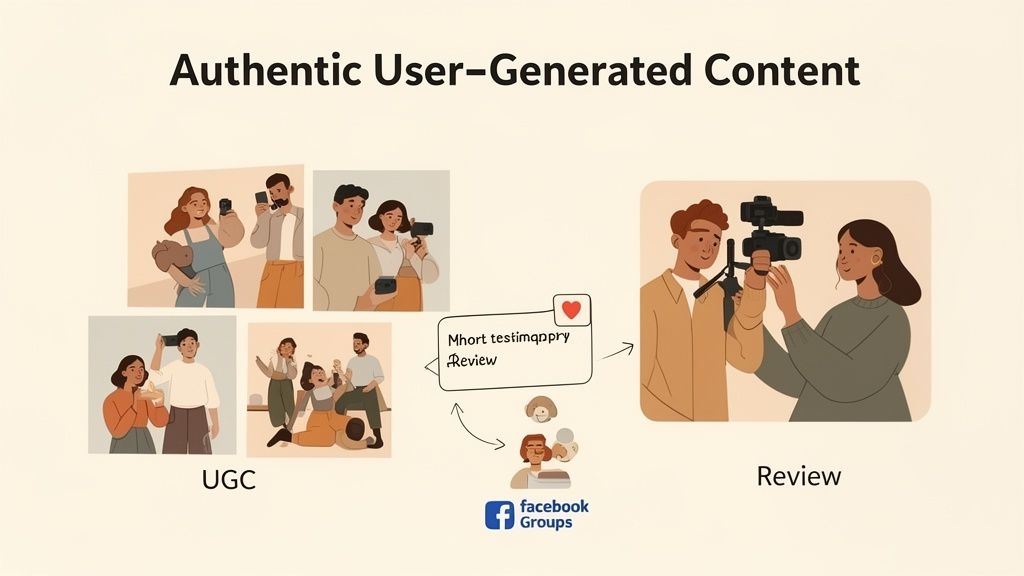
Think of User-Generated Content (UGC) as the supercharged, digital version of old-school word-of-mouth. It’s all the photos, videos, and testimonials your actual customers and fans create. This kind of content absolutely crushes it on Facebook because it cuts through the noise with undeniable social proof. When someone sees a friend or peer raving about a product, it feels genuine and carries so much more weight than a branded ad ever could.
Give Your Audience a Reason to Create
Let's be real: great UGC rarely just happens. You have to create opportunities that get your community excited to share. The goal is to make it easy, fun, and worthwhile for them to create content that features your brand. Don't just sit back and hope people tag you—give them a clear reason to do it.
This sparks a powerful cycle. You encourage creation, your audience shares their stories, and you get a goldmine of authentic, low-cost content that speaks directly to potential new customers.
Here are a few ways to get the ball rolling:
Host Fun Contests: Ask users to submit photos or videos of them using your product in a creative way or completing a simple challenge. The prize doesn't have to break the bank; exclusive merch or a feature on your page works wonders.
Launch a Branded Hashtag: Come up with a simple, memorable hashtag for your community. A local coffee shop, for instance, could use something like #MyMorningMugshot to gather photos from its regulars.
Ask for Reviews and Testimonials: Don’t be shy! Directly ask happy customers to share their experiences. You can easily turn a simple text review into a slick graphic or feature a video testimonial as a Reel.
Turn Customer Stories into Standout Posts
Once you start collecting this content, the real magic is in how you showcase it. A positive comment left on a post is nice, but a well-designed graphic highlighting that same comment? That's marketing gold. You're turning a fleeting moment into a lasting asset.
Your job is to be the curator of your community's best stories. Find those gems and polish them up for everyone to see.
By putting your customers' voices front and center, you're not just selling a product; you're selling an experience. You're proving that real people genuinely love what you do—and that's the most powerful marketing you can get.
For example, a skincare brand could take a customer's before-and-after photo (with permission, of course!) and create a carousel post walking through their journey. This is not only incredibly relatable but also answers the biggest question on a potential buyer's mind: "Will this actually work for me?" If you want to dive deeper, check out these highly effective user-generated content strategies for more ideas.
Build a Thriving Hub with Facebook Groups
Your main Facebook Page is your broadcast channel, but a dedicated Facebook Group is where the real conversation happens. Groups are a treasure trove for UGC because they offer a safe, more private space for your biggest fans to connect with you—and each other.
In 2026, the smartest brands are using Groups as vibrant community hubs, not just as a customer support channel. It’s a place where members can ask questions, share their own tips, and post photos of their latest purchases without feeling like they're talking into an empty room.
Try these strategies to get your Group buzzing:
Share Exclusive Content: Give group members a first look at new products or some fun behind-the-scenes content. Make them feel like insiders.
Use Weekly Prompts: Post a regular question to spark discussion. A productivity app could ask, "Show us your workspace setup!"
Spotlight Your Members: Feature a different member each week, celebrating their story and how they use your product.
When you build this sense of belonging, UGC starts to flow naturally. People create content not just because you asked, but because they genuinely want to share their excitement with people who get it. That’s how you win on Facebook in 2026: with content that’s authentic, community-driven, and built on a foundation of trust.
Driving Engagement with Interactive Content
In 2026, the days of silent, passive scrolling are officially over. If you want to win on Facebook, you have to move past just pushing content at people and start pulling them into a conversation. This is where interactive content becomes your secret weapon, turning your page from a static billboard into a bustling town square.
The logic is simple: Facebook’s algorithm loves content that starts a conversation. Every time someone votes in a poll, answers a quiz, or drops a comment on your livestream, it sends a powerful signal to Facebook that your post is genuinely engaging. This gives your content a massive visibility boost, ensuring it lands in front of more people.
From Passive Viewing to Active Participation
Think of your Facebook feed as a party. A static post is like someone standing quietly in the corner, hoping someone will notice them. An interactive post is the host walking around, starting games, and asking questions. They make people feel included and heard.
This simple shift turns your audience from passive viewers into active participants. When you ask for their opinion, you're doing more than just chasing likes—you're building a sense of community and ownership around your brand.
Here are a few interactive formats that are crushing it right now:
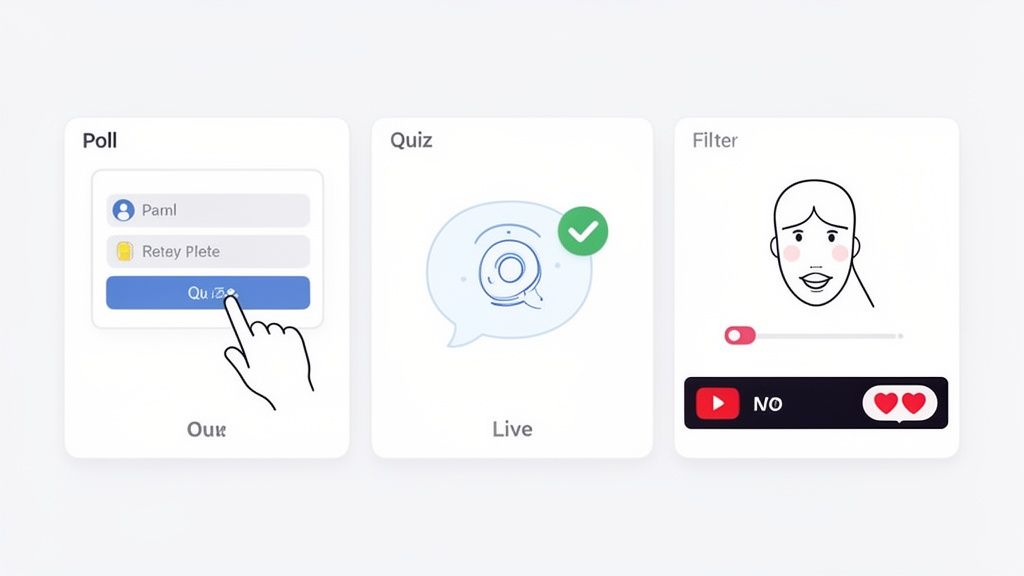
Polls: They're quick, easy, and incredibly effective. Use them to get feedback, let your audience vote on a new product idea, or just kick off a fun debate.
Quizzes: People love learning about themselves. A clever quiz can entertain and provide real value, all while teaching people about your brand or industry.
AR Filters: Branded Augmented Reality filters for Stories are a fun, immersive way for people to play with your brand. They’re highly shareable and essentially turn your followers into content creators.
Actionable Ideas for Interactive Posts
Knowing what formats work is one thing; putting them into action is another. Here are a couple of real-world examples you can steal for your own strategy.
A clothing brand could run a simple poll: "Which tee design should we make next? Cast your vote: A or B?" This not only drives a ton of engagement but also gives them valuable market research for free.
Or, a financial advisor could create a quiz called, "What's Your Money Personality?" After a few fun questions, it could offer personalized saving tips based on the results, providing genuine value and positioning the brand as a helpful expert.
The real goal of interactive content is to make your audience feel like they're part of the story, not just watching from the sidelines. Give them a voice, and they'll be far more likely to stick around and listen to what you have to say.
Livestreaming: The Ultimate Connection Tool
While polls and quizzes are fantastic for quick hits of engagement, nothing builds a deep, real-time connection like a livestream. Going live creates a sense of urgency and "you had to be there" energy that gets people to tune in and participate right now.
It’s like hosting your own live TV show where the audience can shout out questions and shape the conversation. It's the perfect way to build a real community and show the human side of your brand—something that’s absolutely critical for earning trust.
Here are a few ways to use livestreaming to forge that connection:
Host a Q&A Session: Bring on an expert from your team or an industry influencer to answer audience questions live. It’s a brilliant way to tackle common pain points and deliver immediate value.
Unveil a New Product: Ditch the static product shot. Build real buzz by revealing a new product live. You can demo its features, answer questions on the spot, and even drop a special discount for live viewers.
Go Behind the Scenes: Give your followers a tour of your office, your workshop, or the chaos behind an event setup. This kind of transparency humanizes your brand and makes people feel like insiders.
By making interactive content a core part of your 2026 Facebook strategy, you stop fighting for attention and start earning it. You’ll shift from just broadcasting messages to actually building relationships, creating a loyal community that’s genuinely excited to see what you post next.
Building Your 2026 Facebook Content Plan
Alright, so you know which content formats are crushing it on Facebook in 2026. That's a great start, but it's only half the story. The real secret is having a solid plan to put it all together. A winning strategy isn't about just randomly posting Reels and hoping one goes viral; it’s about creating a consistent, balanced content mix that your audience genuinely looks forward to.
Think of your content plan like a well-balanced meal. You can't just eat dessert all day, right? Same goes for your Facebook Page. A feed full of only funny memes or only hard-sell posts will get old fast. You need a healthy variety to keep your community engaged and growing.
The Three Pillars of a Winning Content Mix
To keep things simple, let's group your content into three main buckets. By rotating through these three pillars, you’ll make sure you're hitting all the right notes, keeping your audience hooked, and giving them reasons to keep coming back.
Entertain: This is your attention-grabbing content. Think of those scroll-stopping Reels, hilarious memes, and super relatable stories. The primary goal here is to get noticed and introduce your brand to new faces.
Educate: This is where you really build trust and position yourself as an expert. Share valuable tips, easy-to-follow how-to guides, insightful infographics, or even longer text posts that solve a real problem for your audience.
Engage: This is all about building a community. You want to start conversations and make your followers feel seen and heard. Polls, quizzes, user-generated content (UGC) campaigns, and livestreams are perfect for this.
Imagine a small coffee shop. They could post a trending Reel of a barista's latte art fail to entertain new followers. The next day, they could educate their audience with a carousel post on "5 Ways to Make Better Coffee at Home." To finish the week, they could engage everyone with a poll asking what seasonal drink they should bring back next. See how that works?
Repurpose Your Content Smarter, Not Harder
Staring at a blank content calendar trying to come up with fresh ideas for each pillar can be completely overwhelming. This is where smart repurposing becomes your best friend. The idea is to create one big, juicy piece of "core" content and then slice it up into smaller, snackable pieces perfect for different formats.
This approach is a massive time-saver and ensures your most important messages are seen by more people in the way they prefer to consume them.
A single piece of core content can be the seed for an entire week's worth of posts. This isn't about being lazy; it's about being efficient and maximizing the value of your best ideas.
Let’s walk through a real-world example.
Start with a Core Asset: You film a 10-minute in-depth video tutorial for YouTube about "How to Repot a Fiddle Leaf Fig." That’s your pillar content.
Break It Down for Facebook: From that one video, you can spin off:
Three Short Reels: Pull out three quick 30-second tips from the video. Add some text overlays and trending audio, and you're good to go.
One Carousel Post: Create a simple graphic carousel that breaks down the main steps from your tutorial into a visual guide.
One Text Post: Write a longer post that dives deeper into one specific aspect, like "The #1 Mistake People Make When Repotting," to spark conversation.
One Interactive Story: Use a poll or quiz sticker asking your audience, "What plant should we cover next?"
And just like that, one chunk of work has been transformed into a full week of diverse, engaging Facebook content. A sustainable workflow like this is the key to staying consistent. To really nail this down, starting with a structured social media marketing plan template can make all the difference.
Create an Analytics-Driven Workflow
Your content plan should be a living, breathing thing—not something you set in stone and forget. The final piece of the puzzle is creating a feedback loop fueled by your analytics. You have to get in the habit of regularly checking your Facebook Insights to see what's actually connecting with people.
And please, don't just glance at vanity metrics like likes. Dig into the numbers that really tell you something.
For Reels (Entertain): Are your 3-second views high? That tells you if your hook is grabbing attention. How about shares? That’s the gold standard for a video that truly resonated.
For Carousels (Educate): Look at your saves. When people save a post, it means you've given them something so valuable they want to come back to it.
For Polls (Engage): What’s the participation rate? A high response rate is a clear sign you’ve touched on a topic your audience is passionate about.
Use this data to tweak your strategy every single month. If you see your educational carousels are getting tons of saves but your memes are falling flat, it’s a no-brainer: double down on what works. This data-driven approach takes the guesswork out of content creation and turns it into a predictable engine for growth. As you map out your 2026 plan, leaning on the best content creation tools for social media will help you execute your ideas and track what's working with much less effort.
A Few Common Questions About Facebook Content
Let's be honest, figuring out Facebook can feel like trying to hit a moving target. As you map out your plan for 2026, you're probably wondering where to best spend your time and energy. Let's clear up some of the most common questions I hear from creators and marketers so you can move forward with a bit more clarity.
Think of this as a quick chat to help you nail down what really matters for building a real community and seeing actual growth.
How Often Should I Post on Facebook?
The old-school advice to "post every single day" is officially over. In 2026, the Facebook algorithm is all about quality and consistency, not just sheer volume. It's like a friendship—a great conversation once or twice a week is way better than a boring, forced check-in every day.
For most brands and creators, the sweet spot is now somewhere between 3-5 high-impact posts per week. This keeps you on your audience's radar without burning them (or you) out. It frees you up to stop creating low-effort filler just to check a box.
Pour that energy into what’s working now: short, punchy videos, authentic user-generated content, and things that get people talking, like polls. A few well-crafted, conversation-starting posts will always beat a firehose of daily content that falls flat. It's about being consistently good, not just consistently present.
Are Static Images and Link Posts Dead?
Not dead, but their job has completely changed. Simple images and link posts aren't your go-to for grabbing wide organic reach in the main feed anymore. The algorithm just doesn't push them like it does video and other interactive stuff.
This means you need to be much more strategic about when you use them.
For Deep Dives: A sharp infographic or a text post that genuinely solves a problem can do incredibly well, especially if it’s something people want to save and come back to.
For Group Discussions: Facebook Groups are the perfect place for link posts. Sharing a great article or resource there can kick off a focused chat with people who are already dialed in.
For Big News: When you have a major announcement—a product launch, a big event, new store hours—a clean, static image is still the clearest and most direct way to get the message out.
Think of them as specialized tools in your toolkit, not your everyday hammer. Pull them out when the job calls for it, but don't expect them to build your whole house.
Can a Small Business with No Budget Actually Succeed?
Yes, 100%. In fact, 2026 might be one of the best times for small businesses to break through on Facebook. The platform is rewarding genuine connection over big ad dollars, making creativity and authenticity your new superpowers.
The current Facebook algorithm is the great equalizer. It values a clever idea filmed on a smartphone just as much—if not more—than a polished, expensive ad campaign.
The trick is to play to your strengths. As a small business, you have a direct connection to your customers that giant corporations can only dream of.
Here’s what it really takes to win:
A Smartphone: The camera in your pocket is more than good enough to create killer video for Reels.
A Good Idea: You know your people. You know their problems, what makes them laugh, and what they care about. A relatable Reel that speaks their language is pure gold.
A Real Connection: Actually talk to your followers. Reply to comments, feature their posts, and make them feel like they're part of your story.
Your ability to be nimble, real, and truly plugged into your community is a massive advantage. Focus on creating stuff that feels human, and you can build a fiercely loyal following without spending a dime on ads. Your passion and personality are your best assets.
Ready to put these insights into action and manage your winning content strategy with ease? Postiz is your all-in-one solution for scheduling, designing, and analyzing your social media performance. Start planning your 2026 content calendar today.
Learn how to create a social media plan for startups using a lean framework. Set goals, choose platforms, plan content, and track KPIs that drive growth.
Stop guessing and start strategizing. Learn how to build content pillars for social media that drive real engagement and make content creation effortless.