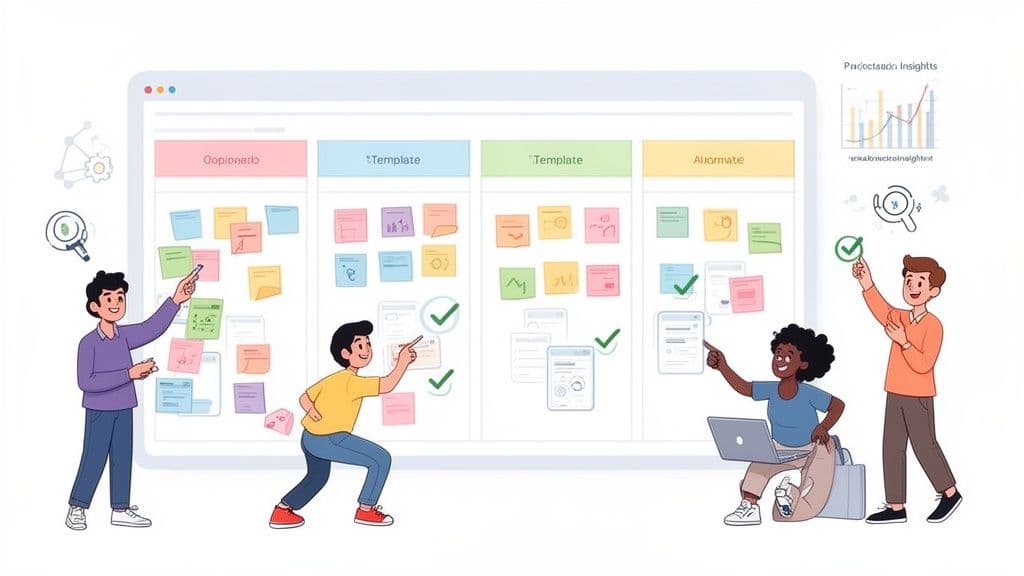
In the fast-paced world of social media, success isn't just about creating great content. It's about how your team creates, reviews, and publishes that content together. Inefficient workflows, miscommunication, and unclear ownership can derail even the most creative strategies, leading to missed deadlines, inconsistent branding, and team burnout. The difference between a high-performing content engine and a struggling one often comes down to the systems that govern its operations.
This guide cuts through the noise to provide a definitive roundup of team collaboration best practices specifically designed for modern social media and content teams. We will move beyond generic advice to give you actionable frameworks, workflow templates, and real-world examples you can implement immediately. Forget abstract theories; this is a practical playbook for building a more efficient and effective content creation process.
You will learn how to:
Establish clear roles and permissions to prevent confusion.
Implement asynchronous communication to protect your team's focus.
Centralize your content calendar for a single source of truth.
Build effective feedback loops that improve quality without causing delays.
Integrate smart automation to reduce manual friction and errors.
From defining responsibilities to fostering a culture of psychological safety, these ten practices are designed to transform your collaborative process. They will help you eliminate bottlenecks, improve content quality, and ultimately drive measurable results. Let's explore the systems that separate high-performing content teams from the rest.
1. Clear Role Definition and Permission Hierarchy
To achieve effective team collaboration, start by defining who does what. A clear role and permission structure eliminates confusion, prevents mistakes, and makes everyone accountable for their part of the content lifecycle. Without it, team members may accidentally publish unfinished drafts or edit content meant for another campaign, causing chaos and rework.
This practice involves assigning specific responsibilities to each team member. For instance, a Content Creator focuses solely on drafting posts and designing graphics, while a Scheduler takes that finished content and queues it for publication. An Approver, like a marketing manager or client, gives the final sign-off. This division of labor is a cornerstone of professional team collaboration best practices.
Implementation in Practice
Modern collaboration platforms are built around this concept. A marketing agency, for example, can give clients a "viewer-only" role, allowing them to see the content calendar without the ability to make unauthorized changes. Small businesses can separate "creator" from "scheduler" roles to add a layer of review before posts go live, preventing costly typos or scheduling errors.
Key Takeaway: The goal is to grant team members the minimum access they need to perform their duties effectively. This "principle of least privilege" protects your accounts and keeps workflows tidy.
For a more structured approach to managing permissions, especially in larger teams, consider implementing a formal security model. Advanced systems like Role Based Access Control (RBAC) provide a robust framework for defining and managing user access rights across different platforms.
To get started:
Document Roles: Create a simple document outlining each role (e.g., Admin, Editor, Contributor) and its specific responsibilities and permissions.
Start Simple: Begin with a few basic roles and only add more complex ones as your team grows and workflows demand it.
Regular Audits: Review who has access to what every quarter. Remove permissions for former employees or for team members who have changed roles.
Manage all your social media in one place with Postiz
Asynchronous communication allows team members to collaborate across different time zones and schedules without needing real-time interaction. Instead of relying on synchronous meetings and instant messages, teams document decisions, feedback, and approvals in shared spaces. This method is central to modern team collaboration best practices, especially for distributed teams where real-time overlap is minimal.
This approach promotes thoughtful responses over immediate reactions. For example, a content creator can request feedback on a social media graphic, and the marketing manager in a different time zone can review it and provide detailed comments hours later. The entire exchange is documented and accessible, preventing information from getting lost in private chats. This philosophy was popularized by remote-first companies like GitLab and Basecamp, which built their operations around it.
Implementation in Practice
A remote marketing agency can use threaded comments within their social media scheduling platform to discuss copy changes for a specific post, keeping all context in one place. An international team coordinating a global product launch can use a shared calendar and project management tool to track progress without a single live meeting. All necessary briefs, assets, and decisions are documented for everyone to see.
Key Takeaway: The goal is to make progress the default, not waiting for a meeting. Document everything in a central, shared location so team members can contribute effectively on their own schedule.
This method builds trust and autonomy, allowing individuals to manage their work without constant interruptions. To get started:
Set Clear Expectations: Define and communicate expected response times (e.g., "feedback on all drafts within 24 hours").
Use Threaded Discussions: Keep conversations organized by commenting directly on the relevant task, document, or content piece.
Reduce Meetings: Implement a "no-meeting Tuesday" to encourage written communication and create blocks of time for deep work.
Create Templates: Develop standardized templates for common requests like content briefs or approval checklists to ensure clarity.
3. Centralized Content Calendar and Version Control
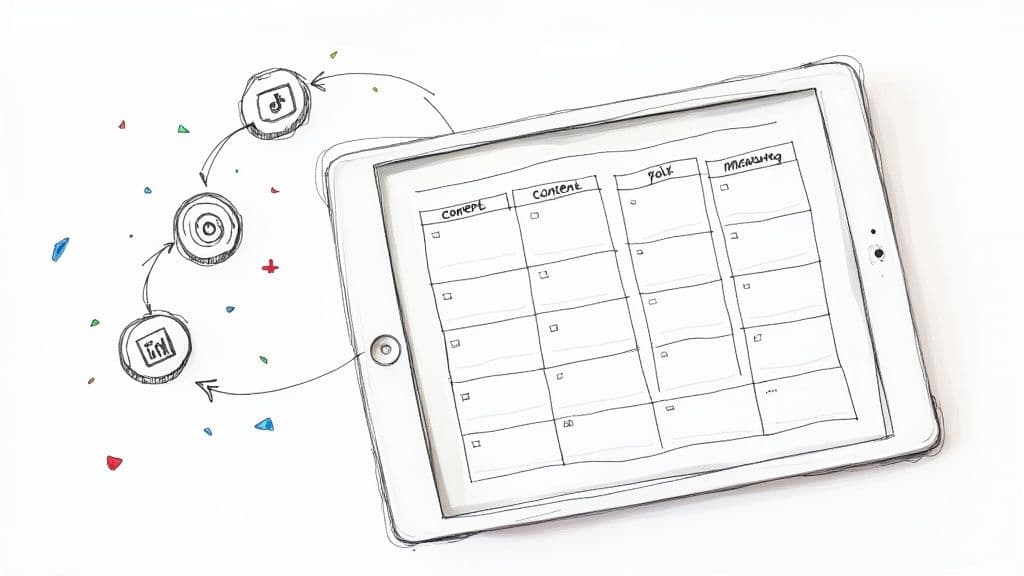
To elevate your team collaboration best practices, you must establish a single source of truth for all content. A centralized content calendar prevents duplicate posts, conflicting messages, and miscommunication by showing every scheduled post across all platforms in one place. It provides instant visibility into content status, approvals, and revisions.
This practice also involves disciplined version control, which is essential for creative workflows. When multiple team members are working on a single piece of content, it’s easy to lose track of edits. Version control ensures you can track changes, revert to previous versions if needed, and understand the history behind content decisions. This is particularly important for social media teams using tools like Postiz, where timing and consistency are everything.
Implementation in Practice
Modern planning tools like Trello and Airtable have popularized this visual approach to content management. For instance, a marketing agency can use a centralized calendar in Postiz to manage 20+ client accounts simultaneously, giving each client a clear view of their upcoming schedule. Small businesses can use a shared calendar to prevent accidentally posting the same message to both LinkedIn and Twitter, while influencers can maintain a consistent posting cadence across Instagram, TikTok, and YouTube.
Key Takeaway: The goal is to create one definitive reference point for what content goes live, where, and when. This eliminates guesswork and ensures the entire team works from the most current information.
A unified calendar is more than just a schedule; it’s a strategic dashboard. For a deeper dive into building an effective schedule, you can learn more about how to create a content calendar for social media and integrate these principles into your workflow.
To get started:
Color-Code Everything: Use colors or tags to identify the platform (e.g., blue for Facebook, pink for Instagram) or campaign type (e.g., green for product launch, yellow for blog promo).
Conduct Weekly Reviews: Hold a brief weekly meeting to review the upcoming content calendar, ensuring all details are accurate and there are no gaps in the schedule.
Archive Old Content: To keep the active calendar clean and focused, archive past months or completed campaigns. This prevents clutter and improves performance.
4. Regular Collaborative Review Cycles and Feedback Loops
Effective team collaboration doesn't end once content is published. The best teams build a system for continuous improvement by establishing structured, recurring review sessions. This practice involves regularly analyzing content performance, gathering feedback, and adjusting strategies together, turning content creation into a dynamic learning process.
These sessions create a formal feedback loop where insights from analytics directly inform future decisions. Instead of just scheduling posts and hoping for the best, your team can pinpoint what resonates with your audience and why. This approach, popularized by Agile methodologies like Scrum retrospectives, transforms social media management from a one-way broadcast into an intelligent, collaborative effort.
Implementation in Practice
A digital agency can conduct weekly retrospectives using its analytics dashboard to review campaign performance and adjust client content strategies in near real-time. Similarly, a small business can hold monthly reviews to see which content types generated the most leads, helping them decide where to invest their creative energy next. Even solo influencers can benefit by analyzing audience comments to refine their content themes.
Key Takeaway: The goal is to make data-driven decisions a team habit. Consistent review cycles prevent teams from operating on assumptions and ensure strategies are based on real-world performance.
This practice is central to many successful organizational frameworks, including OKRs (Objectives and Key Results), which rely on regular check-ins to track progress and make adjustments. The data-centric content culture at companies like Netflix also shows the power of using performance insights to guide creative direction.
To get started:
Schedule Consistent Meetings: Set a recurring time for your reviews, such as every Monday at 10 AM. A predictable rhythm makes it a non-negotiable part of the workflow.
Focus on Actionable Questions: Frame discussions around "What worked?" and "What didn't?" to guide the conversation toward concrete improvements rather than abstract blame.
Celebrate Wins: Acknowledge successful posts or campaigns to boost morale and reinforce effective strategies.
Document Key Insights: Maintain a simple "content playbook" or shared document to record findings, ensuring valuable lessons are not forgotten.
5. Task Assignment with Clear Ownership and Deadlines
Explicit task assignment ensures every piece of work has a definite owner and a clear deadline. This practice eliminates ambiguity about who is responsible for what, preventing important duties from falling through the cracks. In the context of social media management, this simple act of assigning a task is a critical component of effective team collaboration best practices.
Without clear ownership, a caption might go unwritten, a graphic might be forgotten, or an analytics report might never get reviewed. Assigning each step, from creation to approval and scheduling, to a specific individual ensures accountability throughout the content pipeline. For instance, a Content Creator knows they are responsible for delivering a set of posts by Wednesday, and the Scheduler knows they are responsible for queuing them by Friday.
Implementation in Practice
Task management platforms like Asana, Monday.com, and Jira have standardized this process. An agency, for example, can assign specific content creation tasks to freelancers with firm deadlines tied to the client’s content calendar. Similarly, an in-house team can distribute weekly post-approval duties among different managers to balance the workload and avoid bottlenecks. This clarity prevents confusion and keeps the entire team aligned.
Key Takeaway: The goal is to move from a culture of "someone will do it" to "this person is responsible for it by this date." This shift fosters accountability and makes project tracking transparent.
For a more systematic approach, many teams use a responsibility assignment matrix like the RACI framework, which defines who is Responsible, Accountable, Consulted, and Informed for each task. You can learn more about how to delegate tasks effectively to create a more organized and productive workflow.
To get started:
Be Specific: Instead of “Create content,” assign “Draft three Instagram carousel posts for the Q3 campaign, including captions and hashtag research.”
Set Buffer Deadlines: Assign deadlines a day or two before the actual due date to leave a buffer for reviews, edits, and unexpected delays.
Provide Context: Use task descriptions to include all necessary resources, links, and context, so the owner doesn't have to chase down information.
6. Documentation and Knowledge Base Maintenance
To foster strong team collaboration, it is essential to create a central source of truth. A well-maintained knowledge base ensures team members can find answers independently, reduces onboarding time for new hires, and preserves crucial institutional knowledge. Without it, your team will constantly ask repetitive questions, and valuable insights will walk out the door when a key person leaves.
This practice involves documenting everything from high-level strategy to day-to-day operational details. For a social media team, this includes brand voice guidelines, approved hashtag lists, platform-specific formatting rules, and step-by-step instructions for the approval workflow. It is a foundational element of professional team collaboration best practices, allowing your team to scale without chaos.
Implementation in Practice
Modern knowledge management tools like Notion or Confluence have made this easier than ever. A marketing agency can create a dedicated workspace for each client, documenting their specific brand guidelines, target audience personas, and content pillars. Small businesses can use a shared Google Drive folder to store content templates and performance reports, ensuring everyone is working from the same set of files.
Key Takeaway: The goal is to make information self-service. A great knowledge base empowers team members to solve problems on their own, freeing up senior members to focus on more strategic work instead of answering the same questions repeatedly.
Companies like GitLab have built their entire culture around radical transparency and documentation. While you may not need to go to that extent, adopting the core principle of "document everything" creates a more resilient and efficient team.
To get started:
Structure Your Hub: Organize your knowledge base with clear top-level categories like ‘Getting Started,’ ‘Brand Voice,’ ‘Content Creation,’ and ‘Platform Guides.’
Assign Ownership: Make specific team members responsible for keeping certain sections of the documentation up to date.
Schedule Audits: Review all documentation quarterly to remove outdated information and add new learnings, ensuring it remains a trusted resource.
7. Cross-Functional Collaboration Between Content and Analytics Teams
Effective social media management requires more than just great creative; it needs data to prove what works. Breaking down the silos between content creators and data analysts ensures that insights directly inform creative decisions. This practice fosters a feedback loop where content is continuously optimized based on real-world performance.
This collaboration is one of the most impactful team collaboration best practices because it bridges the gap between art and science. When content creators understand what resonates with an audience, and analysts understand the creative strategy behind a post, the entire campaign becomes more effective. Instead of working in separate vacuums, both teams share ownership of the results, leading to smarter, more targeted content.
Implementation in Practice
A marketing agency can implement this by having its creative team and analytics experts jointly review performance dashboards in a tool like Postiz. The analyst might point out that carousel posts are receiving 50% more saves than single-image posts, while the content creator can explain that the carousels tell a more detailed story. Together, they can decide to produce more story-driven carousel content for the next campaign.
Key Takeaway: Treat analytics not as a report card but as a creative tool. Data should inspire and guide content creation, not just judge it after the fact. This symbiotic relationship turns insights into actionable creative direction.
This approach was popularized by platforms like HubSpot, which built its entire methodology on combining data-driven insights with valuable content to attract and engage customers.
To get started:
Hold "Data Coffee" Meetings: Schedule informal, weekly meetings where analysts and creatives can discuss performance trends without the pressure of a formal review.
Create a Shared Glossary: Define key metrics (e.g., Engagement Rate, Reach, CTR) so both teams speak the same language and understand what success looks like.
Train for Analytics Literacy: Equip content creators with basic training to understand performance data, empowering them to make quick, data-informed adjustments.
8. Transparent Communication of Brand Strategy and Goals
For teams to collaborate effectively, every member must understand the "why" behind their work. Transparently communicating the brand strategy, target audience, and specific business goals ensures everyone is aligned and can make better, more autonomous decisions. When a content creator knows the campaign's core objective is to drive Q4 sales among a specific demographic, they can produce far more effective work than if they were simply told to "make a post about our new product."
This practice involves connecting daily tasks to the bigger picture. It empowers team members to think strategically, suggest improvements, and stay motivated because they see how their individual contributions fit into the company's success. This is a crucial element of professional team collaboration best practices, especially for distributed teams or agencies where context can easily be lost.
Implementation in Practice
An agency can start every new client project with a mandatory kickoff meeting where the entire team, from copywriters to designers, is briefed on the client’s brand positioning and market challenges. Similarly, a small business owner can hold a quarterly planning session to explain how upcoming social media efforts will support specific revenue targets. When the whole team understands the audience persona details, they create content that genuinely connects.
Key Takeaway: The goal is to move your team from task-doers to strategic partners. When everyone understands the strategy, they can proactively identify opportunities and solve problems without constant oversight.
This concept is supported by established frameworks like the OKR (Objectives and Key Results) methodology, which emphasizes clarity and alignment, and Simon Sinek's popular "Start with Why" philosophy. You can find practical guidance on building this strategic foundation in resources like HubSpot's guide to creating an inbound marketing strategy.
To get started:
Create a Strategy Summary: Develop a one-page document outlining the brand's mission, target audience, key messaging, and top-level goals. Make it easily accessible to everyone.
Connect Campaigns to Goals: For every new campaign, explicitly state which business objective it supports (e.g., "This campaign's goal is to increase email sign-ups by 15%").
Share Customer Insights: Regularly share customer feedback, survey results, and market research with the content team to keep them in touch with the audience's needs.
9. Integrated Workflow and Automation to Reduce Manual Friction
Effective team collaboration best practices include minimizing manual, repetitive tasks that drain your team's energy. By implementing an integrated workflow and automation strategy, you can free team members from tedious work, allowing them to focus on high-value activities like creative thinking and strategic planning. You can learn more about how workflow automation explained and its benefits can boost your team's efficiency.
In social media management, this means automating content approval steps, cross-posting content to multiple platforms, and scheduling posts for publication at optimal times. Integrating your primary platform with complementary tools like Zapier or Make reduces context-switching and ensures smooth handoffs between team members, from content creation to final analytics reporting.
Implementation in Practice
Modern tools are designed to connect and automate these processes. An agency, for instance, can use a platform’s auto-post feature to schedule a month's worth of content at platform-specific optimal times. Small businesses can set up automations to cross-post a new blog article from their website to all social channels, saving hours of manual work. A team can even use Zapier to automatically send a notification to a Slack channel the moment a scheduled post goes live.
Key Takeaway: The primary objective is to build a connected ecosystem where data flows and tasks are triggered automatically. This reduces human error, speeds up the content lifecycle, and lets your team operate at a higher strategic level.
By connecting your tools and processes, you can develop a more organized system for your team's output. For more insights on this, explore our guide on creative workflow management.
To get started:
Start Small: Identify the single most time-consuming, repetitive task your team performs and automate it first.
Document the Flow: Before building an automation, map out the existing manual workflow. This often reveals opportunities for optimization.
Set Up Alerts: Don't assume automations will always work. Configure failure notifications to catch and fix issues quickly.
Quarterly Reviews: Periodically check your automated workflows to confirm they are still necessary and functioning correctly for your team's needs.
10. Psychological Safety and Blame-Free Error Handling
To foster genuine team collaboration best practices, you must create a culture where mistakes are treated as learning opportunities, not moments for blame. Psychological safety is the shared belief that the team is safe for interpersonal risk-taking. In the fast-paced world of social media, errors like scheduling mishaps, accidental post deletions, or brand missteps are inevitable.
This practice involves shifting the focus from individual fault to systemic improvement. For instance, when a post goes out with a typo, a blame-free approach analyzes the workflow to see where the proofreading step failed. A blame-focused culture, in contrast, singles out the person who hit "publish." The former improves the system for everyone, while the latter encourages team members to hide mistakes, which is far more dangerous.
Implementation in Practice
Modern tech companies, influenced by research from Google's Project Aristotle and pioneers like Amy Edmondson, have adopted this mindset. A social media agency can implement a blameless post-mortem process after an off-brand post is published. Instead of asking "Whose fault was this?" the team asks "What can we learn?" and "How can our review process be improved to prevent this next time?"
Key Takeaway: The goal is to separate accountability from blame. Accountability means the team collectively owns the system and is responsible for fixing it. Blame is an unproductive personal judgment that erodes trust and discourages transparency.
This approach is critical for maintaining high morale and encouraging the innovation needed to stand out. To formalize this, some organizations use platforms like Blameless to structure their incident response and learning reviews, ensuring the focus remains on process improvement.
To get started:
Reframe Post-Mortems: Start every error review meeting by asking, "What did we learn?" and "What process broke?" not "Who made the mistake?"
Model Vulnerability: As a leader, openly discuss your own mistakes and what you learned from them to show that it is safe for others to do the same.
Document Fixes: After an error, document the process improvements in a shared knowledge base to prevent recurrence and help onboard new members.
10-Point Team Collaboration Comparison
Practice
🔄 Implementation Complexity
⚡ Resource Requirements
⭐📊 Expected Outcomes
💡 Ideal Use Cases
⭐ Key Advantages
Clear Role Definition and Permission Hierarchy
Medium — policy design and RBAC setup
Medium — admin time and periodic maintenance
⭐ Strong security and accountability; 📊 fewer errors and duplicated work
Agencies with multiple clients; large in-house teams
Prevents unauthorized access; scalable approvals
Asynchronous Communication Protocols
Low — establish norms and tooling
Low–Medium — documentation and notification config
⭐ Better focus and timezone collaboration; 📊 documented decisions and audit trail
Distributed teams; teams spanning multiple time zones
Encourages transparency; fosters innovation and resilience
Building Your Collaborative Engine
We’ve explored a detailed roadmap of ten essential team collaboration best practices, moving from foundational principles like clear role definition to advanced concepts such as psychological safety. The journey from a chaotic, reactive content process to a smooth, strategic operation is not about adopting every single idea at once. Instead, it’s about building a robust and resilient collaborative engine, piece by piece.
Think of each practice as a critical component. A centralized content calendar is your engine's chassis, providing structure and direction. Asynchronous communication protocols are the lubrication, reducing friction and allowing parts to move independently without causing wear and tear. Workflow automation acts as the turbocharger, boosting output and efficiency by taking over repetitive manual tasks.
The real power of these strategies is unlocked when they work together. Clear role definitions prevent confusion during collaborative review cycles. A well-maintained knowledge base makes cross-functional collaboration between content and analytics teams more productive. And a culture of psychological safety ensures that when errors inevitably happen, they become learning opportunities, not moments for blame.
From Theory to Action: Your Next Steps
The most common pitfall is feeling overwhelmed by the sheer number of potential improvements. To avoid this, approach implementation methodically. The goal isn't immediate perfection; it's consistent, incremental progress.
Start by diagnosing your team’s most significant pain point.
Is miscommunication causing delays? Focus on establishing clear asynchronous communication protocols and documenting them.
Are deadlines frequently missed? Implement a system for task assignment with explicit ownership and realistic timelines.
Is feedback inconsistent or causing conflict? Structure your review cycles and create a shared feedback rubric.
Select one area to address this quarter. Hold a team meeting to discuss the challenge and collaboratively decide which practice to implement first. For example, if your team struggles with version control and finding the latest approved assets, your immediate goal could be to set up and enforce a centralized content calendar and asset library.
Key Takeaway: True collaboration isn't a fixed destination; it's a continuous process of refinement. The most successful teams treat their workflows like a product, constantly iterating and improving based on real-world feedback and performance data.
Mastering these team collaboration best practices creates a powerful ripple effect. It directly translates to higher quality content, faster production cycles, and a more engaged, less burned-out team. When your collaborative engine is running smoothly, your team can finally shift its focus from navigating internal friction to creating content that truly connects with your audience and drives business results. This systematic approach is the foundation of a scalable and sustainable content strategy.
Ready to build a powerful collaborative engine for your content team? Postiz provides the centralized platform you need to implement these best practices, from a visual content calendar and automated workflows to streamlined approval processes. Start your free trial of Postiz today and see how the right tool can transform your team's collaboration.
Master these 7 visual storytelling techniques to create compelling social media content. Learn actionable tips and see real-world examples to boost engagement.