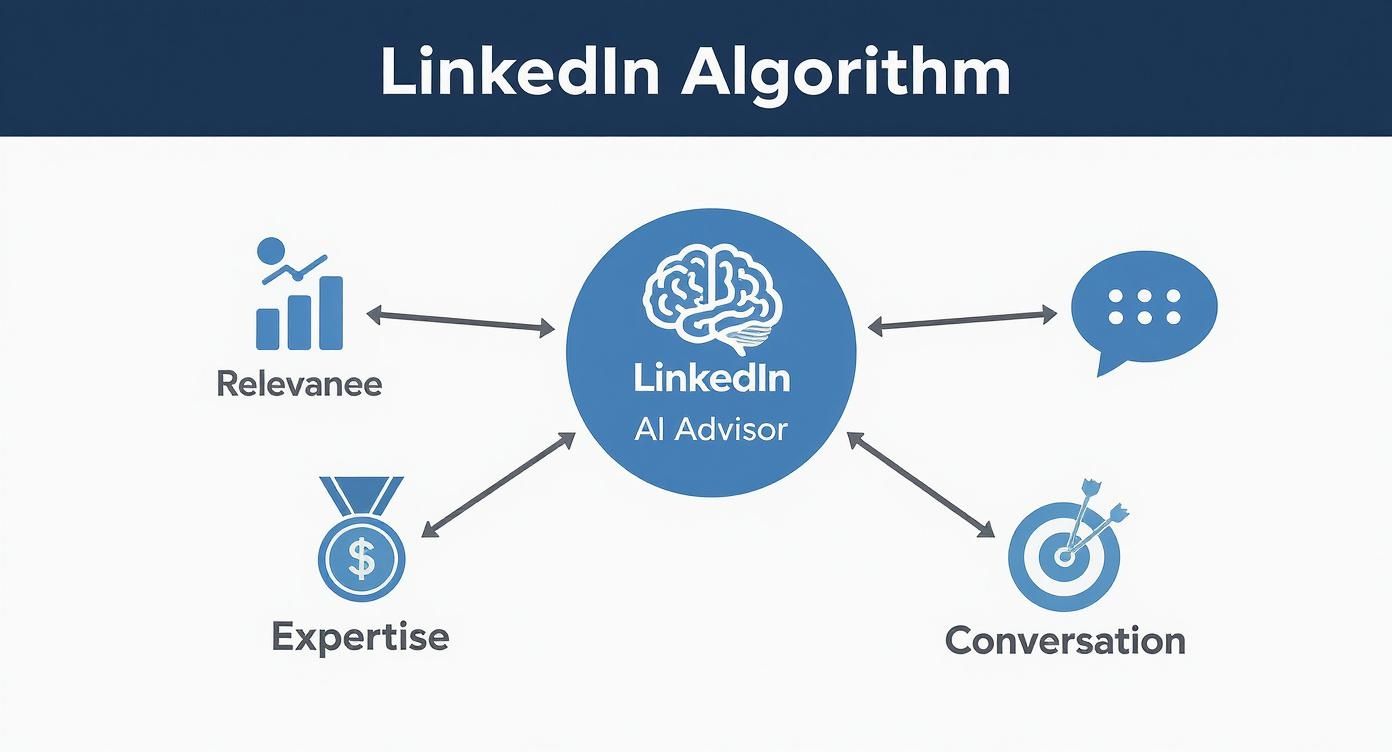
The biggest change you need to wrap your head around with LinkedIn’s latest algorithm is this: it’s all about expertise and real conversations now. Forget just posting at the right time. LinkedIn is acting less like a simple timeline and more like a smart career advisor, digging up valuable knowledge for the right people, even if a post is weeks old.
How the New LinkedIn Algorithm Works
The feed is no longer chronological. It’s intent-driven and relevance-driven.
Here’s what LinkedIn boosts today:
Posts that teach, guide, or explain
Content that sparks professional discussions
Insights from creators with clear authority
Posts aligned with a user’s skills, industry, and interests
Viral-style, shallow engagement matters far less than before.
The Shift from Recency to Relevance
The “golden hour” is no longer everything. Yes, it still helps — but it doesn’t decide your fate.
LinkedIn now asks:
“Is this still useful?”
“Is this relevant to this viewer right now?”
“Is this connected to this user’s professional interests?”
Because of this, a well-written post can resurface days or even weeks later.
The Three Pillars of Modern Reach
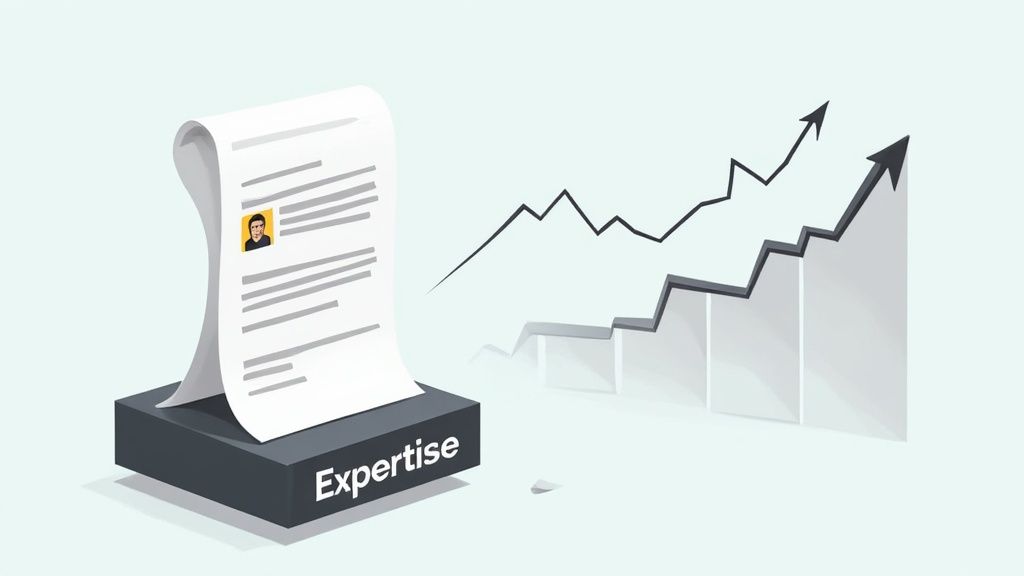
1. Expertise
LinkedIn rewards creators who consistently share original insights on a focused topic.
2. Relevance
The algorithm analyzes a user’s:
industry
skills
past engagement
interests
to match posts to the right audience.
3. Conversation
Thoughtful comments and genuine back-and-forth discussions now carry more weight than likes.
Key LinkedIn Algorithm Shifts at a Glance
To make this even clearer, here’s a quick summary table that breaks down the most important changes in how LinkedIn is ranking content.
Ranking Signal
Old Approach
New Approach
Content Lifespan
Heavily favored posts in the first 24-48 hours.
Quality content can surface for weeks if it stays relevant.
Engagement Type
All engagement (likes, comments, shares) was valued similarly.
Prioritizes thoughtful comments and discussions over simple likes.
Creator Focus
Rewarded broad, viral content.
Favors niche experts who post consistently on a topic.
Timing
The “golden hour” post-publication was critical.
Initial engagement still helps, but long-term value is key.
This table really drives home the point: the game has shifted from short-term tactics to long-term value creation.
Manage all your social media in one place with Postiz
LinkedIn’s AI “Topic Graph” Matches Your Posts to the Right Audience
LinkedIn now uses AI to map:
millions of topics
millions of professionals
billions of interactions
This helps the platform match your content to people who care — even outside your network.
That’s why niche creators are seeing a rise in 2nd- and 3rd-degree impressions.
Why Engagement Bait No Longer Works
Examples:
“Type YES if you agree!”
“Comment ‘Interested’ and I’ll DM you!”
“Drop an emoji to get the link!”
LinkedIn identifies these tactics and suppresses the post.
What LinkedIn Rewards Instead:
thoughtful, multi-sentence comments
back-and-forth discussions
shares with personal insights
saves
profile visits
expert-level contributions
One meaningful comment now outweighs 20 empty ones.
The Crackdown on Low-Quality Tactics
LinkedIn started to get smart. It began a full-on crackdown on these manipulative tactics, teaching its algorithm to tell the difference between a real conversation and a cheap trick for clicks. The platform started to actively penalize posts that explicitly asked for likes and comments without offering anything in return.
This was a huge change. New filters were put in place to spot and suppress engagement bait, tanking its visibility almost overnight. Instead, the algorithm started rewarding posts that sparked thoughtful discussions and substantive comments. You can find more details on this transition over at Recurpost.com.
What Meaningful Engagement Looks Like Now
So, if begging for comments is out, what’s in? The algorithm is now hunting for signs that your content is starting a real professional conversation.
Here’s what the new algorithm really loves to see:
Long-form comments: When someone takes the time to write a few sentences, it shows they actually read and considered your post.
Back-and-forth discussions: You replying to comments—and those replies getting their own replies—is a massive signal that you’ve created an active, healthy discussion.
Shares with added insight: This is a big one. When someone shares your post and adds their own commentary, it’s a powerful endorsement that the algorithm values highly.
LinkedIn Now Suppresses Overly Promotional or Sales-Heavy Posts
LinkedIn has also started quietly down-ranking overly promotional posts. Content full of external links, hard-selling language, or CTA-heavy messaging is now treated similarly to engagement bait: it’s considered low value. LinkedIn wants posts that educate, share experience, or start dialogue — not advertisements. This doesn’t mean you can’t share links; it just means the platform now rewards posts that lead with insight, not promotion.
How Expertise and Relevance Are Changing the Game
LinkedIn’s feed now functions like a personal advisor.
It elevates content that:
is evergreen
helps a specific type of professional
provides actionable insights
LinkedIn confirmed it now surfaces posts up to 2–3 weeks old if they’re still relevant.
This is why niche experts are winning more consistently than broad content creators.
How to Be Seen as an Expert
Post consistently on one niche topic to train the algorithm.
Insights must be original, not generic.
Longer dwell time signals strong expertise.
High-quality comments from industry peers boost your authority.
Your profile content reinforces your expertise category.
The “Golden Hour” Isn’t Gone, It’s Just Different
The idea of the “golden hour”—that make-or-break first 60 minutes—hasn’t vanished, but its job has changed. It’s no longer a simple pass/fail test that seals your post’s fate. Instead, that initial burst of engagement now acts as a powerful quality signal that gives your content a much longer-term boost.
The New Golden Rule: Strong initial engagement tells the algorithm, “Pay attention. This content is high-quality and deserves a longer life.” Think of it as the launchpad, not the entire mission.
A flurry of early likes and comments shows the algorithm that your post immediately clicked with your core network. That initial thumbs-up gives it the green light to start testing your content with a broader audience, like your second and third-degree connections. If it keeps performing well, it can stay alive in the feed for days, sometimes weeks. This is one of the most important takeaways from the recent LinkedIn algorithm updates. Your best work now has the chance to become a long-term asset, continuously finding new people who need to see it.
How LinkedIn Uses Your Profile as an Expertise Signal
One of the biggest pieces missing from most conversations is how much your LinkedIn profile itself now influences your visibility. LinkedIn’s new expertise model doesn’t just look at your posts — it scans your headline, skills, endorsements, past content themes, and even what topics your network engages with. Your profile becomes a ranking signal. The clearer and more consistent your professional identity is, the more confidently the algorithm can categorize you as an expert, which massively increases your distribution.
Alright, so we’ve talked about the “what” and “why” behind the LinkedIn algorithm updates. Now for the fun part: putting it all into practice.
The good news? You don’t need to throw your entire content plan out the window. This is less about a complete overhaul and more about a smart, strategic shift. You need to stop thinking like a broadcaster and start acting like a conversation starter.
Master Your Content Mix
Under the new algorithm, not all content formats pull the same weight. Each one has a specific job to do, and a balanced diet of content is what keeps your audience—and the algorithm—happy.
Think about your content mix like this:
Text-Only Posts: Perfect for sharing a strong opinion, a personal story, or a direct question. They’re clean, simple, and get straight to the point, often sparking the best comment threads.
Image Posts: A powerful visual is the ultimate scroll-stopper. Use quality photos, infographics, or even a behind-the-scenes shot to add personality and context. A good image can easily double your comments.
Document Posts (Carousels): These are your secret weapon for showing off your expertise. Share checklists, how-to guides, or key takeaways from a report. They’re built for swiping, which is a massive boost for dwell time.
Video: Nothing builds trust like a short, authentic video. Speaking directly to the camera makes you relatable. In fact, LinkedIn’s own data shows videos can get up to five times more engagement than other formats.
The key is to experiment. Try different formats and pay close attention to what your specific audience responds to. That’s how you’ll find your sweet spot.
The updated algorithm prioritizes different formats for their ability to drive specific types of engagement. This table breaks down how to think about each one.
Posting consistently becomes much easier with reliable LinkedIn scheduling tools, especially when testing multiple formats weekly.
To stay consistent and make testing easier, using a LinkedIn post scheduler can help you plan, automate, and optimize your content without manual posting.
Table: Content Format Performance Under the New Algorithm
Content Format
Key Strengths
Best For Driving
Implementation Tip
Text-Only Posts
Simplicity, high readability, encourages direct replies.
Comments & Discussion: Sparks debate and personal stories.
Start with a bold question or a polarizing statement to hook readers immediately.
Single Image Posts
High visual impact, stops scrolling, easily shareable.
Initial Engagement: Grabs quick attention and reactions.
Use high-contrast images or infographics with a clear focal point.
Document Posts (Carousels)
Demonstrates expertise, high dwell time due to swiping.
Dwell Time & Expertise: Keeps users engaged with your content longer.
Create a “how-to” guide or a listicle. Make the first slide irresistible.
Video (Native)
Builds authentic connection and trust.
Overall Engagement & Trust: Generates comments, shares, and reactions.
Keep it short (under 90 seconds), add captions, and record with good lighting.
Quick Reactions & Data: Gathers opinions with a single click.
Ask a relevant, timely question with 2-3 clear options. Follow up with a post on the results.
By strategically choosing formats, you can give the algorithm the exact signals it’s looking for while providing genuine value to your network.
Pro Tip: Need to share an external link? Don’t put it in the main post. The algorithm prefers content that keeps people on LinkedIn. Instead, pop it in the first comment. You’ll drive the traffic you want without hurting your post’s reach.
If you’re looking to blend your organic efforts with a paid strategy, checking out some effective LinkedIn ad examples can give you some great ideas for what works.
For a deeper breakdown of the advantages of LinkedIn ads, this guide shows how paid campaigns can complement your organic reach.
Structure Your Posts for Maximum Engagement
How you say something is just as important as what you say. Your post’s structure can make or break its performance, especially with the latest algorithm changes.
A winning post follows a simple, three-part formula.
Use a strong hook in the first 3 lines.
Keep the body skimmable and valuable.
End with a question that leads to conversation, not yes/no answers.
Write like you’re inviting discussion, not making an announcement.
Let’s see it in action.
Before:
“We just published a new blog post on marketing trends. It covers SEO and social media. Check it out here: [link]”
After:
“Is SEO officially on life support?
I’ve talked to three marketing VPs this week who are pulling their budgets from organic search and going all-in on social. They say it’s just too crowded.
This got me thinking… are we all undervaluing SEO, or is this the start of a massive shift in how we market?
What are you seeing? Are you betting bigger on SEO or social this year?”
See the difference? The first one is an announcement. The second one is a conversation. It has a hook, adds value, and invites everyone to weigh in—exactly what the algorithm is designed to reward.
To format posts for better readability and engagement, make sure you’re following the correct LinkedIn post dimensions.
Building a Community to Boost Your Visibility
The latest LinkedIn algorithm updates have really shaken things up. The old goal of just blasting your message out and hoping it sticks? That’s over. The new game is all about starting real conversations and turning your profile into a go-to spot for people in your industry.
How to Spark Meaningful Conversations
Creating a place where people actually want to talk doesn’t happen by accident. You have to be intentional. It’s about being a facilitator, not just a publisher. The right approach can turn passive scrollers into people who actually want to join the conversation.
Here are three simple ways you can start building your community today:
Ask Open-Ended Questions: Ditch the simple yes/no questions. Instead of, “Do you agree?” try asking, “What has your experience been with this?” This prompts people to share their own stories, not just one-word answers.
Tag Experts Thoughtfully: When it makes sense, tag one or two other professionals in your post and ask for their specific take. This pulls new voices into the mix and shows the algorithm you’re a connector.
Engage Off Your Own Page: Community building isn’t a one-way street. Block out 15 minutes each day to leave insightful comments on posts from other people in your industry. This builds goodwill and makes them far more likely to engage with your content when they see it.
Turning Engagement Into Visibility
Every single meaningful interaction you help create sends a clear signal to LinkedIn. The algorithm sees your content as a launchpad for professional networking and learning, which tells it you’re a creator worth showing to more people. This is the heart of how the recent LinkedIn algorithm updates reward community-driven efforts.
This approach creates a powerful, self-sustaining loop. The more you talk with your community, the more the algorithm shows your posts to new, relevant people. As those new people join the conversation, your visibility gets another boost, solidifying your reputation as an expert. If you want to go deeper, our guide on how to build online communities has even more strategies.
How to Measure Your LinkedIn Success
It’s great to adapt to the latest LinkedIn algorithm updates, but how do you actually know if your new strategy is working? The old scoreboard—chasing likes and a bigger follower count—just doesn’t cut it anymore. It doesn’t tell the whole story.
Success on LinkedIn today is all about the quality of your engagement, not just the raw numbers.
If you want to prove your efforts are actually moving the needle, you need to start tracking the metrics that reflect what the algorithm now cares about: genuine expertise and real conversation. It’s time to get past the surface-level data and find the numbers that show true impact. This is how you’ll fine-tune your strategy and show everyone what your work on LinkedIn is really worth.
Key Metrics That Matter Now
Let’s stop obsessing over vanity metrics. Instead, build your performance dashboard around these three core indicators. They line up perfectly with what the new algorithm wants to see.
Comment Quality and Depth: Don’t just count the comments. Look at what people are saying. Are you getting thoughtful, multi-sentence replies that kick off a real back-and-forth, or is it just a lot of “Great post!” and “Thanks for sharing”? High-quality comments that spark more discussion are gold.
Engagement Rate Over Time: A post’s life isn’t over after the first hour. Keep an eye on how engagement trickles in over several days or even a week. A healthy “long-tail” of comments and shares is a clear sign your content has staying power.
Reach Beyond Your Network: This one is huge. Dive into your post analytics and see how many viewers are coming from outside your direct connections. When your content starts performing well with your 2nd and 3rd-degree connections, it means the algorithm thinks it’s valuable enough to push out to a wider audience.
Getting a handle on these metrics is your first step. For a wider perspective on tracking performance, check out our full guide on how to measure social media success.
A Simple Framework for Testing and Refining
To keep getting better, you need a simple way to test what your audience really wants. Don’t make it complicated. Just adopt a basic A/B testing mindset to try out different things and let the data be your guide.
Here’s a dead-simple testing method you can start using today:
Isolate One Variable: For one week, focus only on testing different content formats. Post a text-only update, a carousel, a poll, and a short video. Try to keep the topic and posting time as consistent as you can.
Analyze Key Metrics: At the end of the week, sit down and look at the numbers. Which format got the most thoughtful comments? Which one kept the conversation going after 72 hours?
Iterate and Repeat: Take what you learned and make your winning format the new standard. The next week, test something else—like how you start a discussion. Try ending some posts with a direct question and others with a prompt for people to share their own stories.
This methodical approach takes the guesswork out of the equation. You’ll slowly build a data-backed playbook for what truly connects with your specific audience on LinkedIn, which makes every content decision a whole lot smarter.
Once you’ve mastered the basics, you might find that dedicated LinkedIn monitoring tools can give you an even deeper look at your content’s performance, helping you refine your strategy with even more precision.
Ready to take these ideas and run with them? If you want to streamline your LinkedIn strategy, Postiz can help. It offers AI-powered content ideas, smart scheduling, and analytics to make sense of it all. Start planning and publishing smarter content at https://postiz.com.
Master these 7 visual storytelling techniques to create compelling social media content. Learn actionable tips and see real-world examples to boost engagement.