Struggling to make an impact on social media? It’s not about posting more; it’s about posting smarter. The difference between a forgotten post and a viral campaign lies in the strategy behind it.
A solid plan turns random activity into measurable results, but figuring out where to start can be the hardest part. Using a structured social media marketing plan template can make this process faster and more effective.
This article breaks down 8 powerful examples of social media strategy, showing you not just what worked, but why it worked and how you can replicate it. We will move beyond surface-level case studies to provide a detailed analysis of the tactics, tools, and outcomes for each approach. To gain further insights into practical applications and examples of social media strategy, you can also delve into these effective social media marketing strategies.
Get ready to explore actionable blueprints for everything from fostering vibrant communities with user-generated content to leveraging real-time trends for maximum impact. Each example is a playbook you can adapt to build your own winning formula and achieve your specific business goals. Let’s dive into the strategies that are defining success right now.
In this guide, you’ll learn:
UGC social media strategy example
Influencer marketing strategy example
Community-building social media strategy
Real-time marketing strategy example
Data-driven social media strategy
What Is a Social Media Strategy?
A social media strategy is a structured plan that defines how a brand uses social platforms to achieve specific goals such as brand awareness, engagement, or sales. It includes content planning, audience targeting, performance tracking, and optimization.
Social Media Strategy Examples by Business Type
SaaS & Tech Brands
Ecommerce & DTC
B2B & Professional Services
Personal Brands & Creators
1. User-Generated Content (UGC) Strategy
A User-Generated Content (UGC) strategy centers on encouraging your audience to create and share content that features your brand. Instead of relying solely on branded posts, you leverage authentic content from real customers. This approach builds powerful social proof, as people trust recommendations from their peers far more than they trust traditional advertising.
This method is a standout example of a social media strategy because it transforms passive followers into active brand advocates. It fosters a sense of community and allows your audience to see themselves reflected in your marketing, making your brand more relatable and trustworthy.
Manage all your social media in one place with Postiz
GoPro’s entire marketing model is a masterclass in UGC. They don’t just sell cameras; they sell the adventurous lifestyle their cameras capture. Their “Photo of the Day” contest is a prime example of this strategy in action.
The Tactic: GoPro encourages users to submit their best photos and videos using the hashtag #GoPro. The brand then selects the most compelling content to feature on its official social media channels, often with a prize or monetary reward.
The Result: This simple contest generates a constant, high-quality stream of authentic and visually stunning content. GoPro’s Instagram and YouTube feeds are filled with breathtaking shots from real customers, showcasing the camera’s capabilities in the most persuasive way possible. This strategy provides endless marketing material while building a loyal community of creators.
This strategy works especially well for ecommerce brands, DTC products, travel companies, and consumer-focused SaaS tools where customers naturally create visual or experiential content. Brands with active user communities or lifestyle-driven products benefit the most, as UGC builds trust and significantly improves engagement and organic reach.
Actionable Takeaways for Your Brand
You can implement a similar UGC strategy to boost engagement and authenticity.
Create a Branded Hashtag: Develop a unique and easy-to-remember hashtag for your campaign, like Airbnb’s #BelongAnywhere.
Offer Clear Incentives: Motivate your audience to participate by offering prizes, discounts, or the chance to be featured on your page.
Engage and Amplify: Actively like, comment on, and reshare the best user submissions. Always credit the original creator to build goodwill and encourage more participation.
2. Influencer Partnership Strategy
An Influencer Partnership Strategy involves collaborating with social media creators to promote products or services to their dedicated audiences. Instead of direct advertising, this approach leverages the trust, credibility, and reach an influencer has built with their followers. It’s a powerful way to generate authentic brand awareness and drive conversions through a trusted voice.
This method is a vital example of a social media strategy because it taps into pre-existing communities built on trust. When an influencer recommends a product, it feels more like a genuine suggestion from a friend than a corporate advertisement, effectively cutting through the noise of traditional marketing.
Strategic Breakdown: Daniel Wellington’s Micro-Influencer Dominance
The watch brand Daniel Wellington built its empire almost entirely on an influencer partnership strategy, particularly by focusing on micro-influencers. They mastered the art of creating a perception of widespread, organic popularity.
The Tactic: Daniel Wellington gifted its minimalist watches to thousands of fashion and lifestyle micro-influencers across Instagram. In exchange for the free product, influencers posted high-quality photos featuring the watch, along with a unique discount code for their followers.
The Result: This created a massive, coordinated wave of authentic-looking endorsements. Instagram feeds were flooded with stylish people wearing the same watch, creating immense social proof and aspirational appeal. The discount codes made the purchases trackable and incentivized immediate sales, turning brand awareness directly into revenue.
Influencer partnerships are highly effective for ecommerce brands, mobile apps, and SaaS products targeting niche audiences. They also work well for B2B brands when paired with industry experts or LinkedIn creators, where trust and credibility matter more than follower count.
Actionable Takeaways for Your Brand
You can build a powerful influencer strategy by focusing on authenticity and a clear value exchange.
Prioritize Alignment Over Reach: Choose influencers whose audience and values genuinely match your brand. High engagement on a smaller, niche account is often more valuable than low engagement on a massive one.
Empower Creative Freedom: Provide clear guidelines but allow influencers the creative freedom to present your product in their own unique voice. This ensures the promotion feels natural to their audience.
Build Long-Term Relationships: Move beyond one-off posts. Fostering long-term partnerships with brand ambassadors creates deeper, more authentic advocacy. Using features like collaborative posts can enhance this partnership. For more guidance, check out this resource on how to do collaborative posts on Instagram.
3. Community Building and Engagement Strategy
A Community Building and Engagement strategy prioritizes creating a loyal, interactive group of followers around your brand. Instead of just broadcasting promotional messages, this approach focuses on two-way conversations, fostering relationships, and providing value that goes beyond your products or services. It aims to create a space where customers feel heard, connected, and part of something bigger.
This is a powerful engagement of a social media strategy because it builds long-term brand loyalty and advocacy. When customers feel like valued members of a community, they are more likely to engage with your content, recommend your brand to others, and remain customers for life. It humanizes your brand and turns your social media channels into vibrant hubs of activity.
Strategic Breakdown: Wendy’s Witty Twitter Roasts
Wendy’s transformed its social media presence by adopting a distinct, witty, and slightly savage brand personality on Twitter. Instead of generic corporate messaging, they engaged directly with followers and even other brands, creating a unique and entertaining community experience.
The Tactic: Wendy’s social media team actively responds to mentions, participates in viral trends, and famously “roasts” competitors and users who ask for it. This consistent, humorous voice gives followers a reason to engage beyond just seeing deals on burgers.
The Result: This strategy turned Wendy’s Twitter account into a must-follow source of entertainment, skyrocketing its follower count and engagement rates. The brand became a cultural phenomenon, generating massive earned media and making followers feel like they were in on an inside joke, which strengthened their brand affinity.
This approach is ideal for SaaS platforms, subscription-based businesses, and B2B brands that rely on long-term customer relationships. Community-driven social media strategies help reduce churn, increase retention, and turn customers into brand advocates over time.
Actionable Takeaways for Your Brand
You can foster a strong community by developing a unique voice and prioritizing interaction.
Develop a Distinct Personality: Define a clear brand voice, whether it’s humorous, helpful, or inspiring. Consistency is key to building a recognizable persona.
Prioritize Two-Way Conversation: Make a point to respond to comments, messages, and mentions promptly. Ask questions and actively listen to what your audience is saying.
Offer Exclusive Value: Provide community members with exclusive content, early access to products, or special Q&A sessions to make them feel valued. Learn more about how to build online communities on postiz.com.
4. Content Series and Storytelling Strategy
A Content Series and Storytelling strategy involves creating a sequence of related posts that unfold over time, much like a television series. Instead of one-off posts, this approach uses a narrative arc to build anticipation and create a deeper, more emotional connection with your audience. It hooks followers and encourages them to return for the next installment.
This method is a powerful example of a social media strategy because it transforms your feed from a simple marketing channel into a destination for entertainment and education. By telling a compelling story and experimenting with proven social media marketing ideas, you can hold your audience’s attention for far longer than a single post ever could.
Strategic Breakdown: Ben & Jerry’s Social Justice Campaigns
Ben & Jerry’s has mastered the art of brand storytelling by weaving its social and environmental missions into its marketing. Their campaigns go beyond just ice cream, creating serialized content that educates followers on complex issues like systemic racism, climate justice, and voting rights.
The Tactic: The brand creates multi-part series on Instagram and other platforms that break down a complex topic into digestible, visually engaging posts. Each post builds on the last, often featuring expert voices, data visualizations, and clear calls to action, guiding their audience through a learning journey.
The Result: This strategy positions Ben & Jerry’s as more than a product; it becomes a purpose-driven brand. By consistently telling these important stories, they attract and retain customers who share their values, building an incredibly strong and loyal community that is engaged with the brand’s mission.
Story-driven content series work best for mission-led brands, startups, SaaS companies, and personal brands that need to educate their audience over time. This strategy is especially effective when selling complex products or ideas that require trust and repeated exposure.
Actionable Takeaways for Your Brand
You can use storytelling to create more meaningful and memorable content.
Plan Your Narrative Arc: Before launching, map out the entire series from beginning to end. Know your key messages, the story you want to tell, and how each “episode” will connect to the next.
Use Consistent Branding: Maintain a consistent visual style, from colors and fonts to templates, so your audience can instantly recognize a post as part of the series.
Create Teasers: Build anticipation by using “cliffhangers” or creating short video trailers to promote the next installment, encouraging followers to stay tuned. For specific inspiration on crafting engaging posts and campaigns, explore these social media content ideas to go viral.
5. Real-Time Marketing and Newsjacking Strategy
A Real-Time Marketing and Newsjacking strategy involves capitalizing on current events, breaking news, and trending topics to insert your brand into the cultural conversation. This agile approach requires speed and relevance, allowing brands to gain massive visibility by reacting to moments as they happen. It’s a high-risk, high-reward play that can generate significant buzz.
This method is a powerful example of a social media strategy because it demonstrates a brand’s ability to be nimble, witty, and culturally aware. When executed well, it makes a brand feel human and relevant, capturing audience attention in a way that pre-planned content rarely can. It shows your followers that you are present and engaged with the world around them.
Strategic Breakdown: Oreo’s Super Bowl Blackout Tweet
Oreo’s “Dunk in the Dark” tweet during the 2013 Super Bowl blackout is the gold standard of real-time marketing. When the stadium lights went out during the game, Oreo’s team quickly created and published a simple yet brilliant ad.
The Tactic: Within minutes of the blackout, Oreo tweeted a simple image of an Oreo cookie in a dimly lit space with the caption: “Power out? No problem. You can still dunk in the dark.” The tweet was timely, clever, and perfectly on-brand.
The Result: The post exploded, earning thousands of retweets and massive media coverage. It completely overshadowed many of the multi-million dollar commercials that aired during the game. This single tweet cemented Oreo’s reputation as a quick-witted, modern brand and proved the immense power of agile social media marketing.
Real-time marketing is most effective for consumer brands, media companies, and social-first businesses that can react quickly to trends. Brands with agile teams and strong brand voice guidelines benefit the most, while heavily regulated B2B industries should use this strategy cautiously.
Actionable Takeaways for Your Brand
You can prepare your brand to capitalize on real-time moments.
Monitor Trends: Use social listening tools like Sprout Social or Hootsuite to actively monitor trending topics, keywords, and hashtags relevant to your industry and audience.
Establish a Rapid Approval Process: Create a streamlined workflow with key decision-makers (including legal or PR) on standby. Speed is essential, so you need to be able to get approval for a post in minutes, not hours.
Know When to Stay Silent: Not every trend is an opportunity. Instruct your team to avoid sensitive, political, or tragic events. A poorly judged post can cause significant brand damage.
6. Social Commerce and Shoppable Content Strategy
A social commerce strategy integrates e-commerce functionality directly into social media platforms, allowing users to browse and buy products without ever leaving the app. This approach removes friction from the buying process by turning content feeds into interactive storefronts. By making the path from discovery to purchase seamless, brands can capitalize on impulse buys and improve conversion rates.
This method is a powerful example of a social media strategy because it meets customers where they are already spending their time. It transforms social platforms from brand awareness tools into direct revenue-generating channels, providing a clear and measurable return on investment for social media efforts.
Strategic Breakdown: Glossier’s Instagram Shop
Beauty brand Glossier excels at creating a native shopping experience on Instagram, seamlessly blending content and commerce. They treat their Instagram feed not just as a marketing channel, but as a primary point of sale, making it incredibly easy for followers to become customers.
The Tactic: Glossier uses high-quality, lifestyle-oriented images and videos featuring their products. Ensuring visuals are properly formatted for each platform is critical, and tools like an Instagram photo resizerhelp brands maintain image quality and consistency across posts. Each post has product tags that allow users to tap on an item, view its price and description, and click through to purchase directly from the in-app Instagram Shop.
The Result: This frictionless journey significantly shortens the sales funnel. A user can see a product on a model, tap to learn more, and complete the purchase in just a few clicks. This immediacy boosts conversions and transforms passive scrolling into an active shopping experience, directly linking social engagement to sales.
Shoppable social media strategies are ideal for ecommerce, DTC brands, and lifestyle products where impulse buying plays a role. They are especially powerful on visual platforms like Instagram, TikTok, and Pinterest, where product discovery happens organically.
Actionable Takeaways for Your Brand
You can leverage social commerce to turn your followers into customers.
Set Up Your Shop: Activate the shopping features on platforms like Instagram, Facebook, and Pinterest. Carefully curate a product catalog with high-quality images and clear, compelling descriptions.
Tag Products Consistently: Make it a habit to tag products in all relevant posts, including feed posts, Stories, and Reels. Use lifestyle imagery that shows your products in a real-world context.
Run Exclusive Social Offers: Create product launches or promotions that are exclusive to your social media audience. This creates a sense of urgency and rewards your followers for their loyalty.
7. Employee Advocacy and Brand Ambassador Strategy
An Employee Advocacy strategy transforms your team members into credible brand ambassadors. It involves empowering employees to share company content, culture, and values on their personal social networks. This approach humanizes your brand, as messages from real people are often perceived as more authentic and trustworthy than corporate advertisements.
This method is a powerful example of a social media strategy because it taps into the extensive, combined reach of your employees’ networks. It not only boosts organic reach and engagement but also enhances employer branding, making your company more attractive to top talent.
Strategic Breakdown: Microsoft’s Employee Thought Leadership
Microsoft excels at leveraging its employees, particularly on professional platforms like LinkedIn, to establish thought leadership and build brand credibility. They don’t just ask employees to share links; they encourage them to build their personal brands as industry experts.
The Tactic: Microsoft provides its employees with resources, training, and a supportive framework to share their expertise. Team members post insightful articles, comment on industry trends, and share behind-the-scenes looks at projects they are passionate about, aligning their professional growth with the company’s goals.
The Result: This strategy positions Microsoft as a hub of innovation and expertise, driven by passionate individuals. Instead of a single corporate voice, thousands of authentic voices are amplifying the company’s message, building deeper trust with customers, partners, and potential hires. Their collective content generates significant organic reach and reinforces the brand’s industry leadership.
Employee advocacy works best for B2B companies, SaaS brands, and professional service firms where expertise and credibility drive buying decisions. It is particularly effective on LinkedIn, where thought leadership content can directly influence trust and lead generation.
Actionable Takeaways for Your Brand
You can build a powerful employee advocacy program to extend your brand’s reach.
Provide Clear Guidelines and Training: Equip your team with social media best practices and clear “do’s and don’ts” to ensure brand consistency and confidence.
Create Shareable Content: Develop an internal hub with pre-approved content, such as blog posts, infographics, and company news, that employees can easily access and share.
Recognize and Reward Participation: Acknowledge top advocates through internal shout-outs, small incentives, or professional development opportunities to encourage continued engagement.
8. Data-Driven Social Media Strategy
A Data-Driven Social Media Strategy moves beyond guesswork, relying on analytics and performance metrics to guide every decision. Instead of posting based on intuition, this approach uses concrete data to optimize content, target audiences, and refine campaigns for maximum impact. It is a systematic process of testing, measuring, and iterating to achieve specific business goals.
This method is a powerful example of a social media strategy because it ensures your efforts are both efficient and effective. By focusing on measurable results, you can justify your marketing spend, prove ROI, and consistently improve your performance over time, turning social media into a predictable engine for growth.
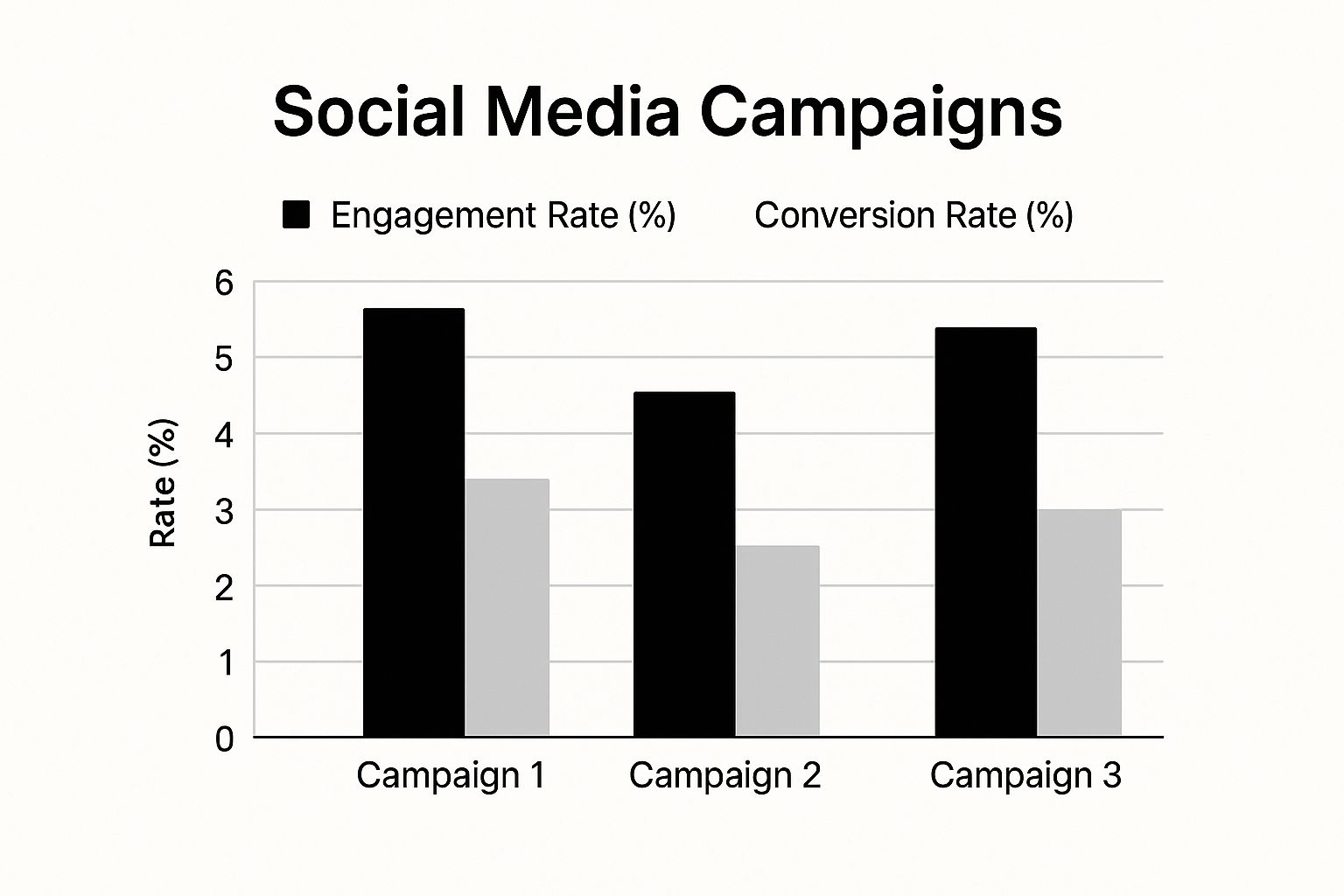
The bar chart below compares key performance indicators for three different social media campaigns, illustrating how data can reveal which efforts drive the most valuable outcomes.
The visualization highlights how a campaign with a high engagement rate doesn’t always translate to a high conversion rate, reinforcing the need to track metrics tied to business objectives.
Netflix’s social media content strategy is a masterclass in using data to drive engagement. The company leverages its massive trove of user viewing data not just for show recommendations, but to inform its social media promotions, creating highly relevant and personalized content.
The Tactic: Netflix analyzes viewing habits, popular scenes, and audience demographics to create memes, clips, and posts that resonate with specific segments. For example, they might promote a new season of a show using different characters or themes in ads targeted to different viewer profiles based on their watch history.
The Result: This data-informed approach leads to hyper-relevant content that feels personal and timely, driving massive shares and conversations. By understanding exactly what its audience loves, Netflix creates social posts that act as inside jokes for its millions of followers, strengthening brand loyalty and generating organic buzz for its programming.
A data-driven social media strategy is essential for scaling SaaS companies, ecommerce brands, and performance-focused marketing teams. It is best suited for businesses that prioritize measurable ROI, continuous optimization, and long-term growth over short-term visibility.
Actionable Takeaways for Your Brand
You can adopt a data-driven approach to make smarter decisions and improve your results.
Define Clear KPIs: Establish key performance indicators (KPIs) that align directly with your business goals, such as conversion rate or click-through rate, instead of just vanity metrics like follower count. This ensures you can accurately measure social media ROI and justify your marketing investment.
Use Analytics Tools: Leverage both native platform analytics and some of the best social media analytics tools to gather comprehensive data and create regular performance reports.
Test and Iterate: Run A/B tests on your content, varying one element at a time (like the headline, image, or call-to-action) to identify what performs best. Use these insights to refine your future posts.
8 Social Media Strategy Examples Compared
Strategy
Implementation Complexity 🔄
Resource Requirements ⚡
Expected Outcomes 📊
Ideal Use Cases 💡
Key Advantages ⭐
User-Generated Content (UGC) Strategy
Moderate: Requires community management and content curation
Low to Moderate: Relies on user participation
Increased trust, engagement, and organic reach
Brands seeking authentic engagement and social proof
Builds credibility, cost-effective, high engagement
Brands focused on measurable and optimized campaigns
Evidence-based decisions, continuous improvement
Bringing It All Together: Your Next Steps
We’ve journeyed through eight powerful and diverse examples of social media strategy, from harnessing the authentic voice of User-Generated Content to leveraging the precision of data-driven campaigns. The common thread connecting these successful brands isn’t a secret formula but a commitment to a core principle: strategy is about intentional choices, not random actions.
A brilliant social media presence is never an accident. It’s the result of understanding your audience, defining clear goals, and choosing the right vehicle to get you there. As we saw, some brands thrive by building tight-knit communities, while others excel by jumping on real-time trends or empowering their own employees to become advocates.
From Inspiration to Implementation
The goal isn’t to copy these strategies verbatim. Instead, the real value lies in deconstructing them to inspire your own unique approach. The most effective plans often blend elements from multiple strategies. You might combine a community-building effort with a targeted influencer partnership or use data-driven insights to fuel a compelling content series.
Remember, the best examples of social media strategy show us that success is built on a foundation of experimentation and measurement. Your first attempt at a new strategy won’t be perfect, and that’s okay. The key is to test, learn, and iterate.
Your Actionable Roadmap to a Better Strategy
Feeling inspired but not sure where to start? Here is a simple, actionable plan to translate these examples into results for your own brand:
Conduct a Strategic Audit: Before you build something new, review what you already have. Which of the eight strategies we discussed most closely aligns with your current efforts? Where are the biggest gaps between what you are doing and what you want to achieve?
Identify ONE Primary Strategy to Test: Don’t try to implement everything at once. Choose the one strategy that feels most aligned with your immediate business goals. If your goal is brand awareness, an influencer or UGC campaign might be a great starting point. If you need to drive sales, a social commerce strategy is a clear winner.
Define Your Key Performance Indicators (KPIs): How will you measure success? Be specific. Instead of “more engagement,” aim for “a 15% increase in comments and shares on our content series posts over the next quarter.” Clear KPIs are essential for understanding what’s working.
Create a 90-Day Plan: Break your chosen strategy down into small, manageable tasks. What content do you need to create? Which influencers do you need to contact? What data do you need to track? A 90-day sprint provides enough time to see initial results without feeling overwhelming.
Ultimately, mastering social media is an ongoing process of learning and adaptation. The digital landscape is constantly evolving, but the strategic principles of providing value, fostering connection, and measuring what matters will always remain relevant. By using these powerful examples of social media strategy as your guide, you are well-equipped to build a plan that not only captures attention but also drives meaningful, sustainable growth for your brand.
Ready to turn these strategic examples into a streamlined, executable plan? Postiz provides the powerful scheduling, analytics, and management tools you need to organize your content, track performance, and execute a sophisticated social media strategy from a single dashboard. Stop juggling platforms and start building a better strategy by visiting Postiz today.
Live streaming is a background medium for younger consumers, and paid clippers compound its reach at a scale traditional agencies can't match. Here's how the new media codes work — and how to distribute your content through them.