Engineering firms don’t win work on social media by posting a few project photos. You win by making trust measurable. Decision-makers want proof that you can deliver safely, on-spec, and on-schedule, and they want to understand your thinking before they ever book a call.
The goal is simple: turn complex work into clear proof for three audiences at once: buyers (clients and procurement), partners, and future hires. That starts with a strategy built on two things: clear goals and a precise understanding of who you’re talking to.
Build the Strategy Foundation (Audience, Goals, Competitive Gaps)
Before you post anything, do the groundwork. Strong engineering social media is planned, not improvised. Skip this step and even great content will underperform.
This foundation phase has one job: remove guesswork. You decide what to publish, who it’s for, and what outcome it should drive.
Define Your Target Audience with Precision
Saying your audience is “potential clients” is far too vague to be useful. Think about it—is the procurement officer focused on budget and compliance the same as the project manager digging into technical specs and timelines? Absolutely not. They care about different things and need different information from you.
To create content that actually gets their attention, you need to develop detailed audience personas. These are essentially character sketches of your ideal audience members.
Objections: “prove you can deliver,” “show similar projects,” “reduce uncertainty”
Channels: LinkedIn groups, industry pages, newsletters
Content triggers: case studies, specs, project updates, expert explainers
If you need a hand getting started, this guide on how to create buyer personas is a great resource. Building these out ensures your content speaks directly to a real person’s needs.
Set SMART Goals for Your Social Media Efforts
Your social media activity needs to connect back to real business outcomes. A goal like “increase brand awareness” is fluffy and impossible to track. Instead, use the SMART framework (Specific, Measurable, Achievable, Relevant, Time-bound) to give your goals some teeth.
The same trust-first, compliance-aware approach is used in highly regulated industries like healthcare, as shown in our guide on social media marketing for medical clinics.
Your goals should directly answer the question: “What business problem is our social media strategy solving?” Whether it’s lead generation, talent acquisition, or market positioning, clarity is key.
Here are a few examples of what strong goals look like for an engineering firm:
Lead gen: Generate 10 qualified inquiries from LinkedIn content and DMs this quarter.
Hiring: Increase senior engineer applications by 25% in 6 months.
Authority: Become a top content source in your network for sustainable infrastructure design within 12 months.
Manage all your social media in one place with Postiz
Finally, take a good look at what everyone else is doing. Check out your direct competitors, of course, but also look at the industry leaders you admire. A good primer on the fundamentals can be found in this piece on B2B Social Media Marketing explained.
The point here isn’t to copy them. It’s to find the gaps. What topics are they ignoring? Where is their engagement weak? You might discover an opportunity to own a niche topic or present information in a much more engaging way. This research is where you’ll find your opening to stand out.
Picking the Right Platforms to Reach Decision-Makers
Trying to be everywhere on social media is a surefire way to burn out your team and get mediocre results. For engineering firms, the game isn’t about blanketing every channel. It’s about being strategic. You need to show up where the decision-makers, talented engineers, and industry partners are actually spending their time.
Instead of chasing fleeting trends on consumer-focused apps, the most successful firms concentrate their efforts on a few high-impact platforms. This focused approach means you’re investing your valuable resources where they can generate real business outcomes, from high-value project leads to top-tier job applicants.
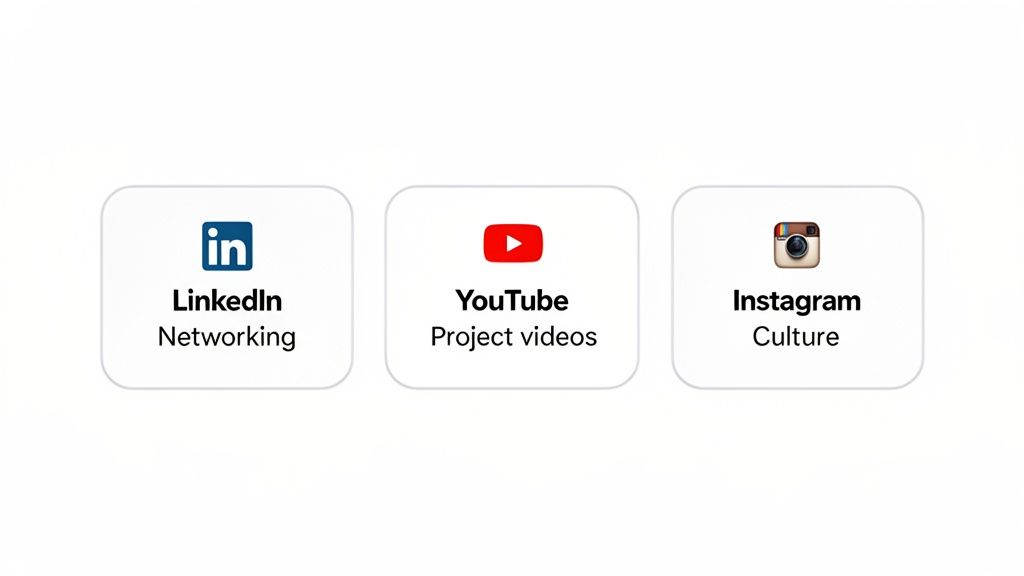
LinkedIn for buyers and partnerships
YouTube for proof and deep explanations
Instagram for hiring and culture
LinkedIn: The Undisputed B2B Powerhouse
Let’s be clear: for any engineering firm, LinkedIn is non-negotiable. It has long since evolved from a simple resume hub into a bustling professional ecosystem. This is where project managers, procurement officers, and C-suite executives actively look for industry insights and vet potential partners.
This is your stage for building credibility. You can share deep-dive technical articles, post key project milestones, and jump into conversations within relevant industry groups. In the hyper-competitive world of engineering, LinkedIn is the clear winner for B2B marketing—a staggering 85% of B2B marketers name it their highest ROI channel. Engagement is also way up, making it a goldmine for thoughtful discussions on technical innovation.
A strong LinkedIn presence does more than just list your services; it positions your firm as a knowledgeable authority in your niche. It’s where your expertise becomes visible and accessible to the people who can hire you.
For engineering firms, a well-executed LinkedIn strategy is the foundation of your entire social media effort. You can learn more about building one in our guide on developing a powerful LinkedIn marketing strategy.
YouTube: Bringing Complex Projects to Life
Let’s face it, text and static photos can only do so much to convey the scale and intricacy of a major engineering project. This is precisely where YouTube becomes your secret weapon. It gives you a platform to visually tell your project’s story in a way that’s both compelling and easy to digest.
Think of it as your digital project portfolio, but with the added power of motion and expert narration. You can use it to:
Create Project Walkthroughs: Use drone footage and 3D renderings to give potential clients a jaw-dropping virtual tour of a completed site.
Produce Technology Demos: Show exactly how a new piece of equipment or a proprietary process works, highlighting its efficiency and benefits.
Host Expert Interviews: Feature your lead engineers explaining their problem-solving process on a particularly challenging project. This puts a human face on your technical expertise.
Video cuts through the jargon and demystifies what you do, making your firm’s value proposition crystal clear to both technical and non-technical stakeholders.
Instagram: Humanizing Your Brand to Attract Talent
While it might seem like an odd choice at first, Instagram plays a surprisingly powerful role in recruitment and shaping your employer brand. The next generation of engineers isn’t just looking at your corporate website; they’re scrolling through Instagram to get a genuine feel for your company culture.
This is your chance to pull back the curtain and show the human side of your firm. Post behind-the-scenes shots of your team collaborating, celebrate employee anniversaries, or showcase your company’s involvement in the local community. These small glimpses build an authentic connection with potential hires and prove that your firm is more than just a place to work. In a tight hiring market, that human element is a critical advantage.
To help you decide, here’s a quick breakdown of where to focus your energy.
Platform Selection Guide for Engineering Firms
Ultimately, choosing the right mix depends on your specific goals—whether that’s landing bigger projects, attracting top-tier talent, or establishing your firm as the go-to expert in your field.
Use 3 Content Pillars: Expertise, Projects, People
If you want your social media to work, you need a plan. Posting random project photos or company announcements just doesn’t cut it anymore. It’s the equivalent of shouting into the void. To actually build an audience and generate leads, your content needs a backbone—a set of core content pillars.
Think of these pillars as the three or four main topics you’ll always talk about. They keep your content focused, ensure you’re hitting all your key audiences (from clients to potential hires), and consistently show what your firm is all about. This is how you go from being just another engineering company to a voice people actually want to listen to.
Pillar 1: Flex Your Expertise with Technical Thought Leadership
This is where you prove you’re more than just a vendor; you’re an industry leader. It’s not about your project portfolio. It’s about showing potential clients and peers that your team is on the cutting edge, thinking critically about the industry’s biggest challenges.
The goal here is to stop telling people you’re smart and start showing them. Share insights they can’t get anywhere else.
A few ways to bring this to life:
LinkedIn Deep Dives: Write a detailed post breaking down a gnarly technical problem your team cracked on a recent project. Get into the weeds a bit.
“Gated” White Papers: Got a really in-depth report or guide? Offer it as a download in exchange for an email address. It’s a classic for a reason.
Quick-Hit Expert Takes: Film a senior engineer giving their two cents on a new regulation or a breakthrough in materials science. Keep it short, punchy, and perfect for a quick scroll.
Content like this builds trust and positions your firm as the go-to expert when a truly difficult problem arises.
Pillar 2: Make Your Work Real with Project Showcases
Technical articles are great for the brain, but project showcases are what capture the imagination. This is your chance to tell the story behind the specs and blueprints. What was the big challenge? How did your team solve it in a clever way? What was the final result?
Visuals are everything here. I mean it—don’t skimp. Crisp, professional photos and videos aren’t a luxury; they’re a direct reflection of the quality and precision of your engineering work.
A great project showcase isn’t just a gallery of finished photos. It’s a narrative that walks the audience through your firm’s problem-solving skills, meticulous execution, and ability to deliver in the real world.
For example, instead of just posting a photo of a completed bridge, a civil engineering firm could create a stunning time-lapse video of its construction. Pair that with a short case study on the unique geological hurdles they had to overcome, and suddenly you have a story that’s far more compelling than a simple list of services.
This shift to visual, story-driven content is happening across the industry. In fact, 83% of marketers in the AEC sector now call social media their number one channel for winning new business. The proof is in the numbers: firms that put more than 20% of their marketing budget into social media report a 33% higher ROI. To see more data on this trend, you can explore the impact of social media marketing in the AEC sector.
Pillar 3: Win the War for Talent with Culture Content
In a market this tight, your social media is one of your most powerful recruiting tools. The best engineers aren’t just looking for a job description; they’re vetting your company culture. They want to see the people, the environment, and the values that make your firm tick.
This pillar is all about putting a human face on your brand. It’s your opportunity to show, not just tell, why your firm is a fantastic place to build a career.
Here are a few simple ideas:
Employee Spotlights: Interview your engineers. Ask them about a project they’re proud of or what they love about the team. Let their authentic voices shine through.
“Day in the Life” Glimpses: Use Instagram Stories or short video clips to show what a day actually looks like for a project manager or a junior engineer.
Celebrate the Wins: Did your team hit a major project milestone? Did someone earn a new certification? Share it! It showcases a supportive, collaborative atmosphere.
By consistently hitting these three pillars—expertise, projects, and people—you’ll build a well-rounded social media presence that establishes authority, brings in new business, and attracts the best talent in the field.
Repurpose Engineering Content Into Weekly Posts
Putting together a detailed project case study or a white paper on a new material is a huge investment. It takes time, deep expertise, and a lot of review. The single biggest mistake I see firms make is treating that piece of content as a one-and-done effort. To get a real return on that investment, you need a system for breaking down and repurposing every major piece of content you create.
This isn’t about just spamming the same link over and over again. It’s about intelligently pulling the most valuable insights from one big asset and reformatting them for different platforms. A single, in-depth case study isn’t just one thing—it’s the raw material for a dozen targeted social media posts.
The Power of Content Atomization
Think of a big, comprehensive asset—like a PDF case study on a complex bridge retrofitting project—as a large block of marble. Your job is to chisel away smaller, focused pieces that can stand on their own. This process, often called content atomization, is how you get the most mileage out of your team’s hard work.
Here’s how that single bridge case study can fuel your content calendar for weeks, or even months:
LinkedIn Article: Write a 700-word summary of the project. Focus on the core challenges and the innovative engineering solutions your team came up with. This is perfect for grabbing the attention of technical decision-makers.
Instagram Carousel: Create a 5-slide visual post. The first slide could be a stunning “after” shot. Slides 2-3 could use simple infographics to highlight key project stats (e.g., materials saved, completion time). The last couple of slides could feature a powerful quote from the project manager.
Short YouTube Video: Get your lead engineer on camera for a 90-second interview. Ask them to explain the single biggest hurdle they overcame on the project. This puts a human face on your technical expertise.
LinkedIn Text Posts: Go back to the original case study and pull out individual statistics or powerful quotes. Turn these into a series of text-only posts designed to spark a conversation.
This approach transforms one major effort into a sustainable stream of high-quality content without burning out your team. If you want to build a more formal system around this, our guide on creating a content repurposing strategy is a great place to start.
Producing Compelling Visuals
In engineering, precision and quality are everything. Your social media visuals have to reflect that. A grainy smartphone picture of a construction site can actively damage your brand’s credibility. You have to invest in high-quality visuals to properly convey the scale and sophistication of your work.
This emphasis on visual storytelling isn’t just a passing trend; it’s a proven strategy. We’ve seen a surge in video and visual content budgets in engineering marketing, with early reports showing 37% of firms planned to increase their spend. That pivot is still happening today, as platforms like Instagram and Facebook deliver top ROI for visual-first content. And with YouTube being the world’s second-largest search engine, it’s become an essential channel for industrial research and technology demos.
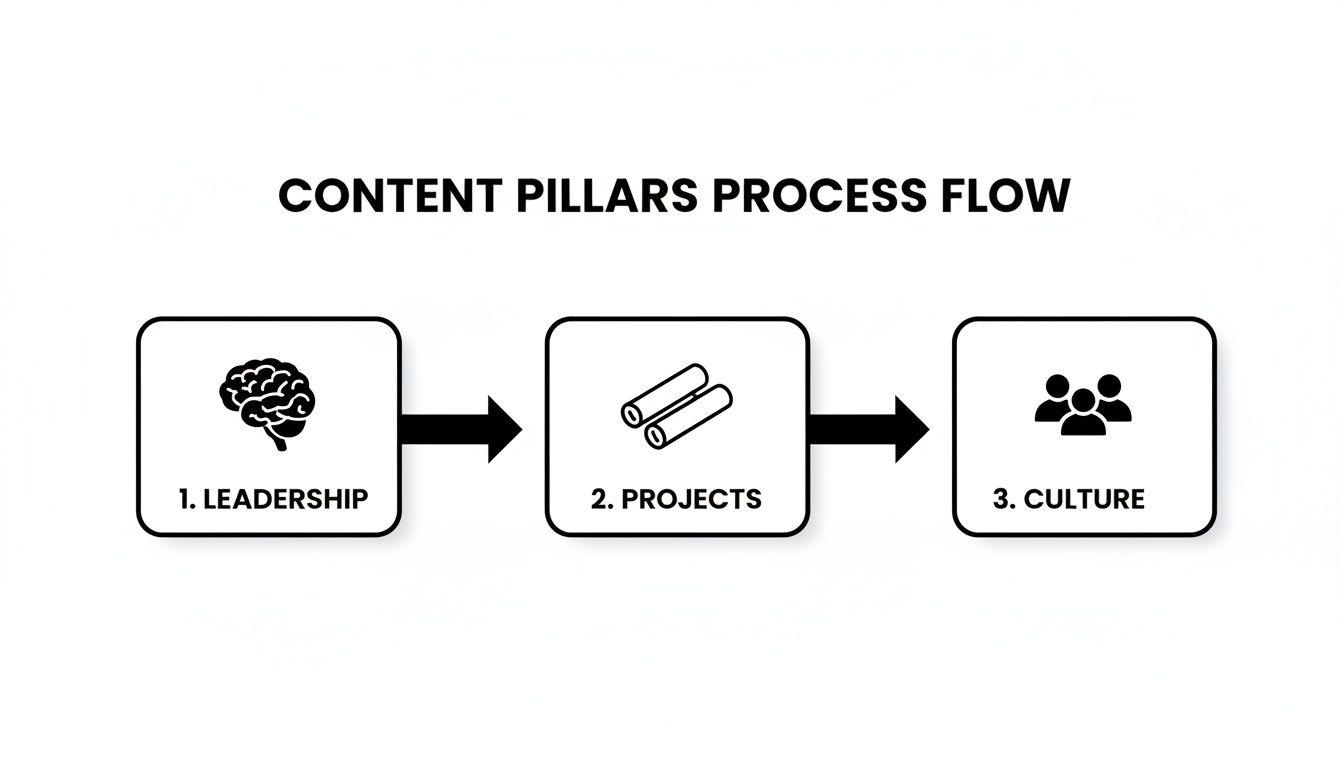
Here’s a look at how the content pillars we’ve been discussing—leadership, projects, and culture—translate into a practical creation workflow.
This flow shows how your core themes should feed into a diverse mix of content, giving you a balanced and engaging social media presence.
Your visuals are a direct reflection of your engineering standards. High-quality drone footage, professional photography, and clean infographics tell a story of precision and excellence before a potential client reads a single word.
Make sure these visual formats are part of your toolkit:
Professional Project Photography: Don’t just take a photo when it’s done. Capture key milestones and the finished project from multiple, dramatic angles.
Drone Footage: For large civil or structural projects, nothing beats drone footage for showing the true scale and context of your work.
Infographics: These are fantastic for simplifying complex data or processes, making your technical expertise accessible to a broader audience.
3D Renderings & Animations: Use these to visualize a project before it’s built or to explain an internal process that’s impossible to photograph.
When you combine a smart repurposing workflow with a real commitment to high-quality visuals, your firm can build authority, showcase its best work, and attract the right kind of talent.
Launch a Repeatable Workflow (Calendar, Review, Engagement)
A brilliant strategy is just a document until you actually put it to work. This is where the rubber meets the road—turning those plans into a living, breathing social media presence that actually drives results for your firm.
Consistency and organization are the two things that make or break this process. Without a system, great ideas get lost, posting becomes an afterthought, and you miss golden opportunities to connect with clients. Building a practical framework isn’t just about tidiness; it’s about creating a sustainable rhythm your team can stick with for the long haul.
Build a Practical Editorial Calendar
Think of your editorial calendar as the single source of truth for everything you post. It transforms your abstract content ideas into a concrete, day-by-day schedule, ensuring you’re hitting all your content pillars—technical thought leadership, project showcases, and recruiting—in a balanced way.
This doesn’t need to be some complex, expensive software. A shared spreadsheet or a simple tool like Postiz does the job perfectly. The real goal is to map out your content at least a month ahead of time.
To maintain consistency without adding manual workload, many firms use a Facebook post scheduler to plan project updates, hiring posts, and announcements in advance.
Your calendar should track the essentials:
Post Date and Time: Aim for consistency, maybe three to five times per week on a platform like LinkedIn.
Platform: Clearly mark if a post is for LinkedIn, YouTube, etc.
Content Pillar: Tag each piece—”Thought Leadership,” “Project Showcase,” “Recruiting”—to keep your mix strategic.
Content Format: Is it a video, a carousel post, a link to a whitepaper? Note it down.
Status: Simple labels like “Draft,” “Pending Review,” and “Scheduled” keep everyone on the same page.
Your editorial calendar is more than a schedule; it’s a strategic tool. It prevents the last-minute scramble for content and ensures your posts are deliberately crafted to speak to clients, partners, and potential new hires.
Define Your Approval Workflow
In engineering, precision is non-negotiable. One small technical error or a misstatement about a project’s scope can do serious damage to your firm’s credibility. This is exactly why a crystal-clear, documented approval workflow is an absolute must before anything goes live.
This process is your quality control, making sure every post is checked for:
Technical Accuracy: A subject matter expert (SME), like a lead engineer, has to sign off on any technical claims.
Brand Compliance: Marketing needs to give the green light on brand voice, tone, and visuals.
Client Confidentiality: You must have explicit permission to share any project details or images.
A simple, effective workflow could look like this: a content creator drafts the post, it goes to an engineering lead for the technical check, and then moves to a marketing manager for final approval and scheduling. This simple system is your best defense against embarrassing mistakes and protects the reputation you’ve worked so hard to build.
Master Community Management and Engagement
Social media is a two-way street, not a megaphone. Your job isn’t done when you hit “publish.” Actively managing your community is how you build real relationships, gather valuable feedback, and show that your firm is an accessible, engaged leader in the industry.
Good community management comes down to a few key habits. First, always respond to comments and questions promptly and professionally. Just acknowledging feedback shows you’re listening and that you value your audience.
Beyond your own page, get active in relevant LinkedIn Groups and industry discussions. Jumping in with a thoughtful insight on someone else’s post can often be more impactful than simply sharing your own content.
When done right, this consistent engagement turns your social media from a marketing task into a genuine business driver. The connections you build can evolve into real opportunities. For a deeper look at turning conversations into contracts, check out this guide on Social Media for Lead Generation.
Got Questions? We’ve Got Answers.
Even with the best playbook, you’re bound to have questions. That’s a good thing—it means you’re thinking critically about how to get this right. We’ve been there, and we’ve helped countless engineering firms work through these same challenges.
Here are a few of the most common questions that pop up, along with some straightforward advice from our experience.
How Often Should We Be Posting on Social Media?
Honestly, the best posting schedule is the one you can actually stick to without sacrificing quality. It’s much better to share three genuinely insightful posts a week than to push out seven generic ones just to hit a quota.
For a network like LinkedIn, aiming for 3-5 high-value posts per week is a great starting point. That’s frequent enough to keep you on people’s radar but not so much that you’re just adding to the noise.
But for a platform like YouTube, the game is completely different. One meticulously produced project showcase or technical explainer video a month will do far more for your brand than four rushed, low-quality clips.
The real goal isn’t hitting some magic number. It’s about creating a sustainable rhythm that lets you consistently share the kind of smart, technically sound content that proves your firm knows its stuff.
This is where a good scheduling tool becomes a lifesaver. You can batch-create your content when you have time, ensuring you have a steady stream of posts going out even when your team is buried in project work. Consistency is what builds trust and keeps you top-of-mind.
What are the Biggest Social Media Blunders Engineering Firms Make?
It’s easy to stumble when you’re starting out, but a lot of firms fall into the same few traps. If you know what they are, you can sidestep them entirely. Most of these mistakes happen when firms forget the “social” part of social media and just treat it like another advertising channel.
One of the biggest no-nos is being too salesy. If your feed just reads like a constant stream of “hire us,” you’ll turn people off fast. Another common pitfall is using dense, internal jargon that makes sense to your engineers but leaves potential clients scratching their heads. Always prioritize clarity and value.
Keep an eye out for these specific missteps:
Talking at People, Not with Them: A classic mistake is treating social media like a megaphone. If all you do is broadcast your own content and never reply to comments or join other conversations, you’re missing the whole point.
Using Subpar Visuals: Think about it—your firm’s reputation is built on precision and quality. Amateur, poorly lit photos or blurry videos send the exact opposite message. Your visuals are a direct reflection of your work.
Going Silent for Weeks: Posting five times in one day and then disappearing for a month makes it look like you don’t have a real strategy. A steady, predictable cadence is what builds a loyal audience.
Just avoiding these common mistakes will put your firm’s social media presence leagues ahead of many of your competitors.
How Do We Actually Measure ROI from All This?
This is the big one. Measuring ROI isn’t about chasing “vanity metrics” like likes and followers. It’s about connecting your social media activity directly back to what you’re trying to achieve as a business—be it getting more leads or attracting top talent.
You have to define what a “win” looks like for your firm. If your goal is to generate new project inquiries, you’ll be tracking very different things than if you’re trying to fill a senior engineering role.
Here’s a simple way to connect your goals to real, measurable data:
When you focus on these kinds of tangible outcomes, social media stops being a marketing expense and starts becoming a strategic investment. This data is what proves to leadership that your efforts are delivering real, bottom-line value.
Ready to stop guessing and start building a powerful social media presence? With Postiz, you can plan, schedule, and analyze all your content from one central hub. It’s time to end the last-minute scramble and build a consistent brand that attracts both clients and top-tier talent.
Discover top social media reporting tools to enhance your strategy in 2025. Learn how these tools can improve your social media insights and performance.
Discover the fastest growing subreddits with top subreddit growth tools. Learn how to find trending subreddits, analyze engagement, and track new Reddit communities.