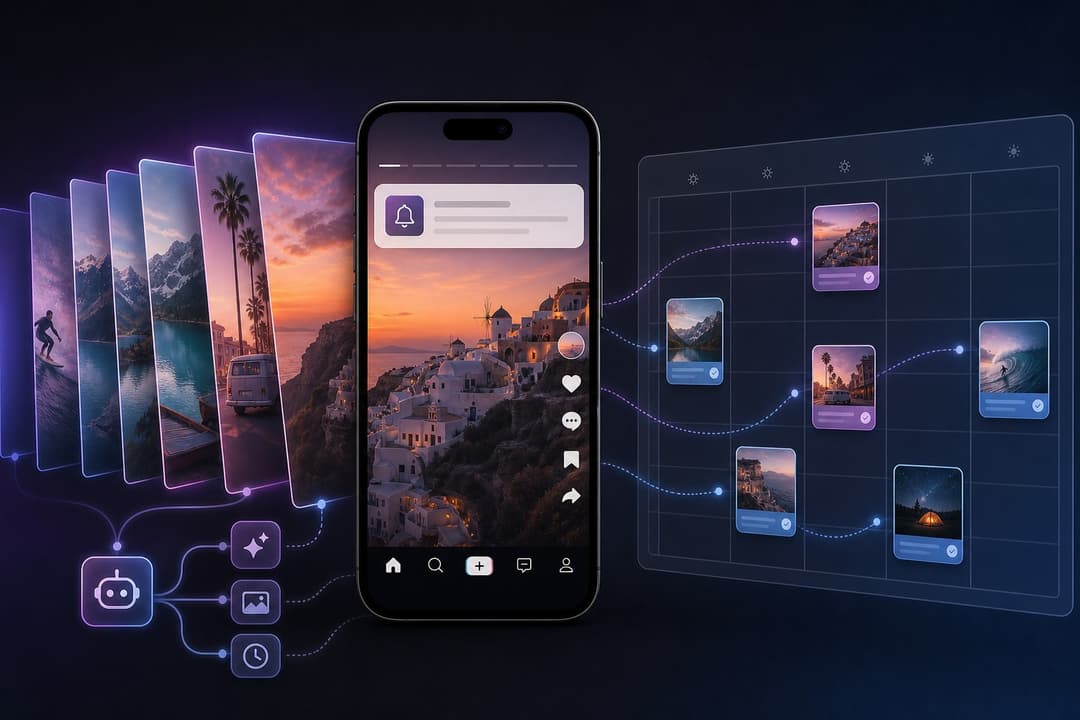
Everyone says consistency is key for YouTube Shorts, but consistently posting into a void won't grow your channel. The real secret weapon is strategic timing: publishing your content precisely when your audience is most likely to be scrolling, watching, and engaging. Hitting that sweet spot signals to the YouTube algorithm that your Short is valuable, kicking off a powerful recommendation cascade that can turn good content into a viral sensation.
Finding the best time to post on YouTube Shorts isn't about guesswork; it's about data. The right timing can dramatically increase your initial velocity, which is the number of views your Short gets in its first few hours. This initial burst of engagement is a critical factor that YouTube's algorithm uses to decide whether to push your content to a wider audience on the Shorts shelf. This guide moves beyond vague advice and dives straight into seven specific, data-backed strategies to pinpoint the optimal posting windows for your unique channel.
We will explore peak viewing hours, audience behavior patterns, and advanced tactics that top creators use to maximize their reach and dominate the feed. To truly crack the YouTube Shorts code, integrating smart posting times with strategic YouTube tags is fundamental for discoverability. By mastering these timing principles, you'll gain a significant advantage that translates directly into more views, a higher subscriber rate, and sustainable channel growth. Let's get started.
1. Prime Time Evening Posting (6 PM – 10 PM)
This strategy targets the high-traffic evening hours when most users are winding down for the day. Posting between 6 PM and 10 PM in your audience's local time zone capitalizes on the period when people have finished work or school, eaten dinner, and are actively scrolling through their phones for entertainment. The core idea is to catch viewers during their peak leisure time, maximizing the potential for immediate views, likes, and shares.

This approach is one of the most reliable and widely adopted, largely because it aligns with general human behavior. The initial momentum gained during these hours can signal to the YouTube algorithm that your content is engaging, potentially boosting its visibility beyond your subscriber base.
Why This Timing is Effective
Evening posting is effective because it aligns with a massive surge in online activity. After daily responsibilities are handled, people turn to platforms like YouTube for relaxation and discovery. This concentrated viewership gives your Short the best possible chance to be seen by a large audience right after it goes live.
Many top creators, from MrBeast to Charli D'Amelio, leverage this window to ensure their content gets a strong start. It’s a foundational strategy that serves as an excellent starting point for any creator trying to find the best time to post on YouTube Shorts. While this works well for Shorts, the principles for long-form content can differ slightly. For a deeper dive into scheduling longer videos, you can explore our guide on the best time to upload YouTube videos.
Actionable Tips for Evening Posting
To make the most of this prime-time window, follow these specific steps:
- Pinpoint Your Audience's Evening: Don't just post at 7 PM your time. Use YouTube Analytics to find where the majority of your viewers are located. Go to
Analytics > Audienceand look at the "When your viewers are on YouTube" report to identify the darkest purple bars, which indicate peak activity. - Test Within the Window: The 6 PM to 10 PM range is broad. Test different slots to find your sweet spot. Schedule Shorts for 6:30 PM one week, 7:45 PM the next, and 9:00 PM the week after. Track which time consistently yields the best performance in the first 2-4 hours.
- Create a Consistent Schedule: Once you identify a high-performing time, stick to it. Consistency helps train your audience to expect new content at a specific time, building anticipation and viewing habits. Use a scheduler like Postiz to automate this process and ensure you never miss a slot.
2. Mid-Day Posting (12 PM – 2 PM)
This strategy targets the midday lull when many users take a break from work or school. Posting between 12 PM and 2 PM in your audience's local time zone allows you to capture viewers during their lunch breaks, a key period of high mobile phone usage. The goal is to reach an active, engaged audience looking for a quick dose of entertainment to break up their day.
This approach is highly effective for reaching a different segment of viewers than the evening crowd. While prime time is about leisure and winding down, the midday window is about quick, snackable content consumed during a brief respite from daily responsibilities. Gaining traction during this time can give your Short a significant boost before the evening rush begins.
Why This Timing is Effective
Midday posting works because it aligns with a predictable, daily spike in mobile activity. Office workers, students, and even remote employees often use their lunch hour to catch up on social media. This creates a concentrated window of opportunity to serve content to an audience that is actively seeking a mental break.
This time slot is particularly powerful for content that is educational, motivational, or directly related to professional industries. For example, many educational channels find success by posting when students are on break. Similarly, corporate or B2B channels can capture professionals checking their feeds during lunch. It’s a strategic choice for creators trying to determine the best time to post on YouTube Shorts for a specific, daytime audience.
Actionable Tips for Midday Posting
To maximize your impact during the lunch hour rush, implement these specific tactics:
- Post Just After the Hour: Instead of posting exactly at 12:00 PM, try scheduling your Short for 12:15 PM or 12:20 PM. This gives your audience time to grab their lunch and settle in before they start scrolling, increasing the likelihood they’ll see your content right at the top of their feed.
- Optimize for Quick Consumption: Create content that is immediately engaging and easy to digest. Midday viewers have limited time, so your Short needs to deliver its value proposition within the first few seconds. Think quick tips, satisfying clips, or funny, relatable skits.
- Combine with an Evening Post: For maximum reach, consider a two-pronged approach. Post a Short during the midday window to capture the lunch crowd and another during the evening prime-time slot. This allows you to hit two distinct peak activity periods and double your exposure.
- Analyze Day-of-the-Week Performance: The effectiveness of a midday post can vary significantly between a weekday and a weekend. Use your YouTube Analytics to track which days yield the best results for this time slot and adjust your schedule accordingly. A business-focused channel might see more success on a Tuesday, while a DIY channel might perform better on a Saturday.
3. Early Morning Posting (6 AM – 9 AM)
This strategy targets the "first scroll" of the day, catching viewers as they wake up, commute, or settle into their morning routines. Posting between 6 AM and 9 AM in your audience's local time zone allows you to engage with them before the daily hustle begins. The goal is to be one of the first pieces of content they see, establishing a presence while their minds are fresh and receptive.
This approach capitalizes on the habitual nature of morning phone usage. By delivering content early, you avoid the highly competitive afternoon and evening slots, giving your Short a chance to accumulate views and engagement before the peak-hour rush. This initial traction can signal to the YouTube algorithm that your content is valuable, helping it gain momentum that lasts throughout the day.
Why This Timing is Effective
Early morning posting is effective because it aligns with moments of focused, individual screen time. People often use these early hours to catch up, get motivated, or find a quick dose of entertainment before work or school. This creates a window of opportunity to capture an audience that is less distracted and more likely to engage with content that fits their morning mindset.
Creators in specific niches have found immense success with this timing. For instance, fitness channels like Chloe Ting can catch their audience right before a morning workout, while motivational speakers find that a 7 AM post resonates with users seeking inspiration for the day ahead. This strategy is an excellent way to determine the best time to post on YouTube Shorts for content that is informational, inspirational, or routine-based.
Actionable Tips for Morning Posting
To effectively leverage the early morning window, follow these specific guidelines:
- Align with Waking Hours: Analyze your audience's primary location in YouTube Analytics. Aim to post about 20-30 minutes after the typical wake-up time in that region. For a US-based audience, this could mean posting around 6:30 AM to 7:30 AM EST to catch the early risers.
- Match Content to the Mood: The most successful morning Shorts are energizing, motivational, or informative. Create content that sets a positive tone for the day, such as quick workout tips, a "daily news in 60 seconds" segment, or an inspiring quote. This makes your content a valuable part of their routine.
- Check Analytics for Morning Spikes: Go to
YouTube Analytics > Audience > When your viewers are on YouTube. While the evening hours are often darkest, look for lighter purple bars in the 6 AM to 9 AM range. Even a small but consistent morning audience can be highly engaged and worth targeting directly. - Consider a Double-Post Strategy: For maximum reach, pair your morning post with a scheduled repost or a different Short in the evening. This allows you to capture two distinct audience segments: the early birds and the night owls, effectively doubling your exposure.
4. Weekend vs. Weekday Optimization
This strategy recognizes that viewer behavior isn't static throughout the week. The optimal posting times differ significantly between weekdays (Monday-Friday) and weekends (Saturday-Sunday). This approach requires creating two distinct posting schedules to align with the different routines and content consumption habits of your audience.

Weekday audiences often have compressed engagement windows, like during their commute or in the evening after work. In contrast, weekend audiences have more flexible schedules and tend to consume content more heavily throughout the day. By treating these two periods separately, you can tailor your content release for maximum impact.
Why This Timing is Effective
A one-size-fits-all approach to scheduling can leave a lot of views on the table. Weekday content needs to capture attention quickly within narrow time slots, whereas weekend content can be posted during broader windows when viewers are more relaxed and willing to binge. For example, a gaming channel might post at 7 PM on a Friday to catch the after-work crowd, but then post at 2 PM on Saturday to engage the afternoon gaming session audience.
This segmented strategy is crucial for finding the true best time to post on YouTube Shorts because it respects the natural rhythm of your audience's life. It acknowledges that the same person who scrolls for 15 minutes on a Tuesday evening might spend hours on YouTube on a Sunday afternoon. Understanding these behavioral shifts is key, and you can explore this concept further by reading our guide on the best day for social media posts.
Actionable Tips for This Strategy
To effectively optimize for weekdays and weekends, implement these specific tactics:
- Analyze Your Data Separately: In YouTube Analytics, review the "When your viewers are on YouTube" report. Instead of looking at the week as a whole, focus specifically on the patterns for Monday-Friday versus Saturday-Sunday. You will likely see different peak times emerge.
- Test Different Windows: During weekdays, experiment with compressed evening windows like 6 PM, 7:30 PM, and 9 PM. On weekends, test broader slots like 10 AM, 2 PM, and 6 PM. Run these tests for at least four weeks to gather reliable data.
- Tailor Content to the Day: Consider creating more time-sensitive or trending content for weekdays when users are looking for quick updates. Use weekends for more evergreen or in-depth Shorts that viewers can enjoy when they have more leisure time.
- Use a Scheduler for Precision: Manually managing two different schedules can be complex. Use a tool like Postiz to pre-schedule your weekday and weekend Shorts. This ensures you consistently hit your optimized time slots without having to post live each time.
5. Post-Event and Trend-Based Timing
This strategy abandons fixed schedules in favor of agility, timing your posts to coincide with breaking news, viral trends, and major cultural moments. Instead of posting at the same time every day, you publish content when a relevant topic is peaking in public interest. The goal is to ride the wave of a trend, capturing a massive influx of search and discovery traffic from users actively seeking content on that subject.
This reactive approach requires you to be constantly aware of what's happening online and in the real world. Success depends on your ability to quickly create and publish a relevant Short while the conversation is still hot. It's a high-risk, high-reward method that can lead to explosive growth when executed correctly.
Why This Timing is Effective
Trend-based timing is powerful because it taps directly into existing, high-volume demand. When an event occurs or a meme goes viral, users flood YouTube searching for reactions, explanations, and related entertainment. By providing timely content, you position your Short to be served to this highly engaged, temporary audience, dramatically increasing its discovery potential.
Creators like MrBeast are masters of this, often capitalizing on viral moments within hours. This strategy is also crucial for news and commentary channels that need to post reactions to breaking events to stay relevant. Finding the best time to post on YouTube Shorts in this context isn't about the clock; it's about the cultural pulse.
Actionable Tips for Trend-Based Posting
To successfully leverage this dynamic strategy, you need to be prepared and quick on your feet:
- Monitor Trends Actively: Set up alerts and constantly check sources for emerging topics. Use Google Alerts for keywords in your niche, monitor the "Trending" sections on Twitter and YouTube, and keep an eye on TikTok to see what's gaining traction.
- Prepare Content Templates: You won't have time to build a Short from scratch. Keep a queue of adaptable video templates, graphics, and audio clips ready. This allows you to simply drop in the relevant new information and publish within minutes.
- Act Within the "Golden Window": Speed is everything. Aim to post your Short within 30 minutes to 2 hours of a trend emerging for maximum impact. The sooner you post, the less competition you'll face and the more likely you are to be seen as a primary source.
- Use Trending Audio and Hashtags: Immediately incorporate trending sounds and relevant hashtags associated with the event. The YouTube algorithm often prioritizes Shorts using these elements, especially within the first 6-12 hours of a trend's emergence.
- Balance with a Regular Schedule: Don't rely solely on trends. Use this strategy to supplement your consistent posting schedule. This gives you periodic boosts in visibility without abandoning the audience you've built through regular content.
6. Audience Time Zone Targeting
This advanced strategy moves beyond a single "best time" and instead focuses on scheduling posts to hit peak viewing hours in multiple geographic time zones. If your audience is international, a single post will inevitably miss prime time for a large portion of your viewers. Time zone targeting involves creating a multi-post schedule that caters to the largest segments of your global audience, ensuring your content has a chance to go viral in different regions.

The core principle is to publish multiple unique Shorts throughout a 24-hour cycle, spaced out to align with evening leisure times in North America, Europe, and Asia, for example. This method requires a deep understanding of your audience distribution and a more demanding content schedule, but it dramatically increases your potential reach and engagement.
Why This Timing is Effective
Audience time zone targeting is effective because it acknowledges the global nature of YouTube. A post at 8 PM Eastern Time is 1 AM in London and 9 AM in Tokyo, missing peak engagement in both of those major markets. By staggering posts, you give each Short a fair chance to capture initial momentum in a specific region, which signals to the algorithm that the content is valuable and should be pushed to a wider audience.
Creators with a significant international following, like MKBHD or global news outlets, use this strategy to maximize their visibility. A gaming channel might post in the evening for their U.S. audience and then again late at night (which is morning in Asia) to capture that market. This approach is a key part of determining the best time to post on YouTube Shorts for channels that are not confined to a single country.
Actionable Tips for Time Zone Targeting
To effectively implement a time zone-based posting schedule, follow these specific steps:
- Identify Your Top Geographies: Go to
YouTube Analytics > Audience > Top Geographies. Identify the top 3-5 countries or regions that make up the bulk of your viewership. This data is the foundation of your entire strategy. - Calculate Local Peak Times: For each key region, determine its prime time (e.g., 6 PM – 10 PM local time). Convert these times back to your own time zone to create a master schedule. For instance, 7 PM in London (GMT) is 2 PM in New York (ET).
- Space Posts Strategically: Schedule your Shorts 6-12 hours apart to cover different zones without overwhelming your subscribers. A common approach is a three-post day: one for Asia/Oceania morning, one for Europe evening, and one for North America evening.
- Keep Content Universal: When posting for a global audience, avoid highly specific cultural or regional references that might alienate viewers in other time zones. Create content with broad appeal.
- Monitor Geo-Performance: After implementing this strategy, review your analytics weekly. Check if view counts are spiking from the intended geographic locations shortly after each post goes live to confirm your timing is effective.
7. Audience Behavior Analytics-Driven Posting
This data-driven strategy moves beyond general advice and focuses entirely on your specific audience's viewing habits. Instead of relying on universal "best times," this approach uses YouTube Analytics to pinpoint the exact hours and days your viewers are most active. Every channel's audience is unique, shaped by niche, demographics, and content style, making personalized data the most accurate guide for scheduling.
The core principle is to let your channel's performance data dictate your posting schedule. By testing, measuring, and continuously optimizing, you create a feedback loop that ensures you're always posting when your community is most likely to engage. This method turns scheduling from guesswork into a precise, strategic advantage.
Why This Timing is Effective
This approach is the most reliable way to determine the best time to post on YouTube Shorts because it's based on the actual behavior of the people who watch your content. General posting windows are a great starting point, but your analytics reveal the true peak activity times for your audience, which might be unconventional. For example, a channel focused on late-night gaming might see a surge at 1 AM, a time most general guides would overlook.
Science communicators like Veritasium have long discussed using analytics to optimize upload timing, and this principle is even more critical for the rapid-fire nature of Shorts. This method removes assumptions and replaces them with hard data, giving you a competitive edge. The principles of data-driven scheduling apply across platforms; for a wider view, you can check out this guide on the best times to post on social media in 2025.
Actionable Tips for Analytics-Driven Posting
To implement this data-first strategy, follow these methodical steps:
- Access Your Viewer Activity Report: Go to
YouTube Studio > Analytics > Audienceand find the "When your viewers are on YouTube" chart. The darkest purple bars indicate the hours with the highest concentration of your viewers online. - Formulate a Testing Hypothesis: Identify the top 2-3 peak time slots from your chart. Plan to test each time slot by posting consistently during that window for at least one to two weeks to gather sufficient data.
- Track Performance Metrics: Create a simple spreadsheet to track key metrics for each Short. Record the post time, views in the first 24 hours, likes, comments, and average view duration. This helps you identify which time slot delivers the best overall engagement, not just initial views.
- Analyze and Optimize: After your testing period, analyze the data to see which time slot consistently performed best. Make this your primary posting time, but re-evaluate quarterly. Audience behavior can shift due to seasons, holidays, or changes in your content.
- Leverage Advanced Tools: For deeper insights and easier scheduling, consider using one of the best social media analytics tools available. These platforms can help you automate tracking and visualize performance trends more effectively.
YouTube Shorts: 7 Timing Strategies Compared
| Posting Strategy | Implementation Complexity 🔄 | Resource Requirements ⚡ | Expected Outcomes 📊⭐ | Ideal Use Cases 💡 | Key Advantages ⭐ |
|---|---|---|---|---|---|
| Prime Time Evening Posting (6 PM – 10 PM) | Medium — daily consistency and competitive timing | Moderate — frequent uploads, steady editing & scheduling | High initial views & engagement; strong algorithm push | Entertainment, broad-audience vlogs, trending content | Maximizes first-hour velocity; higher comments/shares |
| Mid-Day Posting (12 PM – 2 PM) | Low — predictable short window | Low — quick, snackable production | Moderate steady views; less competition than evening | Educational, professional development, news briefings | Less crowded algorithm space; good for working audiences |
| Early Morning Posting (6 AM – 9 AM) | Low — simple recurring schedule, timezone check | Low — consistent but minimal production | Moderate views with strong retention; habit-forming audience | Fitness, motivation, morning routines, news | Minimal competition; better content longevity |
| Weekend vs. Weekday Optimization | High — separate schedules and A/B testing per day type | High — varied assets, planning and scheduling | Improved weekly reach by matching day-specific behavior | Channels with distinct weekday/weekend audience patterns (gaming, lifestyle) | Tailors content to availability; maximizes engagement by day type |
| Post-Event & Trend-Based Timing | High — real-time monitoring and rapid execution | High — alerts, rapid editing, trend-aware assets | Potential viral spikes; large short-term traffic boosts | News, reactions, trend-jacking creators, live events | High viral potential and shareability when timely |
| Audience Time Zone Targeting | High — multi-region scheduling and coordination | High — multiple daily posts, localization, analytics | Expanded global reach; sustained 24-hour engagement | International brands, global creators, multilingual channels | Captures multiple regional peaks; multiplies total engagement |
| Analytics-Driven Posting (Audience Behavior) | Medium — requires analytics literacy and testing | Moderate — time for tests, tracking tools, analysis | Most accurate long-term optimization; higher ROI when validated | Creators seeking data-driven growth; channels with sufficient traffic | Personalized, validated timing; adapts to seasonal/trend changes |
Putting It All Together: Your Blueprint for Perfect Timing
Navigating the world of YouTube Shorts can feel like trying to catch lightning in a bottle. You have incredible content, but if you release it into the digital void at the wrong moment, it can easily get lost. This guide has armed you with a comprehensive toolkit to move beyond guesswork and start making strategic, data-driven decisions about your posting schedule. We've dismantled the myth of a single "magic" posting time and replaced it with a powerful, adaptable framework.
The journey to discovering the best time to post on YouTube Shorts for your unique channel is a process of continuous refinement. You now have the foundational knowledge to begin that journey intelligently. Start with the broad strokes, the widely acknowledged peak viewing windows, and then systematically layer on more sophisticated tactics as your channel matures and your data becomes more robust.
From General Wisdom to Personalized Strategy
Think of this process as building a house. You start with a solid foundation before you start decorating the rooms.
- The Foundation (Your Starting Point): Begin by testing the general peak hours we discussed. The Prime Time Evening (6 PM – 10 PM) and Mid-Day (12 PM – 2 PM) slots are popular for a reason; they capture audiences during their downtime. Use these as your initial test variables for the first few weeks.
- The Framework (Adding Structure): Next, introduce Weekend vs. Weekday Optimization. Does your audience's behavior shift dramatically on a Saturday afternoon compared to a Tuesday morning? This is where you begin to see the first real signs of your community's unique consumption habits.
- The Interior Design (Personalization): This is where the true power lies. Dive deep into your Audience Behavior Analytics. Your YouTube Studio is the ultimate source of truth, overriding any general advice. Use the "When your viewers are on YouTube" report to pinpoint the exact hours and days your specific audience is most active. Layer this with Audience Time Zone Targeting to ensure your content lands perfectly for the majority of your viewers, wherever they are in the world.
Key Takeaway: The goal isn't to find one perfect time and stick to it forever. The goal is to build a flexible system where you test, analyze the results, and adapt your schedule based on what the data tells you. Your audience's habits will evolve, and so should your strategy.
The Art of Consistency and Adaptation
Mastering your posting schedule is one of the most significant levers you can pull to accelerate your channel's growth. A well-timed Short doesn't just get more initial views; it signals to the YouTube algorithm that your content is engaging, which can lead to broader distribution and a coveted spot on the Shorts shelf. Consistency in your timing helps build anticipation and viewing habits within your community. When your subscribers know to expect fresh content from you during their evening scroll, you create a loyal, engaged audience.
Remember that finding the best time to post on YouTube Shorts is an ongoing experiment, not a final destination. Stay curious. Be willing to test a new time slot for a week and see what happens. Pay attention to how different types of content perform at different times. A hilarious comedy sketch might land better on a Friday night, while a quick productivity tip could excel on a Monday morning. Listen to your data, trust the process, and you will unlock the full potential of your YouTube Shorts content.
Ready to stop guessing and start scheduling with precision? Take the insights from this guide and put them into action with Postiz. Our platform allows you to schedule your Shorts for the exact peak times you've identified, analyze performance effortlessly, and build a consistent content calendar that drives real growth. Sign up for Postiz today and turn your timing strategy into your competitive advantage.